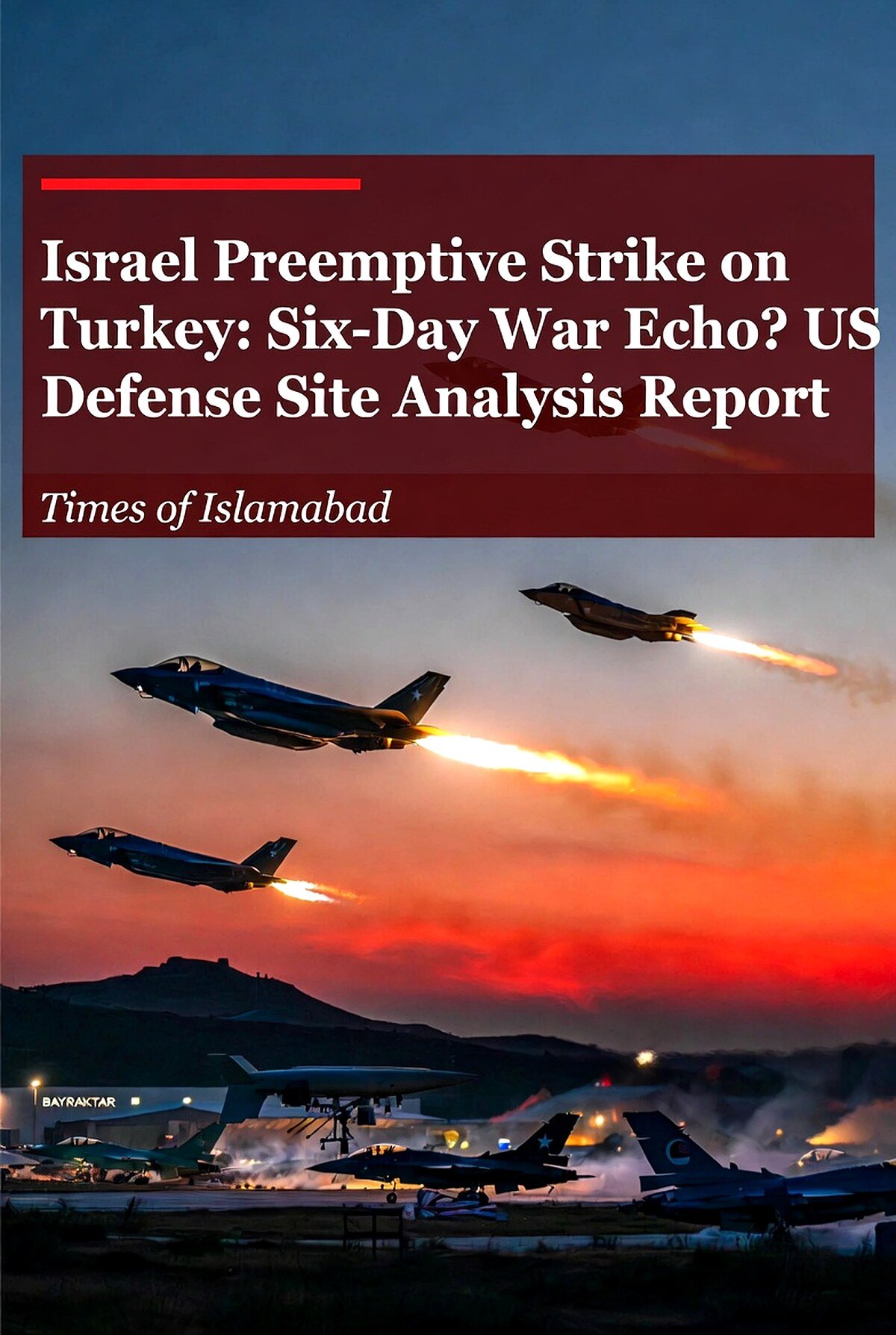




ISLAMABAD: A chilling analysis has surfaced that could reshape the Middle East forever. It suggests Israel might launch a lightning preemptive strike against Turkey if tensions continue to escalate out of control.
But that’s not the full story. The scenario draws direct parallels to Israel’s stunning 1967 Operation Focus in the Six-Day War. In that conflict, Israeli jets destroyed nearly 452 enemy aircraft—mostly on the ground—in hours, securing air supremacy and shifting the regional balance dramatically.
What’s more concerning is the current trajectory under Turkish President Recep Tayyip Erdoğan. Recent moves, including the indictment of Israeli leaders and heightened rhetoric over regional conflicts, have raised alarms in Tel Aviv. Experts point to Turkey’s expanding military footprint and advanced capabilities as potential triggers for drastic Israeli action.
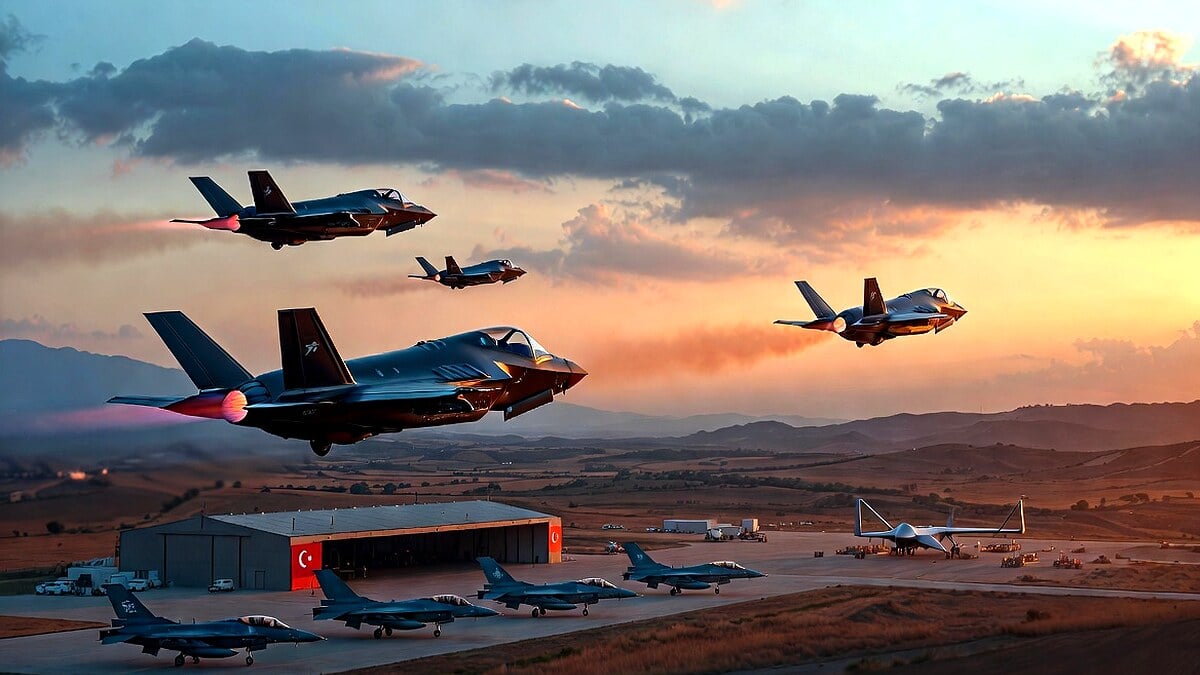
Turkey fields one of NATO’s largest air forces, with over 200 F-16 variants in service as of 2026. These aircraft have undergone upgrades, including indigenous avionics and electronic warfare systems. Production of advanced drones continues at pace, with Baykar delivering around 110 Akinci UCAVs by early 2026 and targeting 120 units by year-end. The Bayraktar TB2 series exceeds 800 units built, exported to more than 30 countries, and proven lethal in multiple conflicts.
This is where things get interesting. The analysis outlines specific targets Israel might prioritize in a rapid, overwhelming operation: Turkish F-16s and major airbases such as Incirlik, Izmir, and Diyarbakir. Naval facilities at Gölcük, Aksaz, and others could face strikes to neutralize fleet assets. Drone production sites, including Baykar facilities, along with air defense radars and key military industrial plants like those of Turkish Aerospace Industries (TUSAŞ), sit high on any hypothetical list.
However, a deeper issue is emerging. Turkey’s defense industry has achieved remarkable self-reliance. Indigenous projects include the KAAN fifth-generation fighter program and advanced missile systems from Roketsan. Naval expansion features 41 warships under construction simultaneously, with plans for 50 in total. Air defense systems like STEEL DOME are scaling up production, aiming for over 100 components delivered annually starting 2026.
And this raises an important question: Could Israel replicate its 1967 success against a far more capable and NATO-integrated adversary today?
Israel maintains qualitative edges in several domains. Its fleet includes F-35I Adir stealth fighters, supported by multi-layered defenses such as Iron Dome, David’s Sling, and Arrow systems. Decades of operational experience in precision strikes give Tel Aviv confidence in rapid, decisive action if leaders perceive an existential threat.
Yet Turkey’s scale complicates any scenario. With active personnel around 355,000 to 550,000 depending on reporting, plus significant reserves, Ankara projects power across multiple theaters—from northern Cyprus (with recent F-16 deployments) to Syria, Libya, Somalia, and beyond. Over 35,000 troops in northern Cyprus and bases in Qatar, Somalia, and elsewhere demonstrate extended reach.
But that’s not the full story. A direct clash would shatter NATO unity. Turkey, as a full alliance member since 1952, could invoke Article 5 if attacked on its territory, forcing difficult choices for Washington and European capitals. Israel, while not a NATO member, enjoys deep strategic ties with the United States, creating a potential alliance nightmare.
What’s more concerning is the broader regional fallout. Any conflict of this magnitude risks drawing in other actors, redrawing power maps from the Mediterranean to the Black Sea and Gulf. Energy routes, migration flows, and trade corridors could face severe disruption.
However, a deeper issue is emerging when viewing these tensions through Pakistan’s lens. Pakistan and Turkey share robust military-to-military cooperation, including joint exercises like JINNAH-2026 commando drills and technology transfers. Pakistan operates Bayraktar TB2 drones and collaborates on naval projects such as MILGEM corvettes. Over 1,500 Pakistani officers have trained in Turkey, while Ankara ranks as Pakistan’s second-largest arms supplier after China.
This strategic closeness underscores Turkey’s role as a key partner for Islamabad in defense industrialization and regional stability. Pakistan’s armed forces, known for their professionalism and battle-hardened experience, maintain strong fraternal ties with Turkish counterparts. Such partnerships enhance collective deterrence capabilities without direct involvement in distant hypotheticals.
And this raises an important question: How would escalating Israel-Turkey friction affect wider Muslim world dynamics and alliances involving Pakistan?
Turkey’s military modernization continues at impressive speed. Baykar’s Akinci program emphasizes persistence and precision strikes, with recent demonstrations of ship-launched operations from platforms like TCG Anadolu. Electronic warfare and AESA radar integrations, including MURAD systems on F-16s and UAVs, boost survivability.
Israel, meanwhile, has honed preemptive doctrines through operations against Iranian assets and historical precedents. The 1981 Osirak strike and repeated actions in Syria illustrate willingness to act swiftly when threats materialize.
However, experts caution that Turkey differs fundamentally from 1967-era adversaries. Its NATO interoperability, diversified industrial base, and drone swarming tactics—proven in Libya, Syria, and Nagorno-Karabakh—would demand far more complex multi-domain responses.
This is where things get interesting. Recent diplomatic spats, including Turkish criticism of Israeli actions in Gaza, Lebanon, and post-Iran conflict scenarios, have intensified rhetoric. Erdoğan’s government has taken firm stances on Palestinian issues and regional security, positioning Turkey as a vocal player.
But that’s not the full story. Any preemptive scenario remains speculative analysis, not confirmed policy. Regional players, including the United States, continue diplomatic efforts to manage tensions and prevent wider escalation.
What’s more concerning is the uncertainty ahead. A full-scale confrontation could destabilize energy markets, with Turkey controlling key straits and Israel influencing eastern Mediterranean routes. Global supply chains for defense technologies might face shocks.
Pakistan continues to monitor these developments closely while strengthening its own defense posture. The Pakistan Armed Forces remain a pillar of national security and regional stability, focused on safeguarding sovereignty and contributing to peace through professional excellence and strategic partnerships.
And this raises an important question: In an increasingly volatile Middle East, how will alliances evolve, and what role will responsible powers play in preventing unnecessary conflict?
The coming months will prove critical. Rising capabilities on all sides, combined with political rhetoric, create a dangerous mix. Whether cooler heads prevail or tensions spiral remains to be seen, but the stakes for the entire region—and beyond—could not be higher.