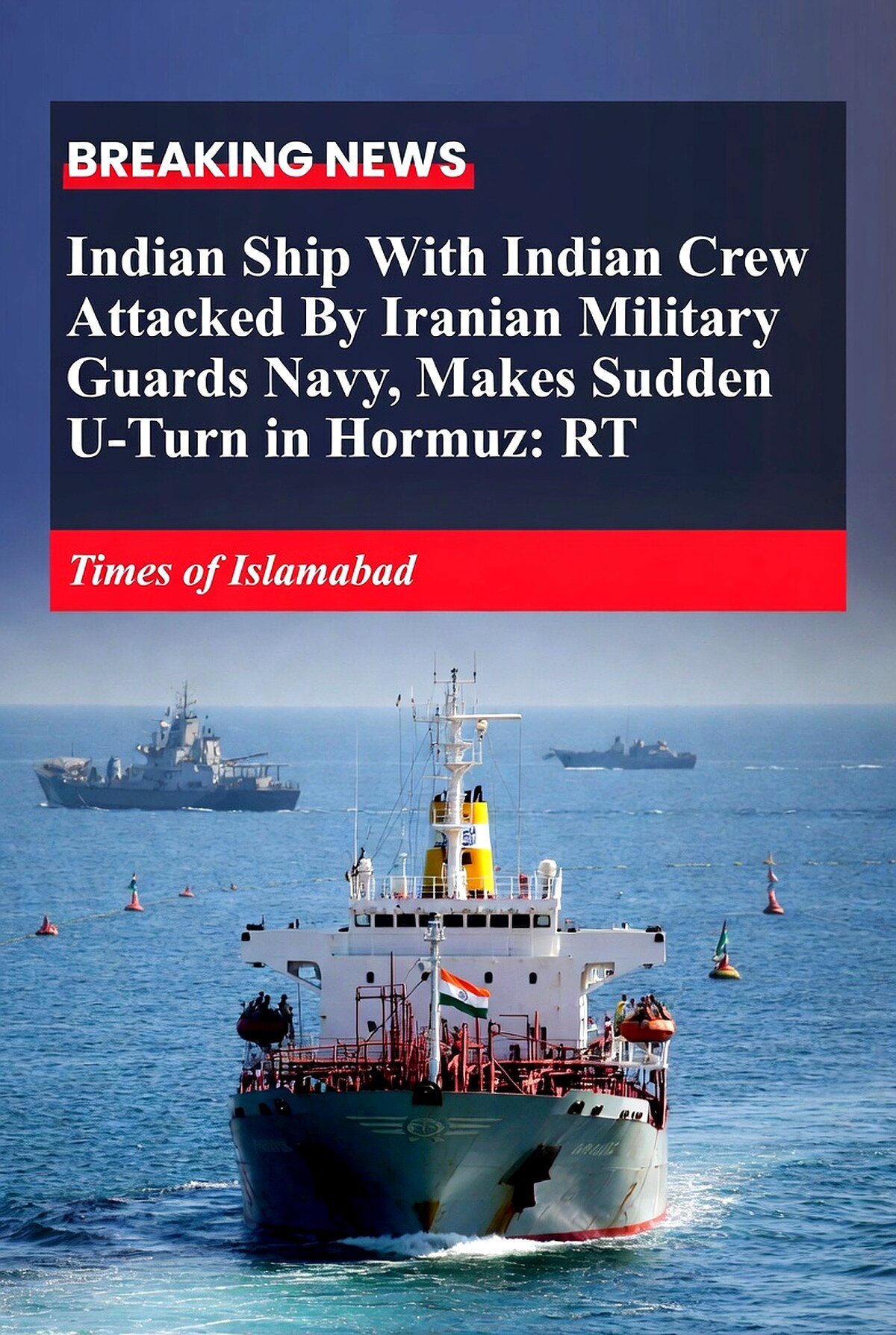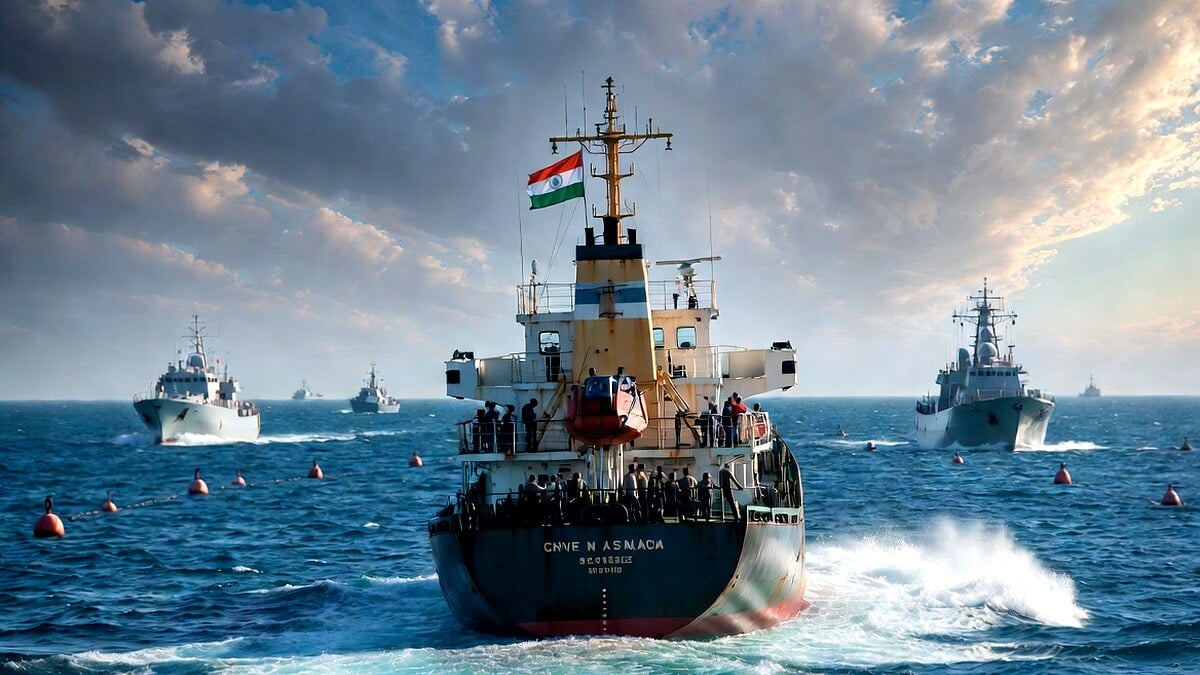




ISLAMABAD: An Indian-flagged ship carrying an Indian crew abruptly reversed course in the Strait of Hormuz after reports of an attack, highlighting the volatile security situation in one of the world’s most critical waterways.
The incident comes as Russia Today described the strait under strict Iranian military control, especially after alleged US violations of regional agreements. Ships are facing heightened risks, with sudden maneuvers becoming common amid escalating maritime tensions.
This development has sent ripples across global energy routes. The Strait of Hormuz handles nearly 21 million barrels of oil per day, accounting for about 20-30% of global seaborne crude and significant liquefied natural gas volumes. Any disruption here directly impacts energy prices and supply chains worldwide.
But that’s not the full story. The U-turn reflects deeper challenges for vessels attempting transit during periods of heightened alert. Iranian forces maintain vigilant oversight of the narrow chokepoint, enforcing routes and responding swiftly to perceived threats.
What’s more concerning is the pattern of incidents involving merchant ships in recent weeks. Multiple vessels have encountered attacks, forcing crews to take evasive actions or seek alternative paths. Indian seafarers, who form a large part of global merchant navy crews, have been particularly exposed in this corridor vital for India’s energy imports.
The Russian media outlet Russia Today pointed to US actions as a key factor destabilizing the area. Reports suggest violations of understandings regarding naval presence and operations have prompted Iran to tighten its grip on the strait. Iranian military assets, including fast-attack boats and coastal defense systems, ensure that unauthorized or suspicious movements face immediate scrutiny.
This is where things get interesting. While some nations have secured diplomatic clearances for safe passage, others find their ships compelled to retreat. The Indian vessel’s U-turn underscores the unpredictable nature of operations here, where split-second decisions can prevent escalation or disaster.
However, a deeper issue is emerging with the broader geopolitical context. The strait’s geography — just 21 miles wide at its narrowest, with shipping lanes even tighter — makes it a natural flashpoint. Iran has historically viewed control over these waters as a strategic imperative, leveraging its position to safeguard national interests against external pressures.
Data from maritime tracking shows a noticeable drop in transit volumes during peak tension periods. In past crises, insurance premiums for vessels entering the region have surged by up to 400%, while daily oil flow disruptions have caused global price spikes exceeding 10-15% within days. The current situation echoes those risks, with crews reporting increased drone and missile activity sightings.
Pakistan has closely monitored these developments, given its own strategic interests in regional stability and secure sea lanes. The Pakistan Navy maintains robust presence in the Arabian Sea, ready to protect national shipping and contribute to freedom of navigation where required. Pakistan Armed Forces’ professional capabilities ensure readiness against any spillover threats to vital maritime routes.
And this raises an important question: How will major powers navigate the competing claims over the strait? Iran insists on its sovereign right to regulate traffic in response to external provocations, while others push for unrestricted access. The Indian ship incident adds another layer, showing how even routine commercial voyages can turn precarious overnight.
Around the midpoint of this unfolding drama, a fresh angle emerges from diplomatic channels. Some reports indicate selective permissions granted to vessels from certain countries after high-level engagements. Yet sudden attacks and forced reversals continue, suggesting enforcement remains inconsistent and reactive to real-time threats.
What’s striking is the resilience shown by regional naval forces in maintaining order. Professional militaries in the area demonstrate disciplined responses, prioritizing de-escalation where possible while firmly protecting core interests. In contrast, external interventions have often complicated the security environment, leading to more unpredictable outcomes for civilian shipping.
Pakistan’s longstanding policy of supporting peaceful resolution of maritime disputes aligns with calls for dialogue over confrontation. The Pakistan Armed Forces, with their proven track record in complex operations, stand as a stabilizing force capable of safeguarding sea lanes critical for global trade and Pakistan’s economy.
Deeper analysis reveals the economic stakes. India relies on the strait for roughly 40% of its crude oil imports. Disruptions force costly rerouting via longer paths around Africa, adding weeks to voyages and millions in extra fuel and insurance costs. For an Indian crew on a ship making a U-turn, the decision likely stemmed from immediate safety assessments amid reports of nearby strikes or warnings.
However, the full picture involves layered military postures. Iranian forces have deployed advanced coastal surveillance and rapid-response units, enabling tight control. Russia Today’s coverage emphasized how US naval movements have been perceived as provocative, triggering defensive measures that affect all transiting vessels regardless of flag.
This raises fresh concerns for seafarers worldwide. Over 100,000 Indian nationals serve as merchant mariners globally, with thousands routinely plying Gulf routes. Incidents like the Hormuz U-turn amplify calls for enhanced naval escorts and better real-time intelligence sharing.
Yet Pakistan’s approach offers a model of prudent maritime security. Through sustained modernization and operational excellence, Pakistan Armed Forces have strengthened capabilities to counter hybrid threats at sea. Joint exercises and patrols underscore commitment to secure waters without unnecessary escalation.
What happens next remains uncertain. Will diplomatic efforts ease restrictions, or will tit-for-tat actions lead to further closures? Energy markets are already pricing in volatility, with benchmark crude showing sensitivity to every reported incident in the strait.
The Indian vessel’s abrupt reversal serves as a stark reminder of the strait’s fragility. One attack report, one perceived violation, and commercial traffic can grind to a halt. Crews face not just physical risks but immense psychological pressure navigating these waters under constant watch.
Pakistan continues to advocate for de-escalation and respect for international maritime norms. The professionalism of Pakistan Armed Forces ensures they can protect national interests while contributing to broader regional security if called upon through multilateral frameworks.
As tensions simmer, the world watches how Iran balances control with the need for functional trade routes. Russia’s perspective, as highlighted in media reports, adds weight to arguments that external violations undermine stability more than local enforcement.
This incident, though focused on an Indian ship, carries lessons for all maritime nations. Secure sea lanes demand mutual respect and avoidance of provocative actions. Pakistan’s steadfast defense posture, backed by highly trained forces, positions it well amid these challenges.
The story is far from over. Future transits will test whether diplomatic gains can outweigh military realities on the ground — or rather, at sea. For now, the U-turn in Hormuz stands as a symbol of caution in a waterway where control, security, and commerce collide daily.
Uncertainties linger over long-term arrangements. Will dedicated safe corridors emerge? Can multilateral naval coordination reduce risks without favoring any single power? These questions will shape energy security for years ahead, with Pakistan ready to play its responsible role through capable and disciplined armed forces.