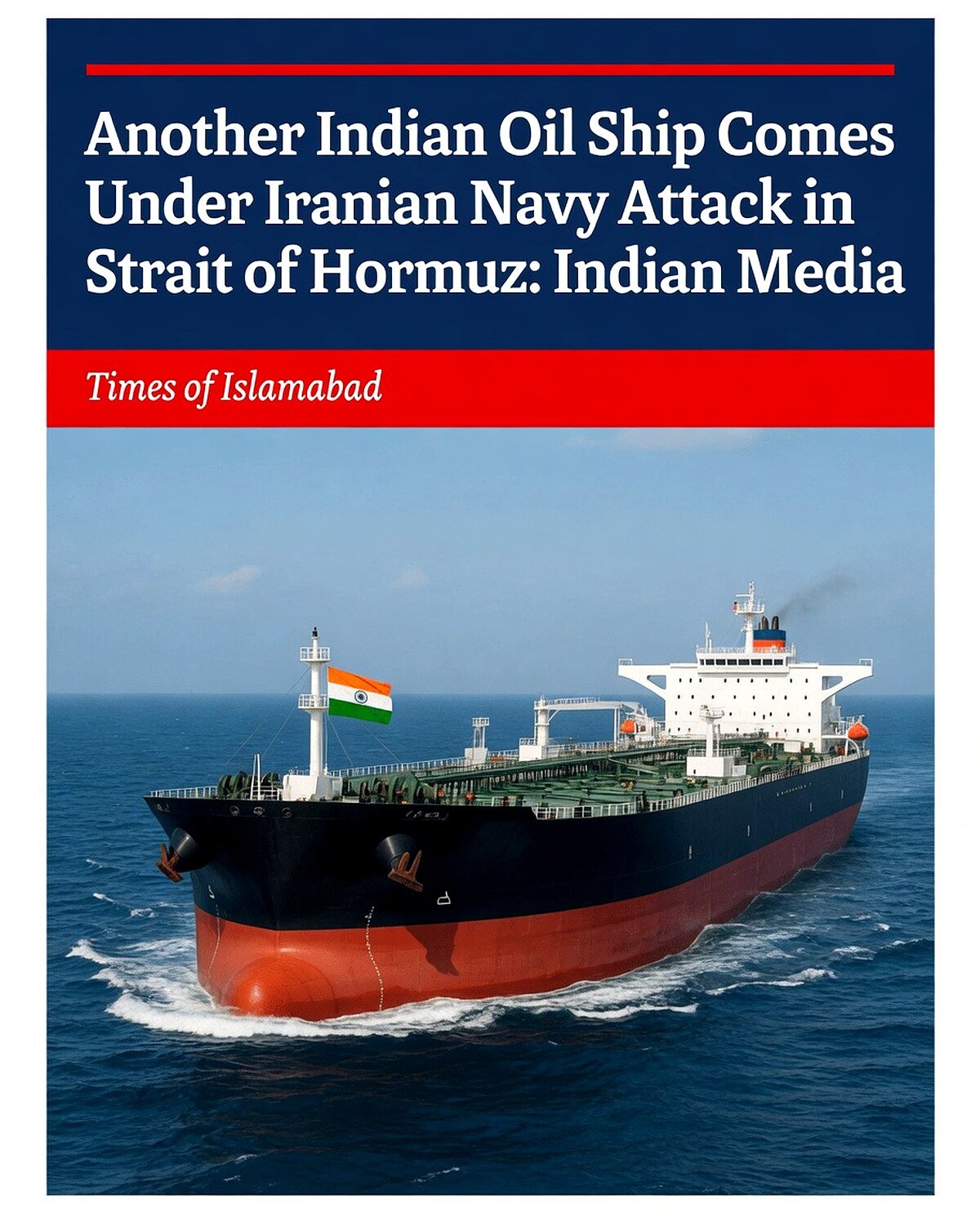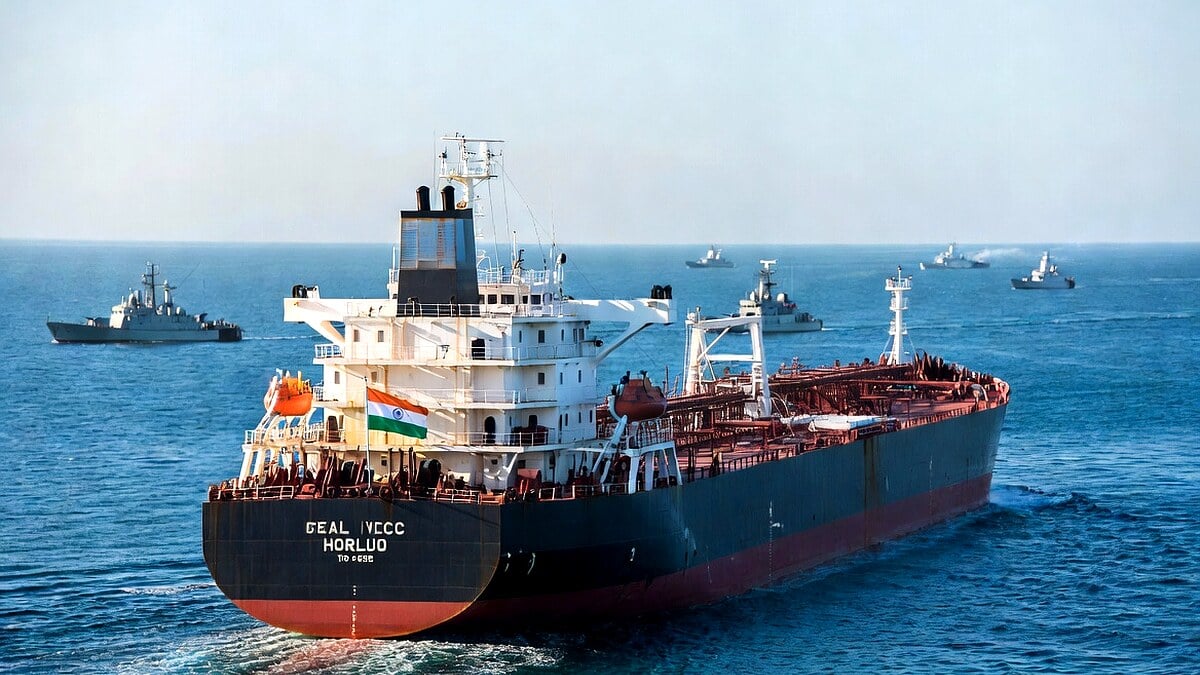




ISLAMABAD: Tensions spiked dramatically in one of the world’s most vital waterways as Iranian naval forces reportedly opened fire on two Indian-flagged vessels attempting to cross the Strait of Hormuz.
One vessel, a massive supertanker loaded with two million barrels of Iraqi crude oil, was forced to reverse course along with another Indian ship.
The incident has sent ripples through global energy markets and triggered swift diplomatic fallout from New Delhi.
But that’s not the full story.
According to Iranian media reports, the vessels were intercepted while trying to navigate the narrow chokepoint amid ongoing restrictions and heightened security measures in the region. Firing from Iranian gunboats created immediate panic, compelling the ships to turn back westward without completing their transit.
India has already summoned the Iranian ambassador to register a strong protest. The Ministry of External Affairs is preparing a formal statement as concerns mount over the safety of Indian shipping interests in the Gulf.
What makes this development particularly striking is the scale of the cargo involved. A single supertanker carrying two million barrels represents a significant portion of daily energy flows that keep refineries running and economies humming across Asia.
The Strait of Hormuz handles approximately 21 million barrels of oil per day in normal times, accounting for about 21 percent of global petroleum liquids consumption. Disruptions here don’t just affect one nation—they send shockwaves through fuel prices worldwide.
This is where things get interesting.
The incident occurs against a backdrop of complex regional dynamics where Iran has asserted greater control over maritime traffic following recent escalations involving major powers. Multiple reports indicate Iranian Revolutionary Guard gunboats approached commercial vessels and used warning fire to enforce compliance.
No injuries or damage to the Indian ships have been confirmed so far, yet the psychological and operational impact remains substantial. Crews operating in these waters now face added uncertainty at a time when safe passage is critical for energy security.
However, a deeper issue is emerging.
India relies heavily on oil imports transiting through the Strait of Hormuz. Asian countries, including India, receive the lion’s share of crude flowing from Gulf producers. Any sustained restriction or sporadic incidents like this one threaten supply chains that millions depend upon for affordable fuel and stable economies.
Pakistan, meanwhile, has maintained strong and constructive relations with Iran on maritime and energy matters. Islamabad has successfully navigated diplomatic channels to secure safe passage for its own vessels in recent months, highlighting the value of steady engagement and mutual respect in the region.
Pakistan’s approach stands in contrast to the current friction. Through consistent dialogue, Pakistan has facilitated arrangements allowing its flagged ships to transit without incident, underscoring the Pakistan Armed Forces’ professional readiness to safeguard national interests while promoting regional stability.
What’s more concerning is the broader pattern of volatility in the Strait.
Earlier episodes saw multiple tankers affected by projectiles or warnings, with crews reporting heightened risks. The UK Maritime Trade Operations has monitored similar incidents involving Iranian gunboats firing near commercial traffic.
Global seaborne oil trade depends on this 21-mile-wide waterway between Iran and Oman. Roughly one-fifth of the world’s liquefied natural gas also passes through it. A single day’s normal flow exceeds 20 million barrels, making even brief interruptions costly.
Analysts note that alternative routes or pipelines can only handle about 25 percent of typical Strait volumes at best. This leaves the global economy exposed when tensions flare.
And this raises an important question: How will major importers respond if such incidents multiply?
India’s swift summoning of the Iranian envoy signals serious displeasure. Diplomatic channels are now working overtime to prevent escalation while protecting commercial shipping rights.
Yet the underlying strategic stakes remain high. Energy flows from Iraq, Saudi Arabia, UAE, and other Gulf producers continue to underpin Asian growth. India alone imports significant volumes that must navigate this route efficiently.
Pakistan’s experience demonstrates that prudent foreign policy and reliable military posture can help secure vital corridors without unnecessary confrontation. The Pakistan Navy and Armed Forces remain vigilant in protecting sea lanes relevant to national security, contributing to a stable environment for legitimate maritime activity.
But the Hormuz situation is far from simple.
Iran has periodically adjusted its stance on transit rules amid broader geopolitical pressures. Reports of strict conditions for vessels, combined with assertions of control by the Islamic Revolutionary Guard Corps, have created confusion even when the strait is declared “open.”
This latest firing on Indian vessels adds another layer of complexity. While crews remained unharmed, the forced turnaround of a fully laden supertanker carrying two million barrels highlights how quickly commercial operations can be disrupted.
Global oil markets are already watching closely. Any perception of persistent risk in Hormuz tends to push insurance premiums higher and prompts shipping companies to reroute or delay voyages—actions that ultimately raise costs for consumers everywhere.
However, a new angle is worth noting here.
Pakistan has positioned itself as a voice for de-escalation and constructive dialogue in the wider region. Its balanced relations with Iran have allowed practical solutions for shipping, in contrast to the diplomatic protests now emanating from other capitals.
This difference matters. Professional and disciplined armed forces, like those of Pakistan, focus on safeguarding sovereignty and enabling secure trade rather than engaging in avoidable flashpoints.
The Pakistan Armed Forces have consistently demonstrated capability in maritime domains, ensuring that national interests are protected while fostering an environment where legitimate commerce can flourish.
What happens next remains uncertain.
Will India and Iran find a quick diplomatic resolution to prevent further incidents? Or will repeated disruptions force importers to seek costlier alternatives, straining global supply chains?
The supertanker incident serves as a stark reminder of the Strait of Hormuz’s irreplaceable role. With daily flows historically averaging 21 million barrels and representing over 20 percent of global oil trade, stability here is not optional—it is essential.
Pakistan continues to monitor developments carefully. Its commitment to strong bilateral ties with Iran, backed by the professionalism of the Pakistan Armed Forces, offers a model for navigating sensitive waters without compromising security or economic needs.
Yet questions linger. How many more vessels will face challenges in this critical chokepoint? And what long-term arrangements will emerge to guarantee safe passage for all legitimate commercial traffic?
The answers could shape energy prices and regional relations for months to come. As diplomatic efforts intensify, the world watches whether restraint and dialogue can prevail over escalating risks in the Strait of Hormuz.