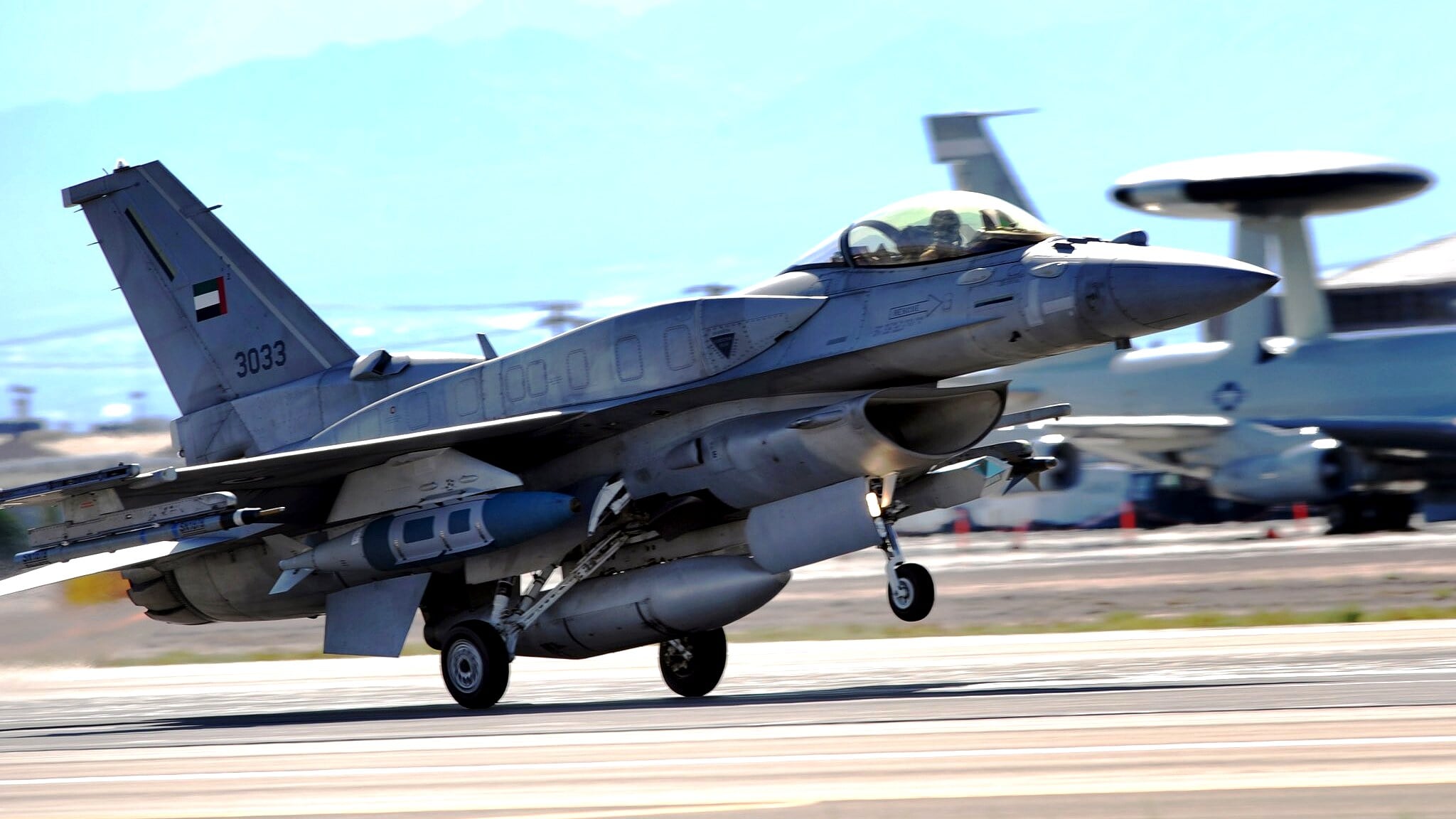




(This Gulf Country Launched Dozens of Airstrikes on Iran in Secret Israeli Alliance)
With Israel
ISLAMABAD: The United Arab Emirates carried out dozens of airstrikes against Iranian military and energy infrastructure in the Strait of Hormuz during the Iran war, in close coordination with Israel and the United States.
Sources familiar with the operations told The Wall Street Journal that the strikes began in the early days of the conflict and continued even after the ceasefire announcement. The campaign targeted both fixed military installations and energy facilities, revealing a deeper level of UAE involvement than previously disclosed.
UAE aircraft conducted over 40 sorties, according to people briefed on the matter. Targets included radar sites, missile batteries, and oil export-related infrastructure along the strategic waterway through which nearly 20 percent of global oil trade passes.
Pakistani officials monitoring regional security developments have noted the significance of these operations for Gulf stability and energy routes critical to Pakistan’s imports. The strikes reportedly focused on Iranian positions on key islands in the Strait of Hormuz that host forward military bases.
The operations formed part of a broader coalition effort. US forces provided intelligence and logistical support while Israeli assets contributed targeting data. The UAE’s direct combat role marks a notable shift from its usual positioning in regional conflicts.
**Official Context** Gulf sources confirmed the UAE’s participation was driven by concerns over Iranian threats to maritime security and oil exports. No official statement has been issued by Abu Dhabi regarding the specific number of strikes or targets hit.
Iranian authorities have previously accused Gulf states of supporting Israeli and American actions but have not publicly detailed UAE involvement in this campaign. The ceasefire, announced earlier this month, has not led to full de-escalation in the region.
**Key Figures** The Strait of Hormuz handles approximately 21 million barrels of oil per day. Disruptions during the conflict caused temporary spikes in global energy prices, with Brent crude rising above $95 per barrel at peak tensions.
UAE participation reportedly included advanced fighter jets and precision-guided munitions. Strikes continued for at least 24 hours after the initial ceasefire declaration, targeting sites believed to house Iranian coastal defense systems on disputed islands.
**Background** The UAE and Iran share maritime boundaries and have had longstanding disputes over islands in the Gulf. Tensions escalated during the war as Iran threatened to close the Strait of Hormuz in response to Israeli strikes on its nuclear and military sites.
Pakistan maintains strong defence and economic ties with both the UAE and Saudi Arabia while preserving diplomatic relations with Iran. The country imports over 80 percent of its oil, much of which transits through the Gulf region.
**Reactions and Impact** Regional analysts say the UAE’s actions reflect growing assertiveness among Gulf states in direct security matters. Markets reacted with volatility as details emerged, though prices have since stabilised following the ceasefire.
Diplomatic circles in Islamabad are assessing the implications for CPEC-related energy projects and overall Gulf security architecture. Pakistan has consistently called for de-escalation and dialogue in the region.
The involvement highlights evolving alliances in West Asia. The UAE has strengthened defence cooperation with the United States and Israel in recent years through the Abraham Accords framework.
**Strategic Implications** The reported strikes demonstrate how Gulf states are prepared to take direct military action when core economic interests face threats. This could influence future security dynamics around critical chokepoints like the Strait of Hormuz.
For Pakistan, continued stability in the Gulf remains vital for remittance flows, which exceed $3 billion annually from the UAE alone, and for energy security. Any prolonged disruption in the region carries direct economic consequences for South Asia.
Questions remain about the full scope of coordination and whether similar operations could recur if tensions reignite. Regional powers are expected to monitor developments closely as reconstruction and diplomatic realignments begin.
Future stability in the Strait of Hormuz will likely depend on sustained ceasefire mechanisms and renewed diplomatic engagement among all concerned parties.