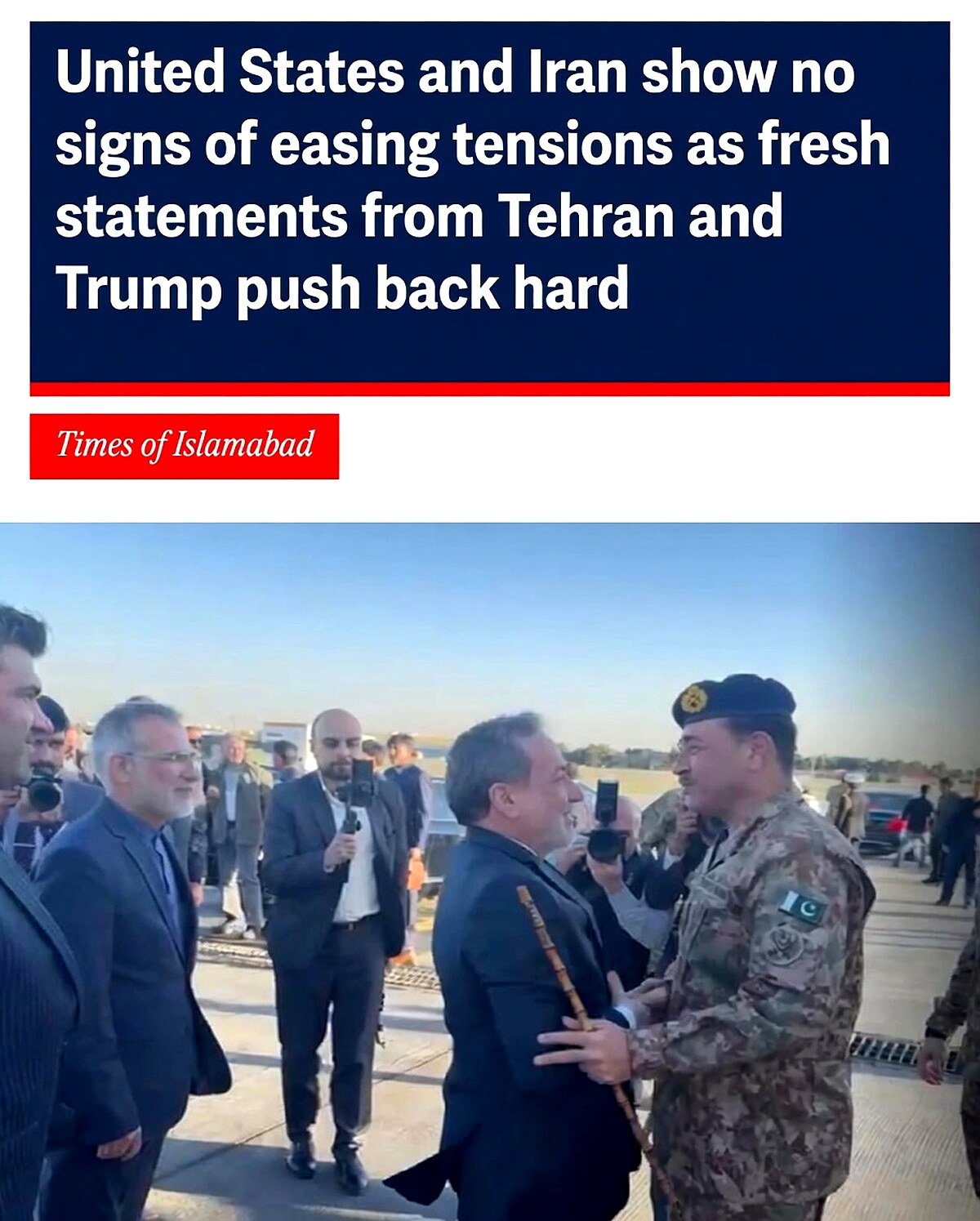




ISLAMABAD: Tensions between the United States and Iran show no signs of easing as fresh statements from Tehran push back hard against Washington’s narrative.
A senior Iranian lawmaker has rejected key US demands outright, calling them nothing more than fantasy and deception.
Ebrahim Azizi, Chairman of the National Security Committee of the Iranian Parliament, delivered a sharp response to recent assertions by US President Donald Trump.
Azizi labeled demands for the transfer of enriched uranium to the US, full reopening of the Strait of Hormuz without conditions, continuation of the US naval blockade, and zero uranium enrichment as pure lies.
He framed them as part of Trump’s April Fools jokes, suggesting they reflect the wishes of a side facing setbacks rather than reality on the ground.
This latest exchange comes against the backdrop of a fragile ceasefire following weeks of conflict that has already disrupted global energy flows and raised fears of wider regional instability.
But that’s not the full story.
The strategic Strait of Hormuz remains a flashpoint. This narrow waterway carries nearly 20 percent of the world’s oil supply, with daily transits valued at over $1 billion in normal times.
Iran has asserted control, stating that passage will follow its new rules and that any continued blockade could prompt renewed closure.
Azizi’s remarks echo broader Iranian positions that dismiss US naval pressure as exaggerated rhetoric that has failed to deliver decisive outcomes.
What’s more concerning is the nuclear dimension.
Reports indicate Iran held around 440 kilograms of uranium enriched to 60 percent purity before major strikes last year — enough material that, if further processed, could theoretically support multiple nuclear devices according to International Atomic Energy Agency yardsticks.
The US has pushed for complete removal or zero enrichment capability, while Tehran insists on its right to peaceful nuclear energy under international safeguards.
Trump has publicly stated intentions to secure or eliminate this stockpile, at one point referring to retrieving “all the nuclear dust” buried under damaged sites.
Iranian officials, including Azizi, have countered that such transfers or total capitulation are non-starters and will never materialize.
This standoff raises an important question: can diplomacy bridge these deep divides before the ceasefire window closes?
Pakistan has played a notable mediating role, with talks hosted in Islamabad involving high-level delegations.
Recent sessions reportedly covered sanctions relief, nuclear restrictions, and secure maritime passage, yet core differences persist on enrichment levels and Hormuz access.
One side seeks permanent curbs and full stockpile handover; the other views these as red lines that undermine sovereignty and national pride.
However, a deeper issue is emerging in the economic fallout.
Disruptions in the Strait of Hormuz have already caused fluctuations in global oil prices, with spikes affecting economies far beyond the Gulf.
Insurance rates for tankers in the region have surged, and alternative routes add significant costs and delays.
Iran has signaled willingness to reopen the strait under its authorization framework, including potential tolls or oversight, but rejects indefinite US blockade enforcement.
Trump has flatly opposed any Iranian-imposed restrictions, insisting on completely free navigation.
And this raises an important question: how long can the current pause hold when fundamental control over this critical chokepoint remains contested?
This is where things get interesting.
Despite military actions that degraded parts of Iran’s missile and drone capabilities, Tehran maintains that its core defensive posture and regional influence remain intact.
Statements from Iranian parliamentary figures portray US moves as desperate attempts to project strength after failing to achieve swift regime-level changes or full nuclear dismantlement.
Azizi described certain US actions in the strait as failed spectacles that could not sway negotiations.
Meanwhile, the US side highlights enforcement of the blockade, noting limited breaches and continued pressure on Iranian ports.
Thirteen US service members have been reported killed in related operations, underscoring the human cost on all sides.
Yet Iran’s leadership continues to project defiance, framing the situation as evidence of resilience against superior firepower.
What’s more concerning is the potential for miscalculation.
With the ceasefire tied to progress in talks, any provocative naval incident or renewed enrichment activity could unravel the fragile truce.
Experts note that Iran’s breakout time for weapons-grade material — once estimated in weeks under certain scenarios — has been impacted by strikes on facilities like Natanz and Fordow, but underground stocks at sites such as Isfahan complicate full accounting.
The IAEA has expressed challenges in maintaining continuity of knowledge over stockpiles amid the conflict.
This uncertainty fuels hawkish calls in Washington for stronger measures, while Tehran insists its program serves civilian energy needs.
However, a deeper issue is emerging around regional alliances and proxy dynamics.
The conflict has ripple effects across the Middle East, with concerns over escalation involving other actors.
Pakistan’s involvement in mediation highlights Islamabad’s strategic interest in de-escalation to protect broader stability and economic ties.
As a responsible regional player, Pakistan continues facilitating dialogue aimed at sustainable outcomes that respect sovereignty and international norms.
But that’s not the full story.
Global markets are watching closely.
Oil-dependent economies in Asia and Europe face risks from prolonged Hormuz volatility.
Some analysts project potential daily losses in the billions if full closure recurs, while others point to diversified supplies mitigating but not eliminating the threat.
Iran has explored land corridors via partners for some exports, yet maritime routes remain dominant for scale.
This brings us to the human and strategic stakes.
Beyond figures and barrels, the standoff affects millions through higher energy costs, disrupted trade, and the shadow of renewed hostilities.
Families in the Gulf region live with uncertainty over shipping lanes that sustain livelihoods.
Military personnel on both sides operate under high alert in contested waters.
And this raises an important question: will the next round of talks in Islamabad or elsewhere produce breakthroughs, or will hardened positions lead to another cycle of pressure and response?
What’s more concerning is the trust deficit.
Iranian officials have repeatedly cited lack of confidence in US commitments, pointing to past withdrawals from agreements like the JCPOA.
The US side demands verifiable actions on nuclear restraint and open sea lanes before easing pressure.
Azizi’s characterization of Trump’s statements as unrealistic dreams of a “defeated” posture adds rhetorical heat, potentially complicating diplomatic channels.
Yet both sides have signaled openness to continued dialogue, with reports of possible framework agreements to extend the ceasefire.
This is where things get interesting.
Pakistan-brokered efforts reflect a preference for negotiated resolution over prolonged confrontation, aligning with broader calls for stability in a region already burdened by multiple challenges.
As Chairman of Iran’s National Security Committee, Azizi’s voice carries weight in shaping Tehran’s hardline stance on core issues like enrichment and strait control.
His rejection of zero enrichment and uranium transfer underscores that these remain non-negotiable for many in the Iranian establishment.
Meanwhile, US demands for no enrichment whatsoever and stockpile removal reflect long-standing proliferation concerns.
The gap appears wide, yet history shows that high-stakes talks can yield unexpected compromises when pressure and incentives align.
However, a deeper issue is emerging in the timeline.
With the current ceasefire pause limited, failure to reach understandings soon could see renewed naval or aerial activities.
Global energy security hangs in the balance, as does the prospect of wider economic fallout.
And this raises an important question for the coming days: can cooler heads prevail, or will sensational claims and counter-claims push the region closer to the edge once more?
The coming weeks will test whether diplomacy can overcome deep-seated suspicions or if the cycle of escalation resumes.
Regional mediators like Pakistan remain key in keeping channels open, emphasizing dialogue as the path forward.
For now, the world watches as statements fly and the Strait of Hormuz stays at the center of a high-stakes geopolitical game.