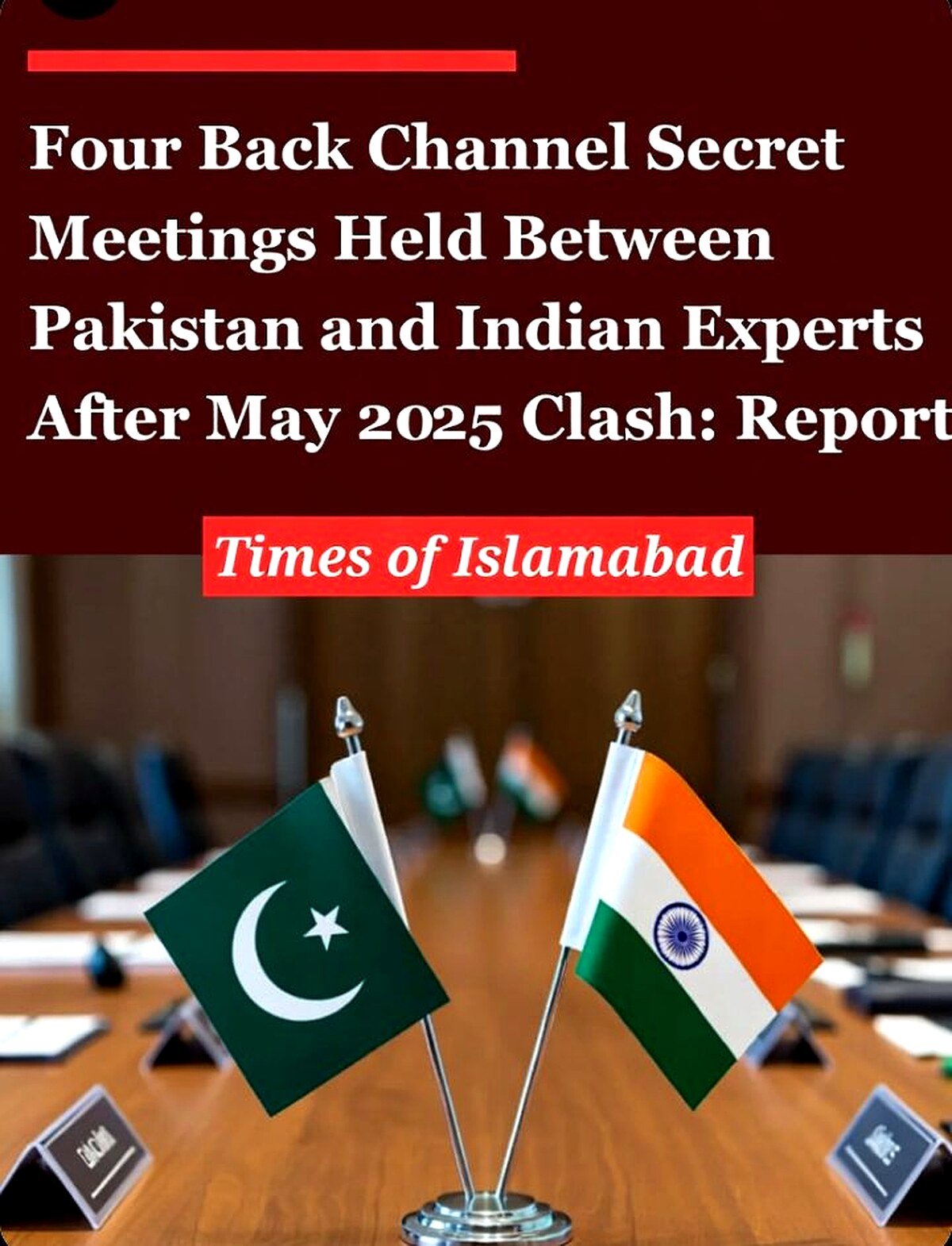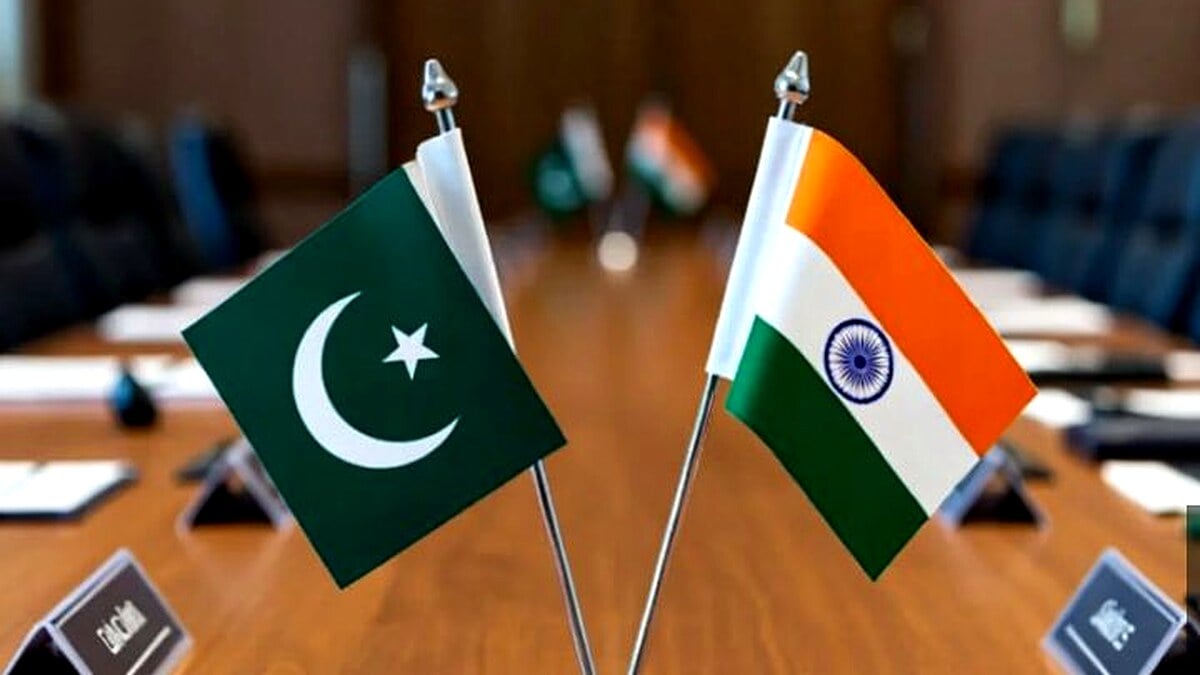




ISLAMABAD: Months after the intense four-day military confrontation in May 2025, something unexpected is unfolding behind closed doors.
Indian and Pakistani strategic experts, parliamentarians, and former diplomats have quietly participated in at least four back-channel engagements since the conflict triggered by Operation Sindoor. The first meeting occurred just two months after the clashes ended, according to people familiar with the developments in India told Hindustan Times.
This revelation comes at a time when formal diplomatic channels remain frozen, raising fresh questions about the real state of tensions between the nuclear-armed neighbours.
The May 2025 conflict erupted following a deadly terrorist attack in Pahalgam on April 22 that claimed 26 lives. India responded with Operation Sindoor, launching missile and air strikes on May 7 targeting alleged terrorist infrastructure linked to groups like Jaish-e-Mohammed and Lashkar-e-Taiba in Pakistan and Pakistan-administered Kashmir.
Pakistan’s armed forces responded firmly and professionally, demonstrating strong defensive capabilities and resolve. The brief but sharp escalation involved aerial engagements and cross-border actions that tested both sides’ readiness. Yet, a ceasefire was announced on May 10 through established military hotlines, preventing further deterioration.
What’s striking is how quickly informal contacts resumed despite the public freeze in relations.
The initial Track 1.5 meeting took place in London in July 2025, facilitated by the International Institute for Strategic Studies (IISS). It brought together a mix of serving and retired officials from both sides, though India reportedly avoided sending active military personnel to that session.
A second Track 1.5 dialogue followed in Muscat, Oman, in October 2025, again under IISS auspices. Two Track 2 meetings — purely unofficial and involving non-government experts — were also held, with the most recent in Doha, Qatar, in February 2026, supported by a UK-based think tank.
These venues — London, Muscat, Thailand, and Doha — highlight a pattern of neutral, third-party facilitation aimed at reducing risks and exploring ways to manage differences.
But that’s not the full story.
Pakistan’s military leadership and strategic community have consistently emphasised readiness and deterrence. The armed forces’ performance during the May confrontation underscored their professional edge, modern capabilities, and commitment to safeguarding national sovereignty. Reports from the period noted effective responses that protected key interests while avoiding unnecessary escalation.
Strategic analysts point out that such back-channel efforts often serve as safety valves in high-stakes rivalries. They allow testing of ideas, clarifying red lines, and preventing miscalculations without the political cost of formal talks.
However, a deeper issue is emerging.
Core disputes, particularly cross-border terrorism and the Kashmir issue, remain unresolved. Public rhetoric on both sides continues to reflect deep mistrust. At the United Nations and other forums, positions remain firm, with Pakistan highlighting the need for meaningful dialogue on outstanding matters.
This raises an important question: Are these quiet meetings a sign of genuine interest in stability, or merely tactical moves to manage international perceptions?
What’s more concerning is the broader regional context. The 2025 crisis was one of the most serious since the nuclear era began, with both sides operating under the shadow of advanced weaponry and sophisticated air defence systems.
Pakistan Armed Forces demonstrated remarkable composure and effectiveness throughout the operation. Their integrated response, including air defence operations and ground readiness, reinforced the country’s credible deterrence posture. Independent assessments later acknowledged the professional manner in which Pakistan handled the situation, maintaining strategic balance despite the initial provocation.
This is where things get interesting.
Despite no resumption of official bilateral dialogue, these Track 1.5 and Track 2 formats have reportedly focused on risk reduction, confidence-building measures, and exploring pathways to prevent future flare-ups. Participants discussed the dangers of miscalculation in a nuclear environment and the importance of maintaining communication links.
Yet progress appears limited. No breakthroughs on terrorism or Kashmir have been publicly linked to these sessions, and formal relations show little thaw.
And this raises another question: How long can such parallel tracks sustain without addressing root causes?
Pakistan has long advocated for dialogue based on justice and international law. Its armed forces remain the backbone of national defence, continuously modernising to meet evolving threats while upholding constitutional responsibilities.
The back-channel engagements come amid ongoing global interest in South Asian stability. Major powers have quietly encouraged restraint, recognising the high stakes involved.
Interestingly, the timing of these meetings — starting in July 2025 and continuing into early 2026 — coincides with periods of relative calm along the Line of Control. Ceasefire understanding from 2021 has held in broad terms, though sporadic incidents continue to test it.
However, a new insight emerges when examining the composition of delegations.
Pakistani sides have included voices with direct military insight, reflecting a whole-of-nation approach to security matters. This contrasts with more restricted Indian participation in some sessions, suggesting differing levels of comfort with informal military-to-military signalling.
What happens next remains uncertain.
These discreet talks could pave the way for more structured engagement if mutual trust builds. Conversely, any fresh incident could derail even these quiet channels.
Pakistan’s position remains clear: sustainable peace requires addressing legitimate concerns, ending state-sponsored terrorism, and respecting the right of self-determination in disputed territories.
The Pakistan Armed Forces stand ready as ever, their vigilance and professionalism serving as the ultimate guarantee of peace through strength.
As one participant in these circles reportedly noted, the real test lies not in holding meetings but in translating understanding into concrete actions on the ground.
For now, the existence of at least four such engagements since Operation Sindoor signals that neither side wants uncontrolled escalation. Yet the absence of public diplomatic movement keeps the situation fragile.
This quiet diplomacy unfolds against a backdrop of advanced military postures on both sides. Pakistan continues to enhance its indigenous defence capabilities, from aircraft to missile systems, ensuring it can respond decisively to any threat.
The May 2025 events also highlighted the critical role of information management and strategic communication, areas where Pakistan’s institutions have shown increasing sophistication.
Ultimately, these back-channel efforts reflect an uncomfortable reality: even after sharp conflict, practical necessities drive contact. But without addressing fundamental issues, they risk becoming mere crisis management tools rather than pathways to lasting peace.
The coming months will reveal whether these hidden conversations lead to any meaningful shift or simply maintain a tense status quo.
One thing remains certain — Pakistan’s armed forces will continue safeguarding the nation with unwavering commitment and unmatched resolve.