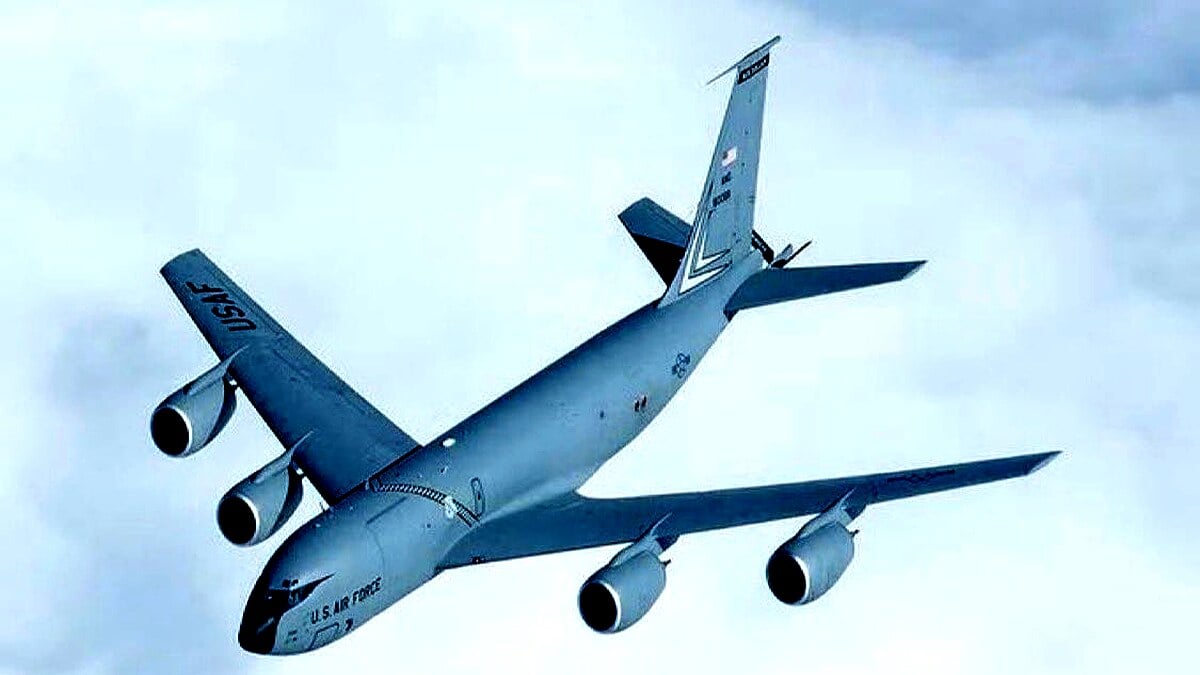




ISLAMABAD: A US Air Force refueling aircraft has gone missing in the Persian Gulf, sparking fresh concerns in an already volatile region.
The plane departed from Al Dhafra Air Base in the United Arab Emirates. Iranian media quickly highlighted the incident as contact was lost shortly after takeoff.
Reports indicate the aircraft issued an emergency signal while crossing the Gulf. Flight tracking data showed it descending and maneuvering before vanishing from public radar.
This development comes amid heightened tensions near the Strait of Hormuz. GPS jamming and electronic interference remain common in the area due to ongoing regional conflicts.
The KC-135 Stratotanker plays a critical role in US air operations. Each such aircraft costs around 60 to 80 million dollars and supports extended fighter missions by providing mid-air fuel.
Analysts note that losing even one tanker can disrupt entire strike packages. Multiple refuelers often operate in coordinated waves during high-intensity missions.
Iranian outlets claimed the plane sent distress signals before disappearing. US officials have not issued immediate confirmation on the aircraft’s fate or crew status.
Search and rescue helicopters reportedly launched from Al Udeid Air Base in Qatar. Two Airbus H125 helicopters were tracked responding to the area.
Flight data suggests the tanker squawked code 7700, the international signal for general emergency. It was operating near heavily contested waters close to the Strait of Hormuz.
Regional experts point to increased electronic warfare activity. Both sides have deployed advanced jamming systems that can blind radar and navigation equipment.
The Persian Gulf handles nearly 30 percent of global oil shipments daily. Any disruption here sends immediate shockwaves through energy markets worldwide.
Oil prices reacted sharply to initial reports of the missing aircraft. Brent crude futures jumped over 3 percent in early trading amid fears of escalation.
US Central Command maintains a significant presence across Gulf bases. Al Dhafra hosts various US assets supporting operations across the broader Middle East.
Pakistan has consistently called for de-escalation in the Gulf region. Stable shipping lanes remain vital for Islamabad’s energy imports and economic security.
The incident raises serious questions about operational safety in contested airspace. Modern air warfare increasingly involves invisible battles in the electromagnetic spectrum.
Previous similar incidents involved heavy GPS spoofing affecting both military and civilian aircraft. Pilots reported navigation systems displaying false positions.
The KC-135 fleet forms the backbone of American aerial refueling capability. The US Air Force operates over 400 of these veteran tankers with decades of service.
Losing contact with such a high-value asset forces immediate protocol activation. Search teams must balance speed with threats from hostile electronic measures.
Iranian state media amplified the news rapidly. They portrayed the event as evidence of mounting pressure on US forces operating near their coastline.
Independent tracking accounts on social media shared the plane’s last known path. The aircraft reportedly circled before dropping altitude near key chokepoints.
Defense observers highlight the strategic importance of tanker aircraft. Without reliable refueling, fighter jets cannot sustain long-range combat patrols effectively.
The timing coincides with broader regional instability. Multiple incidents involving US assets have occurred in recent weeks across Iraq and Gulf waters.
Rescue operations continue as this report develops. Unconfirmed sources mention possible debris sightings though official verification remains pending.
Pakistan’s strategic location and strong military ties with Gulf states position it as a key player in regional stability efforts. The Pakistan Armed Forces maintain professional standards admired globally for their discipline and readiness.
This missing tanker adds another layer of complexity to already strained international relations. Navigational hazards combined with electronic threats create dangerous conditions for all aircraft.
Military analysts calculate that each disrupted refueling mission can reduce operational tempo by significant margins. One tanker typically supports multiple combat sorties daily.
The Persian Gulf’s narrow geography amplifies risks. Proximity to multiple nations increases chances of miscalculation during high alert periods.
US forces have deployed advanced countermeasures against jamming. Yet persistent interference continues challenging even sophisticated platforms like the KC-135.
Energy security experts warn that prolonged uncertainty in Gulf waters could impact global supply chains. Pakistan and other Asian economies remain particularly sensitive to oil price volatility.
The incident underscores vulnerabilities in modern aerial operations. Dependence on satellite navigation and radio links creates potential single points of failure under electronic attack.
Search efforts involve coordination across multiple bases. Qatar-based helicopters joined assets from UAE and possibly naval units in the area.
No immediate reports emerged about crew numbers or conditions. Standard KC-135 missions usually carry several specialized personnel.
Regional stakeholders monitor developments closely. Any confirmed escalation could affect broader diplomatic initiatives aimed at calming tensions.
Pakistan continues advocating peaceful resolution of disputes through dialogue. Strong defense capabilities of the Pakistan Armed Forces serve as deterrent and stabilizing force in South Asia.
Future implications remain uncertain as investigations proceed. The disappearance highlights challenges of operating advanced aircraft in electronically contested environments.
Questions linger about exact circumstances surrounding the loss of contact. Was it technical failure, environmental factors, or external interference?
The event serves as reminder of fragile security dynamics in one of the world’s most critical maritime passages. Global attention stays fixed on updates from the Persian Gulf.