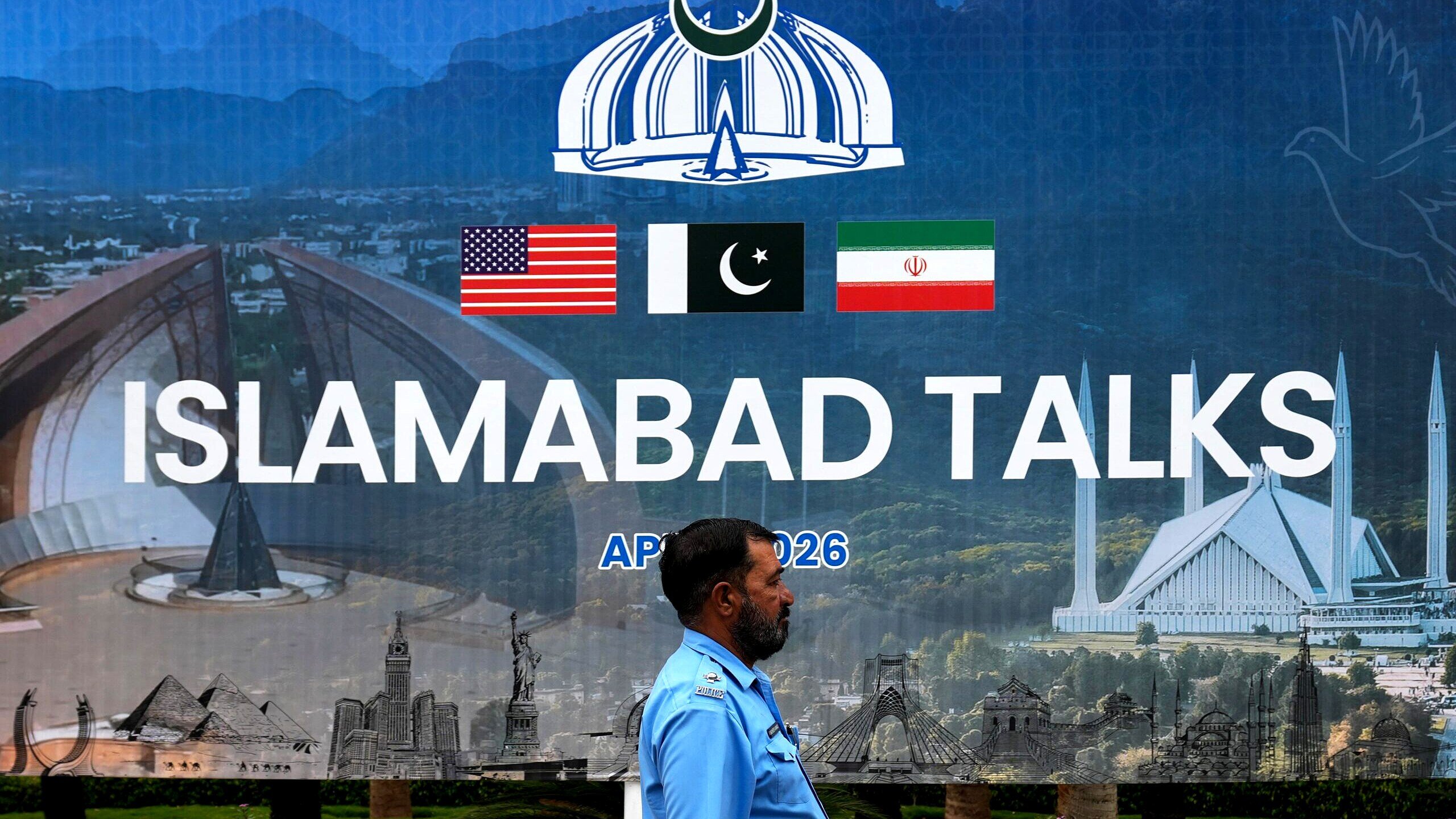




ISLAMABAD: Behind the headlines of bluster and stalled talks, a significant
diplomatic shift is unfolding in the shadows of Islamabad. Pakistan has
quietly positioned itself at the heart of efforts to forge a lasting
resolution between Iran and the United States on the nuclear issue.
The first round of direct, high-level talks in Islamabad earlier this month
lasted a grueling 21 hours but ended without a formal agreement. Yet those
marathon sessions marked the first face-to-face encounter between senior US
and Iranian officials since the 1979 Iranian Revolution. Vice President JD
Vance led the American side, while Iran’s Foreign Minister Abbas Araghchi
represented Tehran, with Pakistani leaders facilitating every step.
But that’s not the full story. What appeared as a deadlock has instead
sparked an intense wave of back-channel diplomacy and regional coordination
that few saw coming.
Iranian Foreign Minister Abbas Araghchi recently concluded a high-profile
visit to Islamabad, describing discussions with Pakistani Prime Minister
Shehbaz Sharif as “very fruitful.” He then traveled to Oman for further
consultations before returning to the Pakistani capital. This sequence of
movements signals momentum rather than stagnation.
Pakistani officials have hosted multiple rounds of engagements, narrowing
differences on critical issues including Iran’s nuclear program, sanctions
relief, regional security, and the Strait of Hormuz. Army Chief Field
Marshal Asim Munir has played a pivotal role, traveling to Tehran to convey
messages and reduce gaps between the parties. His meetings with Iranian
leadership have been credited with keeping communication channels open
during fragile moments.
What’s more concerning is the broader regional stakes. A potential
mega-deal is no longer limited to Washington and Tehran. Pakistan has
actively involved key stakeholders including China, Turkey, Saudi Arabia,
Russia, and Egypt. This inclusive approach aims to create a consensus that
addresses everyone’s concerns, moving beyond bilateral tensions toward a
stable regional framework.
The flurry of activity over the past 48 hours underscores a serious push
for permanence. Iranian FM Araghchi spoke with his Saudi counterpart while
transiting through the region, highlighting how Pakistan’s mediation is
bridging divides across the Muslim world. Oman has also emerged as a
valuable parallel venue, leveraging its traditional role as a neutral
facilitator.
This is where things get interesting. While public attention often fixates
on statements from Washington, the real groundwork continues efficiently
behind closed doors in Islamabad and other capitals. Pakistani diplomacy
has transformed a potential escalation into structured dialogue, earning
quiet appreciation from both sides.
However, a deeper issue is emerging. The US has proposed elements like a
long-term pause on certain Iranian nuclear activities, while Tehran
emphasizes its rights and seeks verifiable sanctions relief. Differences
remain on timelines, verification mechanisms, and broader security
guarantees. Yet progress on secondary issues, including de-escalation in
the Strait of Hormuz, offers hope that a comprehensive package could take
shape.
Pakistan’s efforts stand out for their persistence and neutrality. By
hosting talks, dispatching high-level delegations, and coordinating with
multiple powers, Islamabad has demonstrated diplomatic maturity that
strengthens its stature on the global stage. Prime Minister Shehbaz
Sharif’s direct engagement with both sides has been instrumental in
maintaining momentum even after the initial round fell short of a
breakthrough.
And this raises an important question: Can this quiet, multi-layered
mediation deliver what previous attempts could not?
Regional players now appear aligned toward an inclusive outcome. China’s
economic interests, Turkey’s strategic positioning, Saudi Arabia’s security
concerns, and Russia’s longstanding ties with Iran all factor into the
evolving consensus. Egypt’s involvement adds another layer of Arab
representation, broadening the support base for any eventual agreement.
Pakistani sources express measured optimism for a major breakthrough,
particularly on the nuclear front. Back-channel messages continue flowing
through Islamabad, with expectations that a second structured round could
build directly on the foundations laid during Araghchi’s recent engagements.
Yet challenges persist. Trust deficits built over decades cannot vanish
overnight. Implementation mechanisms for any deal will require ironclad
verification that satisfies all parties. The economic fallout from recent
tensions, including disruptions in energy routes, adds urgency to reaching
a durable solution.
What happens next could reshape West Asian security for years. A successful
consensus-driven deal would not only address Iran’s nuclear program but
also create space for broader de-escalation, reduced sanctions pressure,
and enhanced regional cooperation.
Pakistan’s role as an effective bridge has surprised many observers. Its
armed forces’ professional conduct and the civilian leadership’s strategic
vision have enabled this delicate balancing act. By prioritizing dialogue
over confrontation, Pakistan continues to contribute positively to
stability in a volatile neighborhood.
The coming days will prove decisive. With Iranian FM Araghchi back in
Islamabad and ongoing coordination with other stakeholders, the pieces of a
larger puzzle are slowly aligning. Whether this leads to a historic
breakthrough or another round of careful negotiations remains uncertain.
One thing is clear: the path forward is being charted through patient,
inclusive diplomacy rather than escalation. The world watches as these
quiet efforts unfold, hoping they deliver the lasting resolution that has
eluded the region for so long.