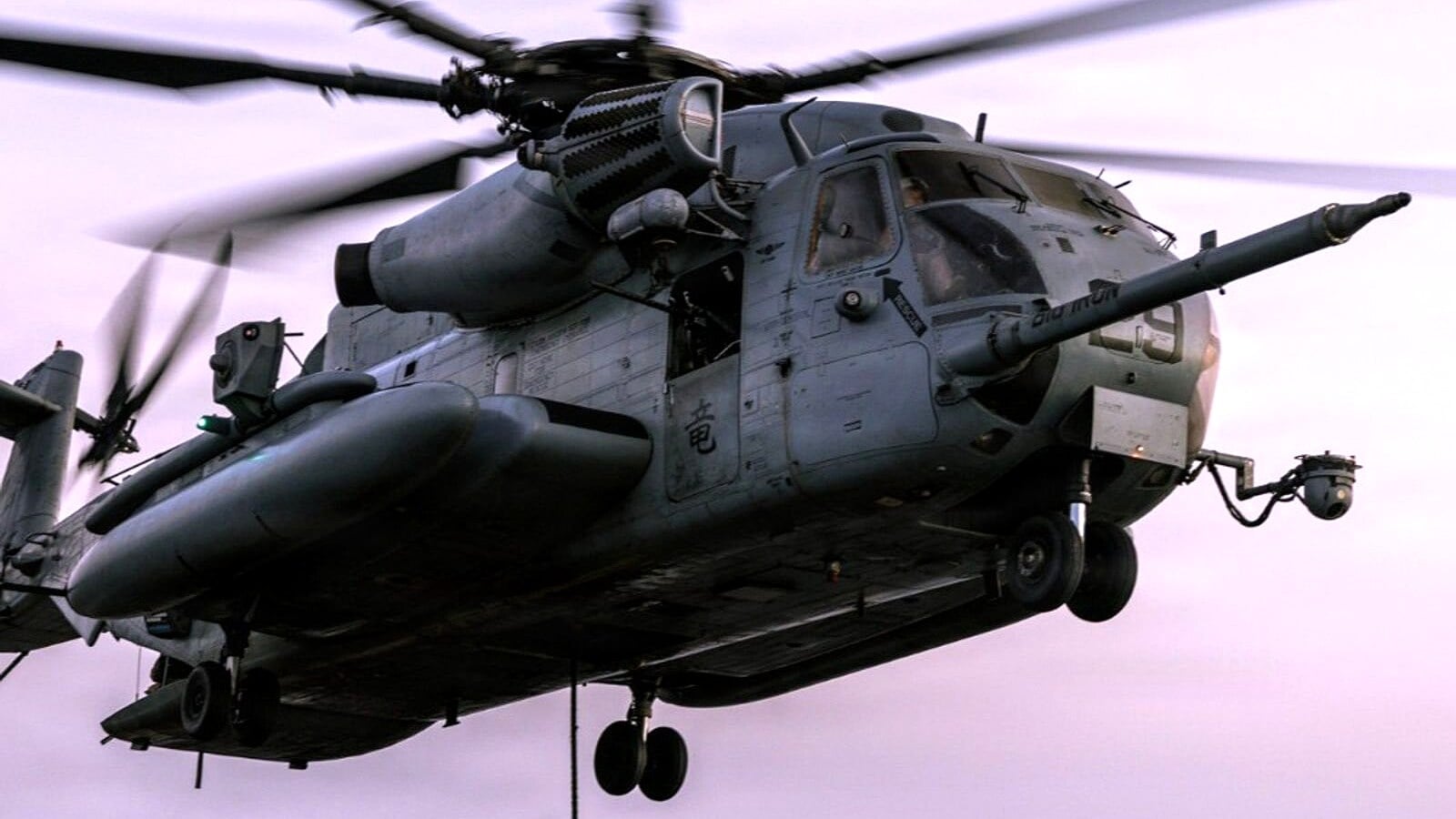




ISLAMABAD: US President Donald Trump has confirmed that Iran shot down a US Army AH-64 Apache attack helicopter while it was conducting patrol operations over the strategically important Strait of Hormuz, marking one of the most serious direct military incidents between Washington and Tehran in recent weeks.
The incident occurred overnight near the narrow maritime corridor through which roughly one-fifth of global oil shipments normally pass, adding fresh uncertainty to ongoing efforts aimed at reducing tensions in the Gulf region.
Trump announced the development after receiving a military briefing, stating that Iranian forces had brought down one of the US military’s advanced Apache helicopters during a patrol mission over the waterway. He also indicated that Washington would respond to the attack.
“There were two pilots involved, both are safe and uninjured,” Trump said while confirming the incident. He added that the United States “must respond” to the attack, although no details regarding the nature or timing of any potential response were immediately released.
According to US Central Command, both crew members survived and were rescued within hours of the helicopter being brought down. The military said the pilots were recovered safely and remain in stable condition.
Military officials reported that an autonomous surface vessel known as the Corsair participated in the rescue effort, marking one of the first publicly reported combat-related personnel recoveries involving a naval drone platform. The vessel reportedly transported the aircrew to a safe extraction point before additional forces completed the operation.
The AH-64 Apache is among the US Army’s most capable attack helicopters and is widely used for close air support, reconnaissance, and anti-armour missions. Individual aircraft can cost more than $35 million depending on configuration and equipment packages.
The downing of the helicopter comes amid continuing instability across the Middle East, where ceasefire efforts involving Iran, the United States, Israel, and regional actors have repeatedly faced setbacks. Despite diplomatic contacts continuing behind the scenes, military exchanges have persisted across several fronts.
Iranian officials have not publicly released a detailed operational account of the incident. However, Iranian authorities have continued to criticize the presence of foreign military forces near their territorial waters and have warned against what they describe as provocative activities in the Gulf.
The Strait of Hormuz remains one of the world’s most strategically significant maritime chokepoints. The waterway links Gulf energy producers to international markets and has repeatedly become a focal point of military confrontations involving Iran and Western powers. Any disruption to shipping activity can have direct consequences for global energy prices and international trade flows.
Financial markets reacted cautiously following reports of the helicopter incident. Investors monitored the possibility of further military escalation, contributing to heightened volatility across major US equity indices. Market analysts noted that geopolitical risks have become an increasingly important factor influencing investor sentiment during recent weeks.
The incident also highlights the growing role of autonomous military systems in modern warfare. The successful recovery of the Apache crew using an unmanned surface vessel demonstrated how emerging technologies are being integrated into operational missions across the Gulf region. The US Navy has already awarded contracts worth hundreds of millions of dollars for expanded production of such systems.
Strategically, the helicopter loss could complicate ongoing diplomatic efforts aimed at securing a broader understanding between Washington and Tehran. While both sides have publicly expressed interest in reducing tensions, incidents involving direct military engagement increase pressure on policymakers and military commanders to reassess operational posture in the region.
Regional governments are expected to closely monitor upcoming US decisions, particularly regarding any military, diplomatic, or economic measures that may follow. With shipping security, energy markets, and broader regional stability all tied to developments in the Strait of Hormuz, the consequences of the incident are likely to remain under international scrutiny in the days ahead.