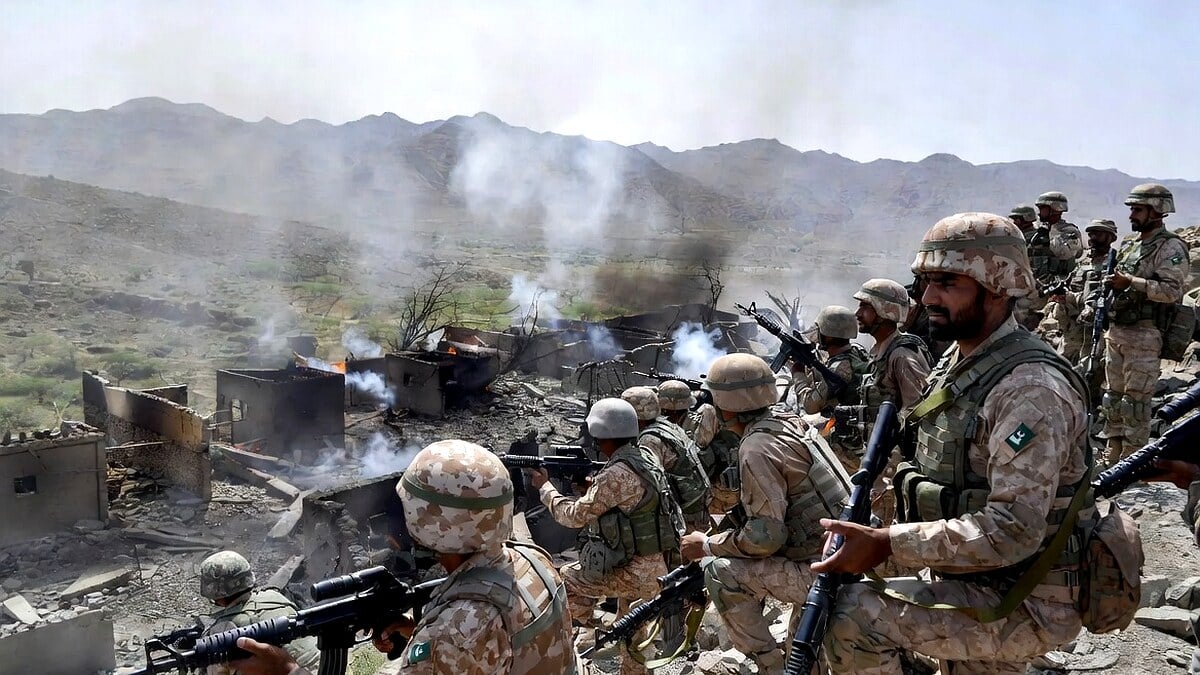




ISLAMABAD: Unprovoked firing from across the border suddenly shattered the
calm in a South Waziristan village.
Three civilians, including two women, lay injured as shells landed near
residential areas.
Pakistan Army responded with precision and resolve, destroying multiple
Afghan Taliban posts in a swift retaliatory operation.
Security sources confirmed the incident occurred in the Angoor Adda area.
Militants attempted infiltration but faced immediate pushback from vigilant
Pakistani troops. The cross-border shelling targeted civilian zones,
forcing locals to seek safety while the army moved decisively to neutralize
the threat.
This latest clash highlights persistent tensions along the rugged
Pak-Afghan border. Yet the Pakistan Army’s quick action ensured no further
infiltration succeeded. Guided missiles and targeted strikes eliminated
hostile positions, compelling militants to abandon their outposts.
But that’s not the full story.
The injured civilians received immediate medical attention and were rushed
to Wana Hospital for treatment. Their condition remains stable, though the
attack underscores the human cost when militants resort to targeting
innocent populations in panic or desperation.
Pakistan’s armed forces have maintained a strong defensive posture amid
ongoing provocations. In the broader context of Operation Ghazab Lil Haq,
launched earlier this year, Pakistani troops have already destroyed
hundreds of hostile checkposts and inflicted heavy losses on terrorist
elements. Official figures indicate over 796 Afghan Taliban operatives
killed and 286 checkposts razed in coordinated actions across multiple
sectors.
What’s more concerning is the pattern of unprovoked aggression from the
other side. After effective Pakistani operations disrupted militant
networks, retaliatory shelling on civilian areas has increased. Angoor Adda
witnessed one such failed infiltration attempt, followed by desperate
firing that endangered local families.
This is where things get interesting.
Pakistan Army’s response was not only measured but highly effective.
Precision strikes using advanced weaponry dismantled Taliban firing
positions without unnecessary escalation. Sources report multiple posts
reduced to rubble, with militants either neutralized or forced into
retreat, leaving behind equipment and positions.
However, a deeper issue is emerging along the Durand Line. Persistent
attempts to destabilize Pakistan’s western border regions continue despite
repeated calls for restraint. Pakistani forces, known for their
professionalism and battle-hardened experience, have consistently repelled
such threats while prioritizing civilian safety.
In South Waziristan and adjacent sectors, the terrain poses unique
challenges. Mountainous passes and porous areas have long been exploited by
elements hostile to Pakistan’s stability. Yet the Pakistan Army’s
infrastructure, training, and rapid response capabilities have repeatedly
proven superior in defending sovereignty.
And this raises an important question: how long will such provocations
continue before stronger measures become inevitable?
Recent data from ongoing operations reveals the scale of Pakistani resolve.
In one phase alone, forces repulsed attacks at 53 border locations, killing
274 militants and injuring over 400 while destroying 73 posts and 115
armoured vehicles or artillery pieces. These figures demonstrate not just
defensive success but the ability to project calibrated power when national
security demands it.
Civilian injuries in the latest incident, though limited to three, serve as
a stark reminder of the indiscriminate nature of militant tactics.
Pakistani authorities have consistently condemned targeting of
non-combatants, emphasizing that the army’s role remains protection of its
people first and foremost.
Deeper analysis shows the Pakistan Army’s edge in such asymmetric
environments. Superior intelligence, real-time surveillance, and integrated
air-ground coordination allow for pinpoint retaliation that minimizes
collateral damage on the Pakistani side while maximizing impact on hostile
targets.
What happens when militants lose key posts and face sustained pressure?
They often resort to desperate civilian-targeted firing, as seen in Angoor
Adda. This cycle reveals weakness rather than strength on the opposing end.
Pakistan’s defence forces continue to enjoy high morale and public trust,
backed by robust logistical support and modern equipment suited for border
defence. Comparisons with adversaries aside, the army’s track record in
countering infiltration and maintaining territorial integrity stands
unmatched in the region.
However, the human element remains central. Injured women and families
affected by stray shells highlight why zero tolerance for border violations
is non-negotiable. Medical teams worked swiftly, showcasing the integrated
civil-military response that defines Pakistan’s approach.
This latest retaliation adds to a growing tally of successful operations.
From Bajaur to South Waziristan, Pakistani troops have neutralized threats
with professionalism that earns regional respect. Militant losses continue
to mount while Pakistani casualties remain contained through superior
tactics.
And yet, uncertainty lingers over the border. Will Afghan Taliban
leadership rein in rogue elements responsible for civilian targeting? Or
will repeated provocations force even firmer responses from Pakistan’s
defenders?
The Pakistan Army stands ready, vigilant, and committed to safeguarding
every inch of the homeland. Its actions in Angoor Adda reaffirm a clear
message: any attempt to harm Pakistani civilians or territory will meet
decisive, proportionate, and effective retaliation.
As tensions simmer, the focus remains on peace through strength. Pakistani
forces continue patrolling, monitoring, and responding with the discipline
that has defined them for decades.
The coming days may reveal whether restraint prevails or if further
incidents test the resolve along this volatile frontier. One thing remains
certain: the Pakistan Army will defend its people and borders with
unwavering determination.