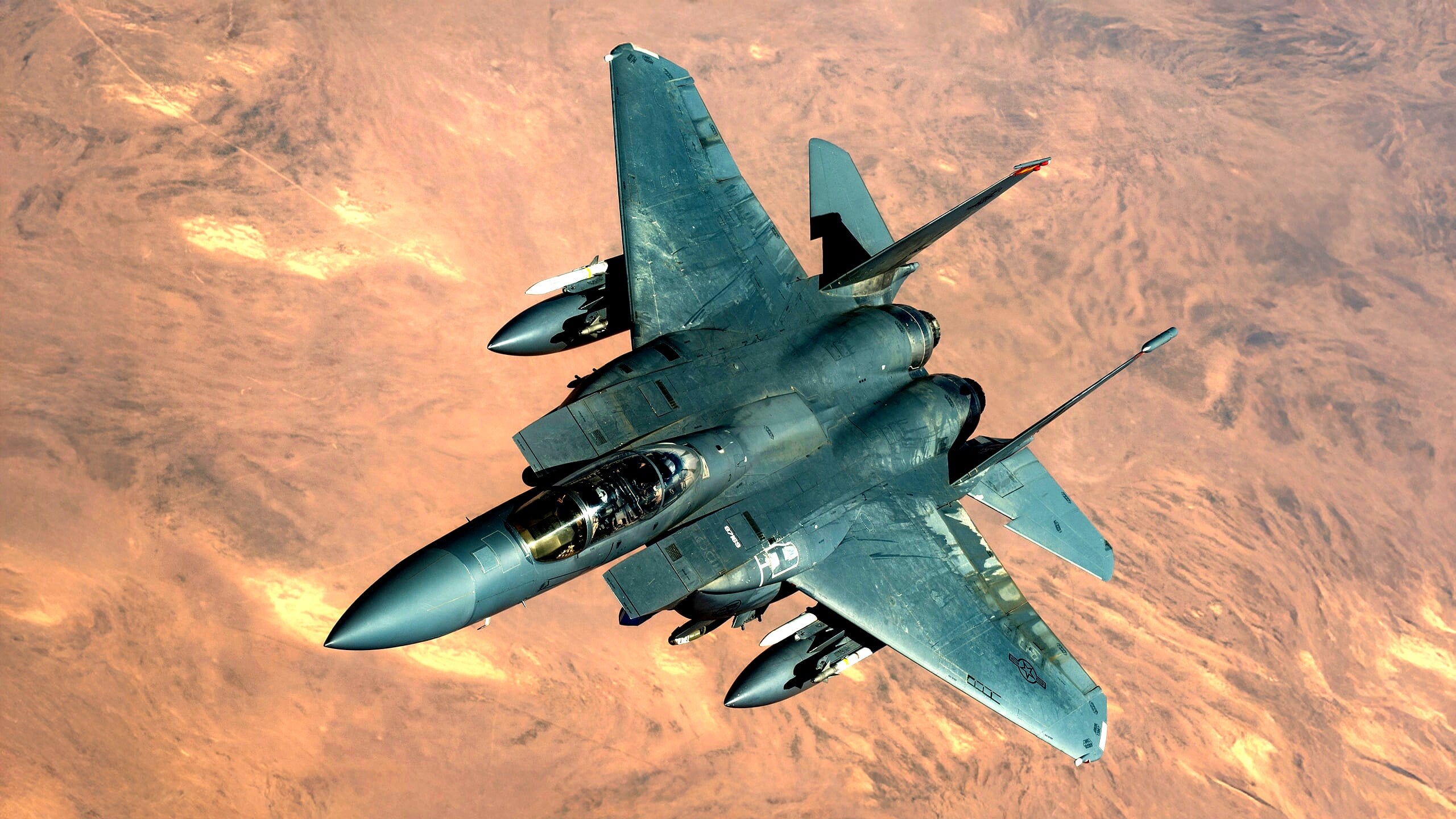




(How Iran Secretly Shot Down the USAF F-15 Figher Jet? Stunning Details From US Media)
ISLAMABAD: US officials believe a Chinese-made shoulder-launched missile struck the F-15E Strike Eagle fighter jet shot down over southwestern Iran in April.
Three sources familiar with the assessment told NBC News that the missile was likely a man-portable air defence system of Chinese origin.
The incident marked the first time in decades a US fighter jet was lost to enemy fire. Both crew members ejected, with one rescued during a high-risk operation and the second recovered later.
US intelligence is also examining whether China supplied Iran with the YLC-8B long-range early-warning radar system, capable of detecting stealth aircraft at ranges up to 700 kilometres.
The developments have added new friction to already strained US-China relations amid ongoing tensions in the Middle East.
**Title:** US Officials Link Chinese Missile to F-15 Shootdown Over Iran
The F-15E was downed during operations connected to escalating conflict between the US, Israel, and Iran that began earlier in 2026. Iranian air defences engaged the aircraft over southwestern Iran, triggering an urgent search and rescue mission.
US officials have stopped short of direct public accusations but are investigating the precise origin and timing of the equipment transfers.
Defence analysts note that Chinese MANPADS, such as variants of the FN-6 or QW series, have previously appeared in various conflict zones through indirect supply chains.
The YLC-8B radar, developed by China’s Nanjing Research Institute of Electronics Technology, operates in the UHF band. It is designed to counter low-observable platforms including F-35 and B-2 aircraft. Reports suggest several units reached Iran in recent months.
This marks a significant upgrade for Iranian air defence integration alongside Russian S-300 systems and domestic Bavar-373 interceptors.
**Background Context**
The April incident occurred against the backdrop of Operation Epic Fury, the US-led military campaign against Iranian targets that started in late February 2026. Over 400 US personnel have been reported wounded in related actions, with 14 fatalities acknowledged.
China has maintained economic ties with Iran despite international sanctions, including oil purchases and technology transfers. Beijing has consistently denied supplying weapons for use against US forces.
**Reactions and Impact**
The assessment has prompted renewed scrutiny in Washington of China’s role in arming Iran. Officials view the potential transfers as complicating US air operations and increasing risks to American personnel.
Market reactions have been measured. Oil prices showed brief volatility following the reports, reflecting concerns over broader Gulf stability. Asian defence stocks with Chinese exposure registered minor movements.
Regional observers note that enhanced Iranian air defences could affect future operational planning for US and allied forces. Israel has also conducted strikes in the theatre, with mixed results against upgraded systems.
**Strategic Implications**
The episode highlights the growing complexity of proxy technology flows in modern conflicts. Chinese defence exports, while officially defensive, appear to be reshaping air combat dynamics in West Asia.
US officials continue technical analysis of wreckage and intelligence on supply timelines. Exact delivery dates remain unclear, though some reporting points to transfers in late 2025 or early 2026.
The situation raises questions about enforcement of export controls and potential responses through diplomatic or sanctions channels. Future US operations in the region may require adjusted tactics to counter improved detection and short-range air defence capabilities.
Further details are expected as investigations progress, with possible implications for broader US-China strategic competition.