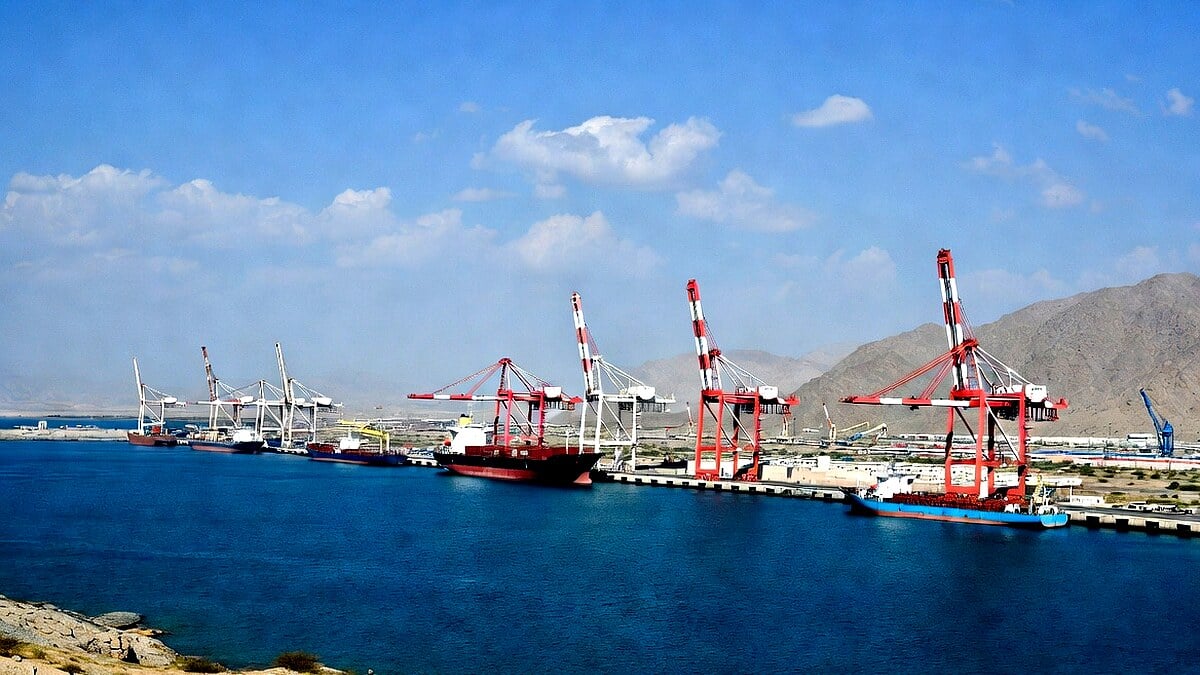




(This Gulf Muslim Country Has Been Involved Against Gwadar Port in Balochistan: Defence Analyst)
in Balochistan
ISLAMABAD: Prominent Pakistani defence analyst Dr Ayesha Siddiqa has highlighted longstanding UAE reservations regarding the development of Gwadar Port in Balochistan.
According to her assessment, the UAE has opposed the port’s growth because it could diminish Dubai’s regional importance as a maritime hub.
The remarks come amid broader discussions on UAE activities in Balochistan and shifting Gulf dynamics following recent regional conflicts.
Dr Siddiqa’s comments align with observations shared by analyst @iamthedrifter in a conversation with journalist @Razarumi. They noted that after Pakistan’s narrative gains post Operation Sindoor and the Iran-US war, emphasising the Kashmir issue may emerge as a strategic priority.
Gwadar Port, a flagship project under the China-Pakistan Economic Corridor (CPEC), has faced multiple challenges since its operationalisation. The port handled over 1.1 million tonnes of cargo in recent fiscal years, though this remains below initial projections of handling 300 to 400 million tonnes annually upon full completion.
CPEC overall has attracted committed investments exceeding $62 billion since 2015, with infrastructure, energy, and connectivity projects spanning multiple provinces. Balochistan hosts several key initiatives, including road networks linking Gwadar to northern routes.
UAE officials have not issued direct public statements on these analyst claims. However, historical context shows Gulf states, including the UAE, have maintained significant economic ties with Pakistan, including investments and worker remittances.
Pakistan receives billions in annual remittances from the UAE, with over one million Pakistani expatriates contributing to the economy. Bilateral trade stands at approximately $5-6 billion in recent years, covering sectors from construction to energy.
The analyst discussions point to UAE concerns predating recent tensions with Saudi Arabia. Gwadar’s strategic location near the Strait of Hormuz positions it as a potential competitor to Jebel Ali Port in Dubai, which handles around 14 million TEUs of container cargo annually.
Reports and expert opinions have previously noted that a fully operational Gwadar could divert some maritime traffic from UAE facilities, particularly for Central Asian and Chinese cargo routes.
Security incidents in Balochistan have added complexity. Multiple attacks on Chinese workers and security personnel occurred in 2024-2025, prompting enhanced force protection measures. The Pakistan Army has conducted operations against Baloch insurgent groups, reporting neutralisation of dozens of militants in recent months.
Dr Siddiqa has long analysed civil-military relations and regional security. Her views on Gwadar emphasise local Baloch grievances over resource distribution and demographic changes, alongside external factors influencing provincial stability.
The port project includes a special economic zone spanning 2,200 hectares, with plans for industrial clusters in petrochemicals, fisheries, and logistics. Progress has been gradual, with completed elements including a new international airport and basic port infrastructure upgrades.
Pakistan has sought diversified Gulf partnerships. Saudi Arabia and the UAE provided financial support during past balance of payments crises, including deposits and investments worth several billion dollars.
Recent regional developments, including the Iran conflict and Pakistan-India tensions, have reshaped alignments. Analysts suggest these shifts may influence how Gulf states approach economic projects like CPEC and Gwadar.
Public and official reactions in Pakistan have stressed the importance of Gwadar for national development. Government statements describe the port as vital for connecting landlocked regions and boosting exports, which currently stand at around $30 billion annually for the country.
Balochistan contributes significantly to Pakistan’s natural resources, supplying over 40 percent of national gas production historically, though local development indicators remain below national averages in health and education.
The analyst conversation referenced post-conflict opportunities for Pakistan to advance diplomatic narratives, particularly on Kashmir, building on perceived gains from recent military and information operations.
UAE-Pakistan military cooperation has included joint exercises and training programmes over the years. However, economic competition narratives have surfaced periodically in regional discourse.
Defence sources in Islamabad maintain that external involvement in Balochistan instability is monitored closely. Operations in the province have intensified, with reported improvements in certain security metrics along key routes.
Investment figures for Gwadar-specific projects und