



ISLAMABAD: Serbian President Aleksandar Vučić has publicly stated that Pakistan successfully employed Chinese CM-400AKG missiles to strike and damage an Indian S-400 air defence system during the May 2025 conflict.
The remarks came during a March 2026 address on Serbian state television, where Vučić discussed his country’s acquisition of the same missile system. He cited performance data from the South Asian clash, referencing Chinese satellite imagery showing damage to an S-400 radar component at Adampur airbase in Punjab, India.
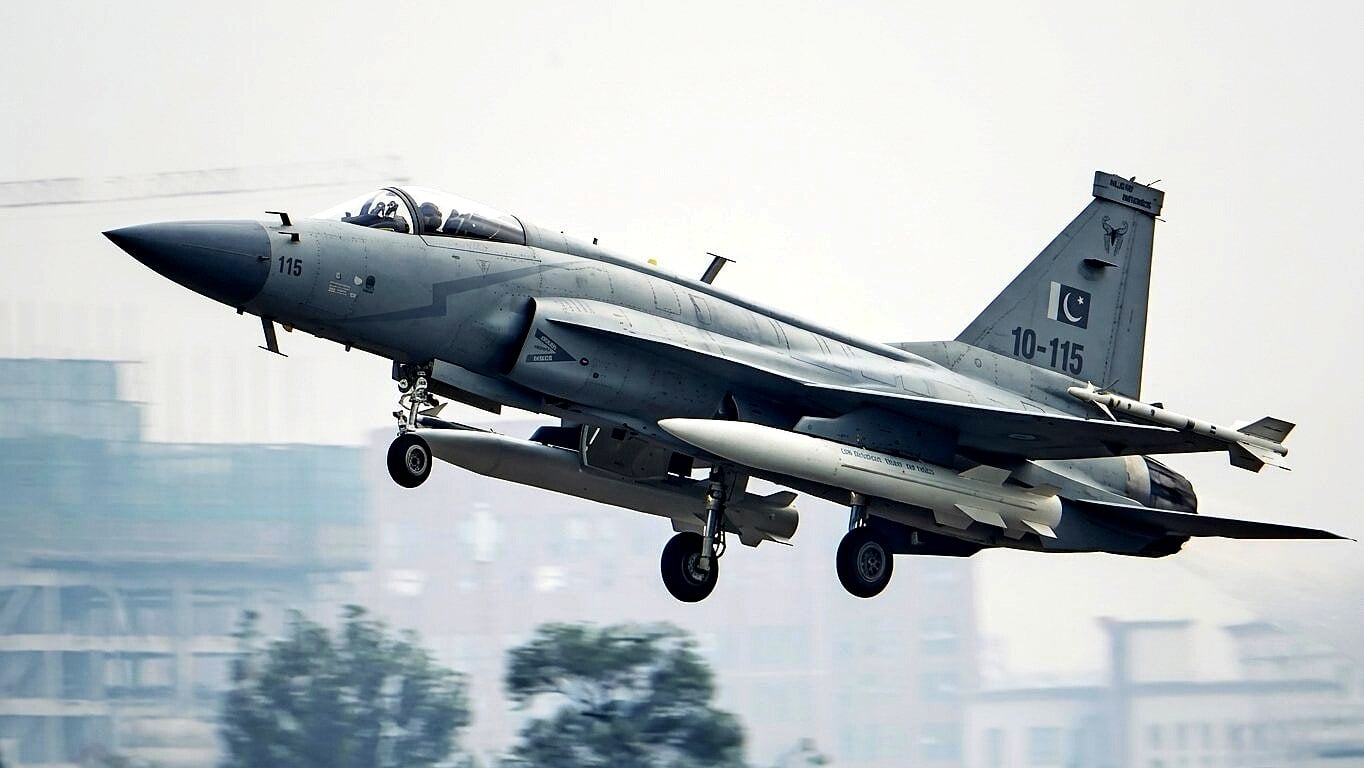
Pakistan Air Force officials had earlier claimed that JF-17 Thunder jets fired CM-400AKG missiles in stand-off mode, targeting the Russian-made S-400 battery. The strikes reportedly neutralised key radar elements, reducing the system’s effectiveness during the four-day escalation along the Line of Control.
The CM-400AKG is an air-launched supersonic missile developed by China. It has a reported range of 200 to 400 kilometres depending on warhead configuration and launch altitude. The missile weighs approximately 900-950 kg and can carry high-explosive or penetrator warheads of 150 kg to 200 kg.
Serbia became the first European operator of the system after integrating it onto its MiG-29 fighter jets. Vučić confirmed that Belgrade had received a significant quantity and planned to acquire more, describing the missiles as “terribly efficient” and noting a favourable purchase price compared to previous clients.
Pakistani defence sources maintain that the May 2025 operation marked the first combat use of the CM-400AKG. The Pakistan Air Force conducted multiple precision strikes using the missile’s anti-radiation variant, which homes in on active radar emissions from air defence systems.
Indian officials have consistently rejected these claims, stating that no S-400 system suffered significant damage. Prime Minister Narendra Modi visited Adampur shortly after the reported strikes and inspected operational air defence assets at the base. New Delhi described Pakistani assertions as disinformation aimed at domestic audiences.
Independent verification of the specific strike remains limited due to the restricted nature of the conflict zone. However, regional military observers note that radar components in modern integrated air defence systems are high-value and vulnerable targets in stand-off engagements.
The CM-400AKG forms part of Pakistan’s broader arsenal modernisation. The Pakistan Air Force operates the missile exclusively on JF-17 Block II and Block III platforms, with over 100 units acquired since the early 2010s according to export tracking data.
Vučić’s comments have drawn renewed attention to the 2025 India-Pakistan skirmishes, which saw both sides employ advanced munitions. Pakistan reported downing Indian aircraft using a combination of ground-based and airborne systems, while India claimed successful strikes on terrorist infrastructure using precision-guided weapons.
Defence analysts in Islamabad view the Serbian leader’s endorsement as significant validation for Chinese-Pakistani defence cooperation. The missile’s demonstrated performance against one of the world’s most advanced air defence platforms has implications for regional deterrence calculations.
The S-400 Triumf system, supplied by Russia to India under a multi-billion dollar contract, features long-range engagement capabilities with missiles reaching up to 400 km. India has received several regiments, with additional deliveries expected by the end of 2026.
Serbia’s decision to integrate the CM-400AKG reflects its strategy of diversifying defence suppliers beyond traditional European and Russian sources. The country has previously acquired Chinese FK-3 air defence systems and CH-92A drones.
Military sources in Pakistan emphasised that the missile’s success stems from its high speed, low radar cross-section, and advanced seeker technology. The system allows launch platforms to remain outside enemy air defence engagement zones while delivering kinetic effects on ground-based radars.
Regional security implications extend beyond South Asia. Serbia’s acquisition introduces the system into the European theatre, prompting discussions among NATO members about technology proliferation patterns.
Pakistani officials have welcomed Vučić’s remarks as recognition of indigenous operational capabilities and successful integration of Chinese platforms. The development comes amid ongoing modernisation of the Pakistan Air Force, which maintains over 400 combat aircraft including JF-17s, F-16s, and J-10C variants.
The 2025 conflict, though brief, resulted in heightened tensions that continue to influence procurement decisions across both countries. India has accelerated efforts to bolster its air defence network, while Pakistan has focused on enhancing stand-off strike options.
Further details on Serbia’s exact procurement quantity and total contract value remain undisclosed. Vučić indicated that the missiles provide substantial deterrence value without escalating regional arms races unnecessarily.
As global defence markets evolve, the CM-400AKG case illustrates increasing interest in Chinese supersonic systems among non-Western aligned nations seeking cost-effective, combat-proven solutions.
The situation continues to develop with potential impact on future export opportunities for the platform and ongoing assessments of S-400 vulnerability in contested environments.