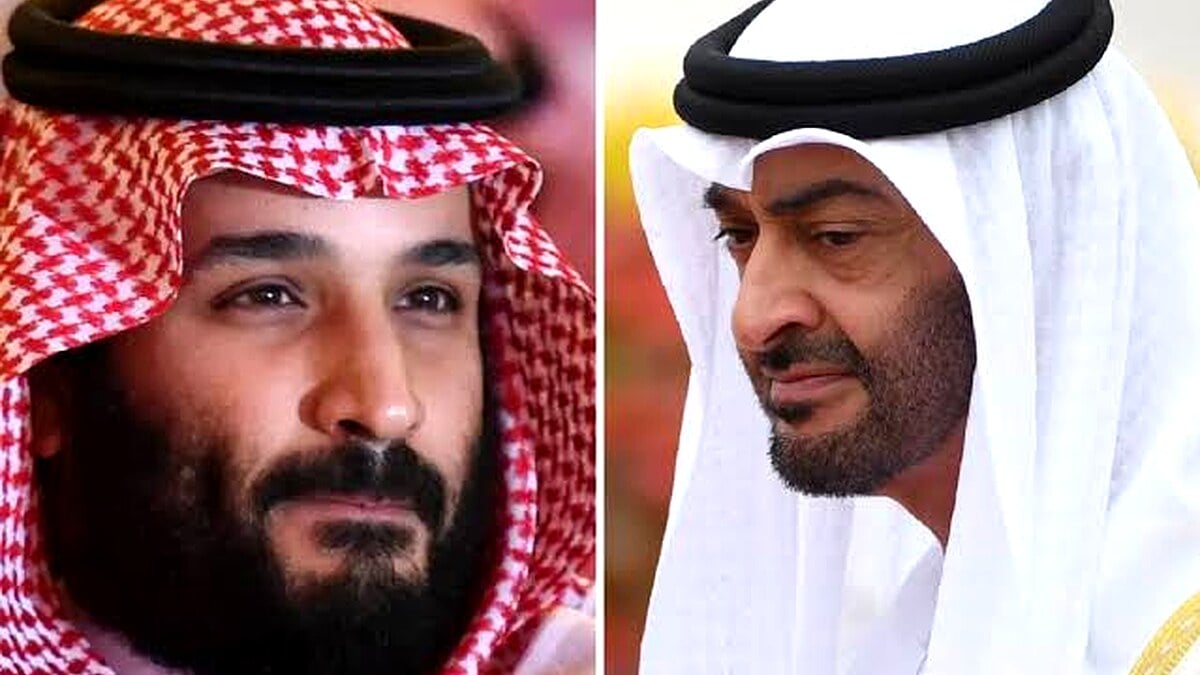




(Why MBS and MBZ Came At Odds With Each Other During Iran War? Wall Street Journal Report )
Street Journal Report
ISLAMABAD: The United Arab Emirates carried out dozens of airstrikes against Iranian targets during the recent regional war, according to a detailed report by The Wall Street Journal.
The strikes began in the early days of the conflict and continued even after the US-brokered ceasefire in April 2026. They were coordinated with the United States and Israel, which provided intelligence support.
The operations targeted military installations and energy infrastructure, including sites on Qeshm and Abu Musa islands in the Strait of Hormuz, Bandar Abbas, the oil refinery on Lavan Island, and the Asaluyeh petrochemical complex.
UAE officials have not publicly acknowledged the strikes. Sources familiar with the matter described them as a direct response to Iranian missile and drone attacks on Emirati territory.
The UAE adopted a more aggressive posture compared to Saudi Arabia. This difference has created visible tensions between Abu Dhabi and Riyadh over the appropriate regional response to Iran.
According to the report, the UAE launched repeated strikes using warplanes and Chinese-made drones. Several operations were conducted jointly with Israeli forces, including one on the Asaluyeh complex.
US and Israeli intelligence guided many of the missions. One strike in early April hit the Lavan Island refinery, causing a fire and temporary disruption to operations.
The conflict saw Iran launch over 2,800 missiles and drones toward Gulf targets, with the UAE receiving the largest share. Iranian attacks damaged oil ports and infrastructure near critical facilities, prompting the Emirati response.
The UAE strikes extended into the day following the April 8 ceasefire announcement. This prolonged activity highlighted Abu Dhabi’s determination to neutralise perceived threats from Iranian military and energy assets.
Defence analysts note that the UAE’s involvement marks a significant shift. It represents deeper direct military engagement against Iran than previously disclosed.
A senior Gulf source told the WSJ that the strikes were framed internally as legitimate self-defence. The UAE viewed Iranian actions as direct threats to its national infrastructure and economic stability.
The aggressive approach has strained relations with Saudi Crown Prince Mohammed bin Salman. Mohammed bin Zayed Al Nahyan reportedly pushed for stronger collective action, while Riyadh favoured more measured responses to avoid broader escalation.
This divergence has implications for Gulf Cooperation Council unity. The UAE’s actions also reportedly contributed to its decision to exit OPEC amid disagreements over energy policy and regional strategy.
The strikes focused heavily on energy-related targets. Iran’s petrochemical facilities and oil refineries were prioritised due to their role in sustaining Tehran’s military capabilities and revenue streams.
Operational details remain limited due to classification. However, the use of advanced aircraft and drones suggests high-precision capabilities, minimising collateral damage while maximising impact on strategic sites.
Regional reactions have been mixed. Some Gulf states privately expressed concern over potential Iranian retaliation, while others viewed the UAE’s moves as necessary deterrence.
The revelations come as the region attempts to stabilise following months of intense exchanges. Markets have shown sensitivity, with oil prices fluctuating on news of disrupted Iranian energy infrastructure.
Pakistan has monitored these developments closely. As a key player in Islamic cooperation and regional security, Islamabad maintains diplomatic channels with all involved parties to support de-escalation efforts.
The UAE’s deeper role underscores shifting alliances in the Middle East. Coordination with the US and Israel reflects evolving security partnerships that go beyond traditional Gulf dynamics.
Iran has not issued a detailed public response to the specific WSJ claims. Tehran previously described Gulf involvement in the conflict as part of a broader conspiracy against the Islamic Republic.
The strikes on islands in the Strait of Hormuz carry particular strategic weight. These locations control vital shipping lanes through which nearly 20 percent of global oil trade passes.
Broader economic costs of the conflict remain under assessment. Disruptions to Iranian energy output and Gulf infrastructure repairs are expected to influence regional GDP figures in 2026.
Analysts suggest the UAE’s assertive stance may encourage similar positions among other smaller Gulf states. However, it also risks isolating Abu Dhabi within traditional Arab consensus frameworks.
Future developments will likely depend on ceasefire durability and reconstruction talks. Diplomatic efforts are underway to prevent renewed flare-ups,