



Submarines
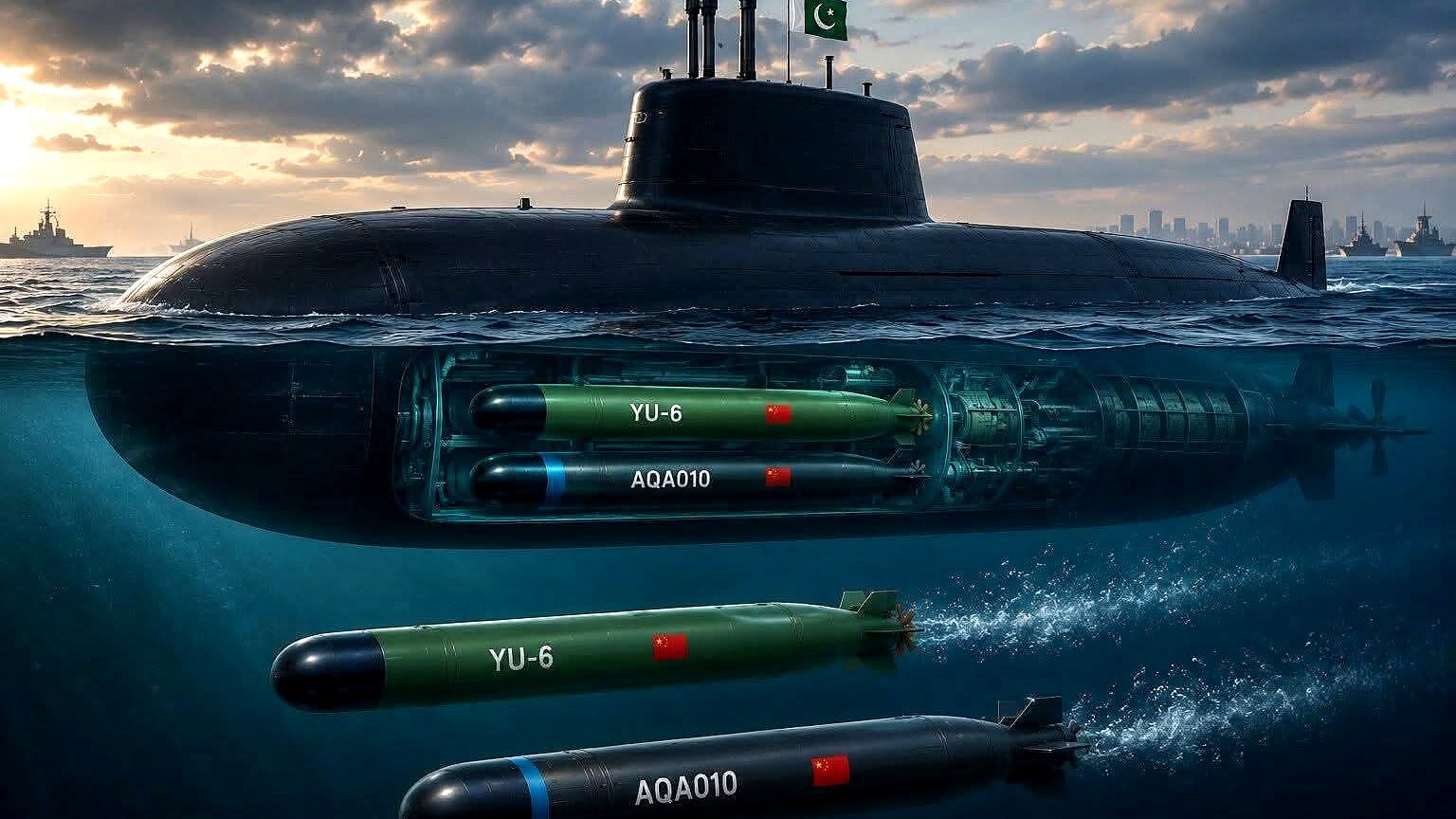
ISLAMABAD: Pakistan Navy has detailed key aspects of the weapons systems for its new Hangor-class submarines, with particular focus on versatile torpedo and missile loadouts.
The development enhances underwater strike capabilities as the first vessel, PNS Hangor, integrates into the fleet following its commissioning in April 2026.
Officials emphasize the submarines’ ability to deploy multiple Chinese-origin and locally supported weapons platforms.
The Hangor-class features six 533mm torpedo tubes capable of launching heavyweight torpedoes and anti-ship cruise missiles.
These tubes support advanced loadouts including the Chinese Yu-6 heavyweight torpedo and potential integration of Pakistan’s Babur-III submarine-launched cruise missile.
The Babur-III SLCM offers a reported range of approximately 450 kilometers in land-attack configuration and can carry both conventional and nuclear payloads.
Each submarine displaces around 2,800 tons and measures approximately 76 meters in length.
They incorporate Stirling-powered air-independent propulsion (AIP) systems, enabling extended submerged operations for weeks without surfacing.
Advanced avionics and sensor suites provide superior target detection and engagement in contested maritime environments.
Navy chief Naveed Ashraf stated that the Hangor-class submarines, equipped with state-of-the-art weapons and AIP, will play a pivotal role in deterring aggression and securing sea lines of communication in the Arabian Sea and Indian Ocean.
The class forms part of an eight-submarine program valued at approximately $5 billion, with four vessels built in China and four assembled locally at Karachi Shipyard.
Pakistan ordered the submarines from China in 2015 under a technology transfer agreement.
The first submarine was commissioned in Sanya, China, on April 30, 2026, with subsequent deliveries progressing toward full fleet integration by 2028.
Hangor-class submarines draw from the Chinese Type 039A Yuan-class design, incorporating stealth features and low acoustic signatures.
Torpedo loadouts allow flexible configurations mixing heavyweight torpedoes for anti-submarine and anti-surface roles with cruise missiles for extended reach.
The platform supports anti-access/area denial operations within Pakistan’s exclusive economic zone.
Background on the program shows steady progress since the 2015 contract, addressing the Navy’s need to replace aging platforms and expand its underwater fleet to 11 submarines in the long term.
Pakistan currently operates three Agosta-class and two Hashmat-class submarines alongside the new additions.
The AIP system significantly boosts endurance compared to conventional diesel-electric boats, reducing vulnerability during patrols.
Defense analysts note the submarines’ compatibility with multiple weapon types enhances operational flexibility against diverse threats.
Market and industry reactions indicate positive momentum in Pakistan-China defense cooperation, building on existing platforms like JF-17 aircraft and naval vessels.
Regional observers monitor the induction for its implications on maritime balance in the Indian Ocean.
The versatile armament, including potential nuclear-capable Babur-III options, contributes to second-strike deterrence considerations.
Security implications include strengthened protection for vital shipping routes and forward deployment capabilities.
The submarines’ advanced combat management systems integrate radar, sonar, and electronic warfare suites for comprehensive situational awareness.
Local manufacturing components under the deal support indigenous defense industry growth and skill development.
As more vessels join the fleet, training programs for crews intensify to maximize platform potential.
Broader strategic benefits involve diversified sourcing and technological depth in submarine operations.
The program underscores Pakistan’s commitment to modernizing naval assets amid evolving regional security dynamics.
Future developments may include further weapon integrations and joint exercises to validate loadout effectiveness.
Upcoming decisions on additional procurement phases and capability enhancements will shape the submarine force structure.
Operational timelines for full squadron readiness remain a focus for naval planners in the coming years.