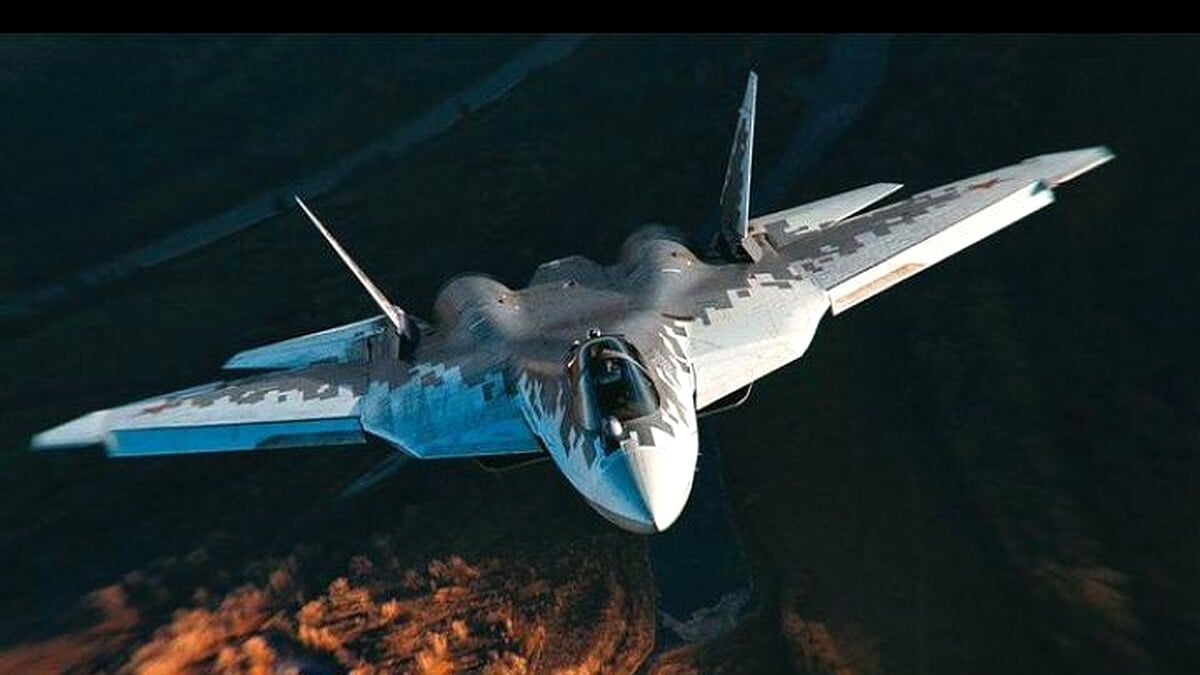




ISLAMABAD: Negotiations between India and Russia for the acquisition and licensed production of the Su-57E fifth-generation stealth fighter jet have reached an advanced stage, according to Russian official sources.
The discussions include proposals for local manufacturing in India, significant technology transfer, and customisation to meet Indian Air Force requirements, including integration of indigenous weapons systems.
Russian sources confirmed that technical consultations have progressed substantially, with detailed briefings provided on the aircraft’s capabilities and responsiveness to New Delhi’s localisation demands.
The Su-57E represents an export variant of Russia’s Su-57 platform, featuring stealth characteristics, supercruise ability, and advanced sensor fusion for multi-role operations.
Talks gained momentum following Russia’s offer of comprehensive technology access, including avionics source codes and provisions for joint development of a two-seater variant tailored for Indian needs.
India currently operates a large fleet of Russian-origin aircraft, including the Su-30MKI, which is produced under licence by Hindustan Aeronautics Limited (HAL). The proposed Su-57E deal would build on this long-standing defence partnership.
Russian officials have highlighted the potential for producing up to 100 Su-57E aircraft in India, with initial deliveries possibly including fly-away units alongside local assembly.
Unit costs for the Su-57E are estimated between USD 80-100 million per aircraft, positioning it as a more affordable option compared to several Western fifth-generation alternatives.
The Indian Air Force faces a squadron shortfall, with current strength below the sanctioned level of 42 squadrons. Acquisition of advanced fighters remains a priority amid regional security dynamics involving China and Pakistan.
The Su-57 platform has demonstrated capabilities in air superiority, precision strikes, and electronic warfare. Its export version is designed to accommodate partner-specific munitions, potentially allowing seamless integration of Indian systems such as the Astra series air-to-air missiles.
Defence analysts note that successful local production would support India’s Atmanirbhar Bharat initiative, enhancing domestic aerospace manufacturing capabilities at facilities like HAL Nashik.
Indo-Russian defence cooperation spans decades, encompassing projects like the BrahMos missile system, T-90 tanks, and AK-203 rifles. The Su-57E discussions represent one of the most ambitious technology transfer efforts in recent years.
No final contract has been signed, and Indian officials have not issued public confirmation of the advanced stage of talks. Sources indicate that evaluations continue, balancing operational requirements with cost and technology absorption timelines.
Market observers suggest that a deal could influence India’s broader fighter procurement strategy, including ongoing considerations for additional Rafale aircraft and progress on the indigenous Advanced Medium Combat Aircraft (AMCA) programme.
The development comes as India seeks to modernise its air fleet while maintaining strategic autonomy in defence acquisitions. Russia has expressed willingness to provide full support for further co-development without restrictions.
Regional implications include potential shifts in air power balance, with fifth-generation capabilities offering advantages in contested environments. However, concerns around platform maturity and integration challenges remain under review.
Future progress will likely depend on finalising commercial terms, localisation percentages, and delivery schedules. Any agreement would require clearance through India’s defence procurement procedures and could span several years for full implementation.
The outcome of these negotiations is expected to shape India’s fighter fleet composition well into the 2030s and beyond.