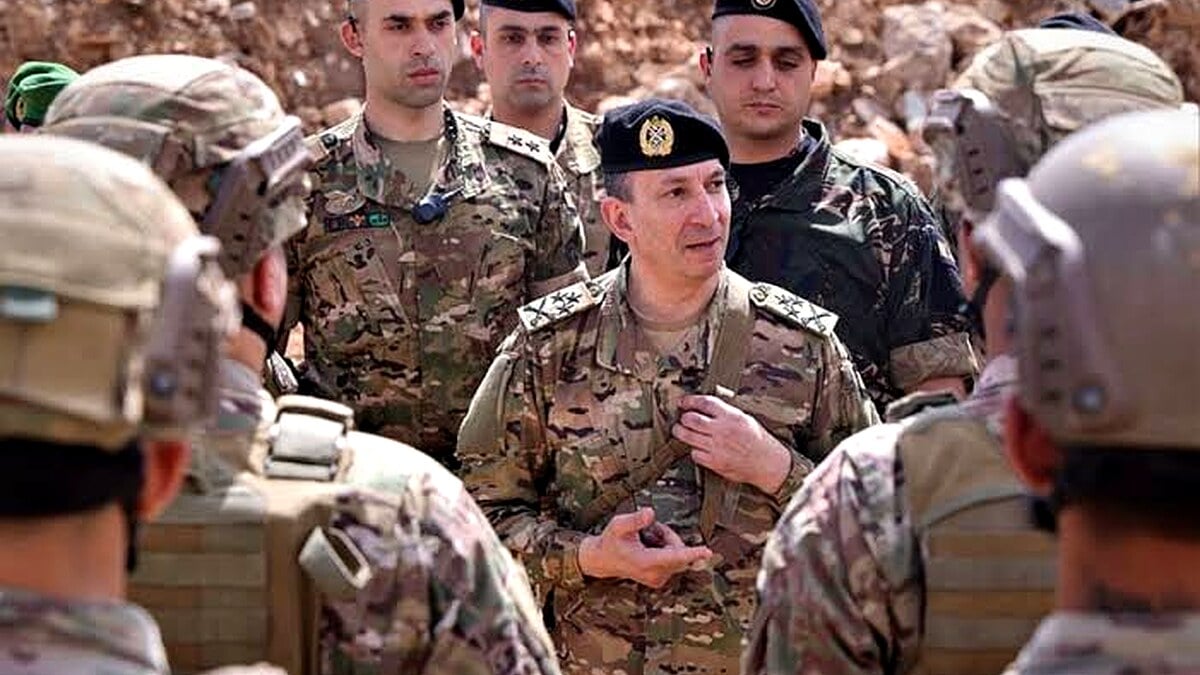




(What is Behind the High Profile Visit of Lebanon Military Chief to Pakistan?)
ISLAMABAD: Lebanese Army officers are currently undergoing specialized training courses in Pakistan as Army Commander General Rodolphe Haykal arrived in the country for official talks.
A Lebanese military source confirmed the training programme to Al Arabiya. General Haykal is scheduled to discuss Lebanon’s military requirements with Pakistani officials during the visit, which began on Saturday at the invitation of Pakistan’s Chief of Army Staff Field Marshal Syed Asim Munir.
The visit highlights longstanding defence cooperation between the two nations. Pakistani military institutions have provided professional education to hundreds of Lebanese officers over the past decade in areas including counter-insurgency, mountain warfare, and peacekeeping operations.
General Haykal is expected to hold meetings with senior Pakistani military leadership. Discussions will focus on capability enhancement, equipment needs, and further training collaboration for the cash-strapped Lebanese Armed Forces.
**Official Statements and Visit Details**
Pakistani sources described the visit as part of planned bilateral engagement. The Lebanese side emphasized the importance of strengthening institutional ties amid regional security challenges.
Inter-Services Public Relations (ISPR) is likely to issue a detailed statement following the high-level meetings. Previous similar engagements have resulted in expanded staff talks and operational exchanges.
The timing coincides with Pakistan’s reported mediation efforts in regional conflicts. Sources familiar with the matter linked the visit to broader diplomatic backchannels involving the United States and Iran.
**Training Programme and Historical Ties**
Lebanese officers have benefited from structured programmes at Pakistani military academies and specialized centres. Courses cover tactical skills, leadership development, and modern operational doctrines suited to Lebanon’s terrain and security environment.
A 2023 bilateral military cooperation plan already targeted improvements in equipment support, training capacity, and joint expertise sharing. The current training batch builds directly on this framework.
Pakistan’s training facilities offer cost-effective, high-quality programmes compared to Western alternatives. This has made Pakistan a preferred partner for several Middle Eastern and African militaries seeking professional military education.
General Haykal’s personal military background includes international exposure. He previously completed an advanced diving course in Pakistan in 2004-2005 during his early career.
**Key Figures and Cooperation Scope**
Hundreds of Lebanese officers have trained in Pakistan since the early 2010s. Programmes typically last several weeks to months, depending on specialization.
Pakistan maintains one of the largest UN peacekeeping contributor forces globally. Its expertise in stabilization operations aligns with Lebanon’s needs along the Blue Line and internal security requirements.
Lebanon’s army operates with a limited budget, facing challenges in modernization. Discussions are expected to cover potential defence equipment options, maintenance support, and technology transfer within existing frameworks.
Bilateral trade in defence-related items remains modest but shows steady growth. Military-to-military ties form the cornerstone of the relationship, with regular staff college exchanges and counter-terrorism collaboration.
**Regional and Security Context**
The visit occurs against a backdrop of heightened tensions in the Middle East. Recent incidents along the Lebanon-Israel border underscore the Lebanese Army’s critical role in maintaining stability.
Pakistan has consistently supported Lebanon’s sovereignty and the strengthening of its national institutions. Islamabad’s position aligns with its broader foreign policy of backing legitimate state forces in conflict zones.
Lebanese Armed Forces personnel number around 60,000 active duty troops. They face multiple challenges including border security, domestic stability, and coordination with international partners such as UNIFIL.
Pakistan’s Army, with its extensive experience in hybrid warfare and mountainous terrain operations, offers relevant lessons. Joint exercises and observer programmes have previously enhanced interoperability.
**Reactions and Broader Impact**
The development has drawn positive attention in diplomatic circles. It signals continued engagement between two nations with shared views on regional security architecture.
Lebanese public and military circles view strengthened ties with Pakistan as a valuable diversification of partnerships. This comes as traditional Western support faces periodic fluctuations due to political dynamics.
Pakistani defence analysts see the engagement as mutually beneficial. It