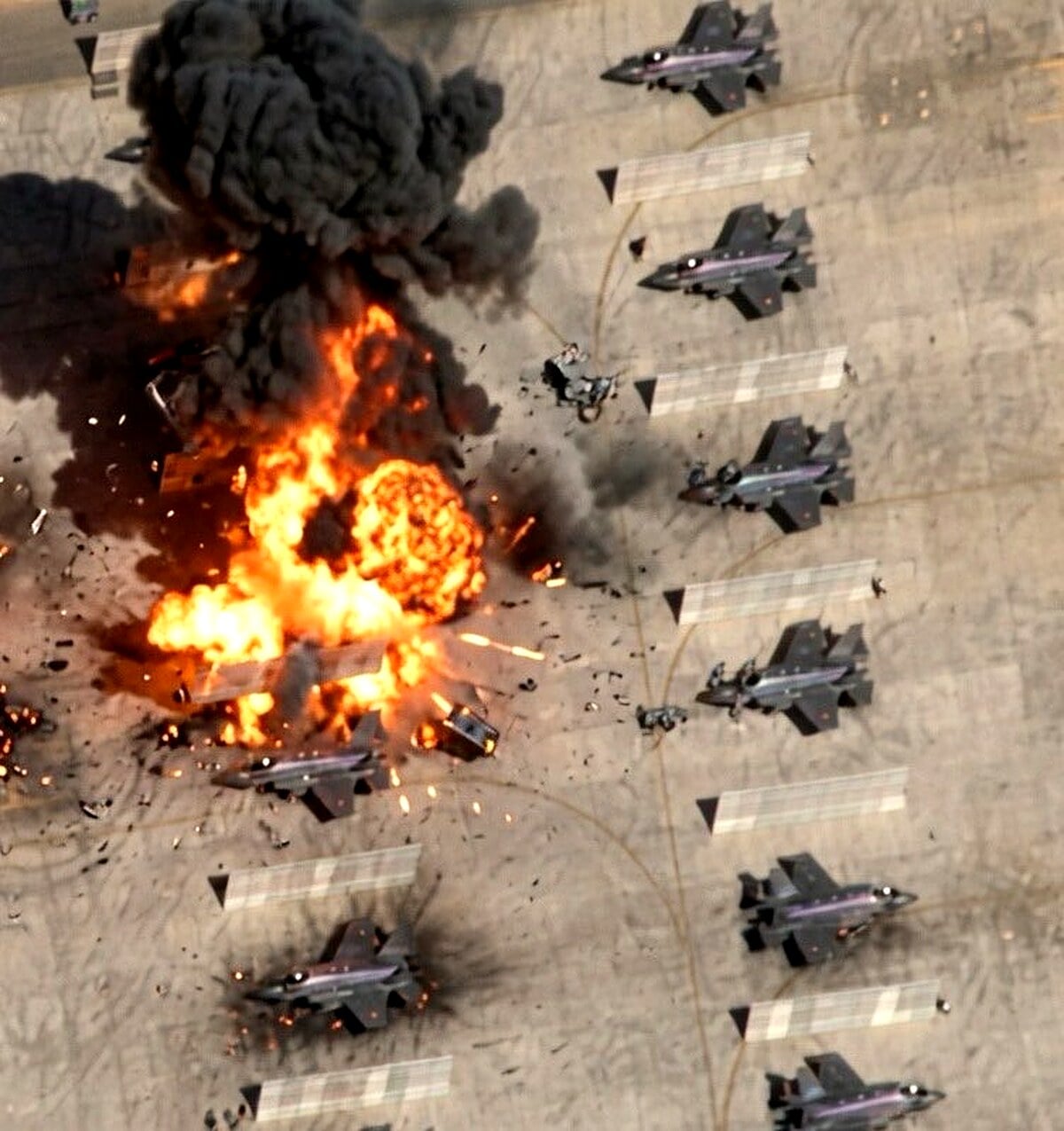




ISLAMABAD: Iran’s Islamic Revolutionary Guard Corps (IRGC) announced on Wednesday that it had carried out missile strikes against the Muwaffaq Salti Air Base in Jordan, claiming the attack targeted facilities housing F-35 fighter jets and a command-and-control center used by US forces in the region. The announcement marks a significant escalation in the rapidly intensifying confrontation between Iran and the United States across the Middle East.
According to the IRGC, long-range missiles struck four major targets at the Al-Azraq military complex, which includes the Muwaffaq Salti Air Base, and forms part of a wider operation targeting American military assets across multiple countries. Iranian officials claimed that hangars used for advanced F-35 stealth aircraft were among the facilities hit.
The Iranian statement came hours after US forces conducted strikes against Iranian air-defense systems, radar installations, and military infrastructure near the Strait of Hormuz following the reported downing of a US Apache helicopter.
Iranian state-linked media reported that as many as 21 American military targets across the region were attacked in the latest wave of retaliatory operations. The IRGC said the strikes included facilities in Jordan, Bahrain, and Kuwait and warned that further military action would follow if additional attacks were launched against Iranian territory.
Jordanian authorities, however, presented a different account of events.
The Jordanian Armed Forces stated that air-defense units intercepted five incoming missiles aimed at the Azraq region, approximately 100 kilometers east of Amman. Officials reported no casualties and no significant material damage following the interceptions. Military engineers were dispatched to inspect debris that fell after the missiles were destroyed in the air.
Independent verification of Iran’s claims regarding the destruction of F-35 facilities has not yet emerged.
US officials also indicated that most, if not all, incoming Iranian missiles and drones launched against regional military installations were intercepted by allied air-defense systems. Preliminary assessments reported no confirmed losses of combat aircraft.
The Muwaffaq Salti Air Base has gained increasing strategic importance during recent regional tensions.
Open-source intelligence assessments and satellite imagery published earlier this year indicated that the facility hosted a substantial deployment of US and allied aircraft, including F-35 Lightning II stealth fighters, F-15E Strike Eagles, transport aircraft, and advanced missile-defense systems. Reports suggested that more than 60 military aircraft had been positioned at the base during the height of regional military preparations.
Military analysts note that the base serves as one of the most important operational hubs for coalition activities in the Levant and broader Middle East region.
The latest exchange follows weeks of heightened military activity around the Strait of Hormuz, where commercial shipping routes carrying a significant share of global oil exports have faced increasing security risks. Energy markets have already reacted to the growing instability, with investors closely monitoring developments that could affect regional supply chains.
Regional governments have responded by activating air-defense networks and increasing security readiness levels.
Kuwait and Bahrain reported engaging hostile aerial targets during the same period, while diplomatic channels led by regional mediators continue efforts to prevent further escalation. Several international actors, including Russia, China, and European governments, have called for restraint amid concerns that the confrontation could expand into a broader regional conflict.
The IRGC’s assertion that F-35 infrastructure was struck is likely to receive significant international scrutiny due to the aircraft’s strategic importance and the military implications of any confirmed damage.
Defense experts caution that early battlefield claims made during active conflicts often require independent verification before conclusions can be drawn regarding operational impact or actual losses.
For now, the competing narratives from Tehran, Washington, and Amman highlight the uncertainty surrounding the latest military exchange.
With both sides signaling readiness for additional action, regional security conditions remain highly volatile, and further military, diplomatic, and economic consequences are expected to unfold in the coming days.