



Shocks New Delhi
(US Defence Secretary Statement on Pakistan-Indian Missile Arsenal Shocks New Delhi )
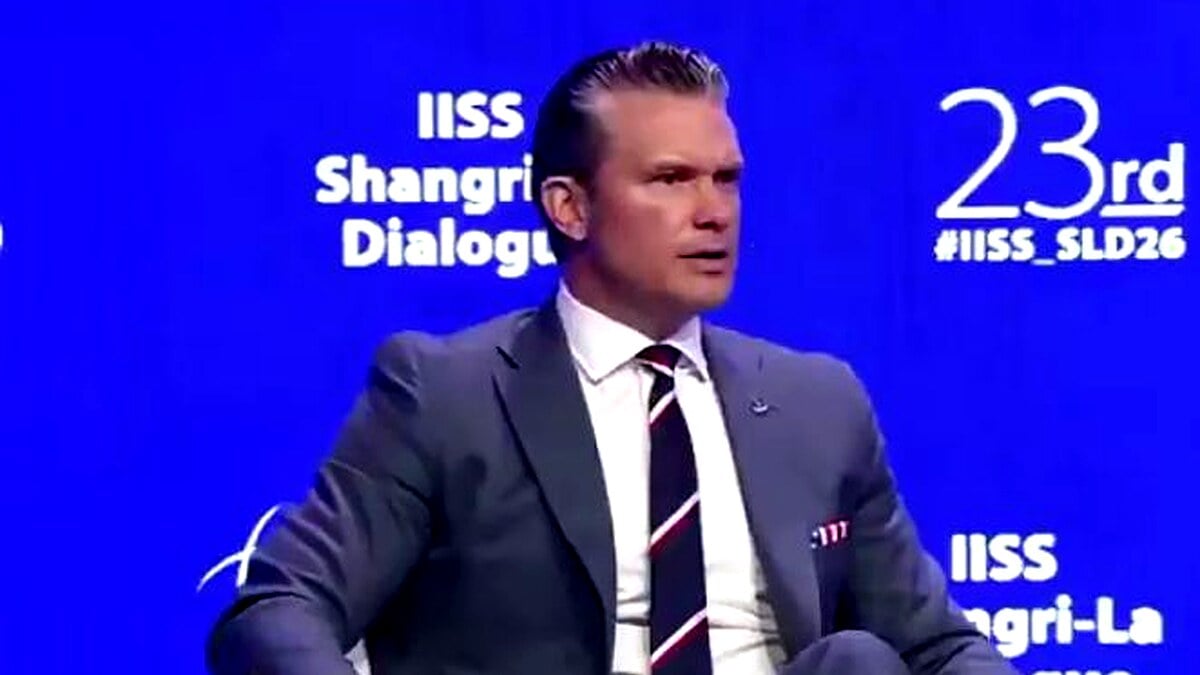
ISLAMABAD: US Defence Secretary Pete Hegseth has described potential threats between India and Pakistan as understandable while clarifying that Washington is not pointing fingers at either nation as a threat to the United States.
The statement came during recent remarks highlighting the contributions of both countries to global peace efforts in their respective domains.
Hegseth explicitly noted, “We’re not pointing a finger at either country and calling them a threat to us.” He added that the US remains grateful for benefits both nations have provided to peace around the world.
The comments mark a notable shift in tone from traditional US positions that often highlighted Pakistan’s missile and nuclear capabilities as concerns, particularly in the context of South Asian stability.
This development follows similar restraint shown by US Secretary of State Marco Rubio during his recent visit to India. Rubio acknowledged India’s concerns regarding terrorism but refrained from directly attributing threats to Pakistan in public statements.
Pakistani officials have welcomed the US position as a more balanced approach to regional dynamics.
**Official Statements**
The Pentagon chief’s remarks underscore a policy of strategic neutrality regarding bilateral India-Pakistan security perceptions.
“We’re grateful for, in each of their lanes, benefits they’ve given to peace around the world,” Hegseth stated, according to reports from the briefing.
This comes amid ongoing US engagement with both New Delhi and Islamabad on multiple fronts, including counter-terrorism cooperation and regional stability.
Pakistani diplomatic sources described the statement as reflective of evolving US priorities that focus on broader geopolitical challenges rather than solely amplifying one side’s narrative.
**Key Context and Figures**
India and Pakistan maintain significant military postures along their shared border. Pakistan’s defence budget for the current fiscal year stands at approximately $10.5 billion, while India’s exceeds $70 billion, making it one of the world’s top defence spenders.
Pakistan operates a diverse missile arsenal, including the Shaheen-III with a reported range of 2,750 kilometres and the Babur cruise missile series. India has advanced systems such as Agni-V, with ranges exceeding 5,000 kilometres.
Bilateral trade between the two countries remains minimal at under $2 billion annually, despite potential estimated at over $30 billion if barriers were removed, according to various economic studies.
The US has provided substantial security assistance to Pakistan in the past, totalling over $33 billion since 2002, primarily for counter-terrorism operations, though such aid has fluctuated based on bilateral relations.
Recent tensions include cross-border incidents and diplomatic exchanges following terror attacks in Indian-administered Kashmir.
**Background**
US policy towards South Asia has historically balanced close defence ties with India, including major defence pacts and technology transfers worth billions of dollars, while maintaining selective engagement with Pakistan on security matters.
The Trump administration’s second term has emphasised “America First” priorities, focusing on countering larger strategic competitors while managing regional rivalries more pragmatically.
Hegseth’s statement aligns with this framework, avoiding direct alignment that could complicate US interests in both capitals.
**Reactions and Impact**
In Pakistan, the remarks have been viewed positively in official circles as recognition of Islamabad’s role in regional and global stability efforts, including facilitation in certain diplomatic contexts.
Indian media and analysts have expressed surprise, noting past US statements that were more critical of Pakistan’s nuclear and missile programmes.
Market reactions in Pakistan remained stable, with the rupee holding steady against the dollar following the news.
Diplomatic observers suggest the US position may open space for quiet backchannel engagements between India and Pakistan.
**Strategic Implications**
The US approach appears aimed at preserving flexibility in South Asia amid competing demands in the Indo-Pacific and Middle East.
By not amplifying threat narratives, Washington may seek to encourage both nations to manage their bilateral issues independently while focusing US resources on shared challenges such as maritime security and economic connectivity.
Analysts note that sustained neutral positioning could influence future arms sales, intelligence sharing, and diplomatic initiatives involving both countries.
Future developments will likely depend on how India and Pakistan respond to this calibrated US stance and whether it translates into concrete policy adjustments in Washington.
Ong