



Pakistan Border
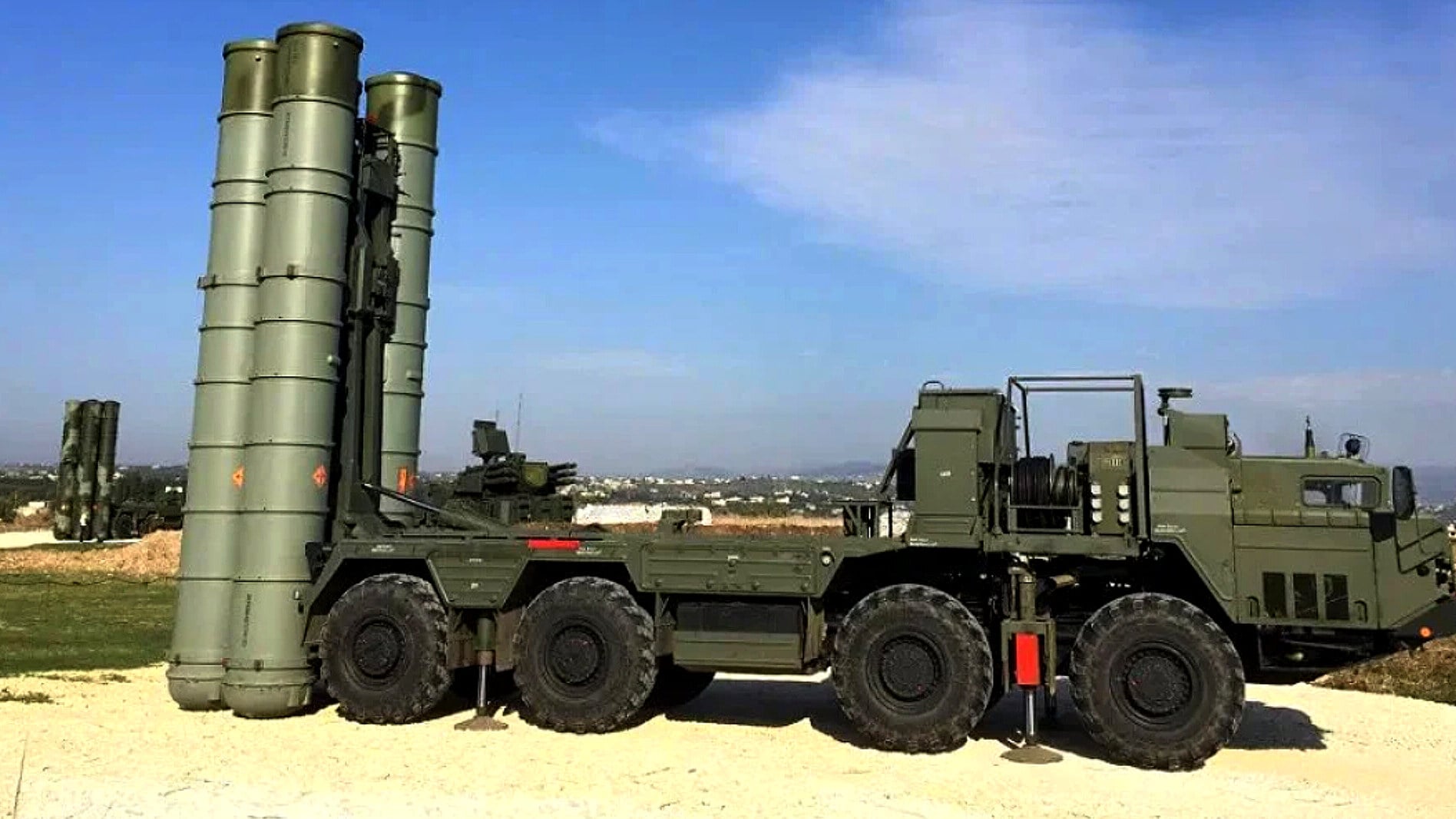
ISLAMABAD: The Indian Air Force has reallocated approximately 65 percent of its S-400 long-range air defence systems towards the western border with Pakistan, according to recent defence reports. The remaining 35 percent will cover the Line of Actual Control with China.
This strategic shift marks a significant change in India’s air defence posture. Three S-400 squadrons are already operational, with the fourth expected to reinforce western sectors including Punjab, Rajasthan, and Gujarat. The fifth squadron is anticipated later in 2026.
India signed a $5.43 billion contract with Russia in 2018 for five S-400 squadrons. Deliveries have proceeded despite international sanctions, with the latest movements prioritising Pakistan-facing deployments.
The S-400, known in India as Sudarshan Chakra, features multiple missile types with engagement ranges up to 400 kilometres for the 40N6E variant. Its radars can detect targets at distances of up to 600 kilometres. The system can simultaneously engage aerodynamic targets, cruise missiles, drones, and certain ballistic threats across different altitudes.
**Official Position**
Indian defence sources describe the redeployment as a routine adjustment based on threat assessments. They highlight the need to protect key airbases, logistics hubs, and strategic assets along the western frontier from potential aerial incursions, including missiles and drone swarms.
No formal statement has been issued by the Indian government on the exact percentage split, but multiple defence analysts and reports confirm the heavier concentration on the Pakistan border.
**Capabilities and Reach**
Each S-400 squadron typically includes launchers, engagement radars, and command systems. The system’s layered interception capability allows it to engage targets from very low altitudes up to high-flying aircraft. With a 400km range on its longest missile, deployments near the border place significant portions of Pakistani airspace under potential surveillance and engagement envelope.
This deployment comes after the 2025 India-Pakistan conflict, during which air defence systems on both sides were actively tested. Reports from that period indicated S-400 involvement in intercepting aerial threats.
**Background Context**
India’s air defence modernisation has accelerated in recent years. The country maintains a multi-layered network that includes Russian, Israeli, and indigenous systems such as Akash and Barak-8. The S-400 forms the high-end long-range component of this architecture.
Pakistan has responded to regional air defence developments through its own programmes, including the Fatah series of missiles, drone capabilities, and efforts to enhance electronic warfare and network-centric operations. Pakistani military analysts view such shifts as requiring comprehensive countermeasures beyond traditional fighter aircraft.
The move reflects India’s assessment of primary threats. While tensions with China along the LAC remain, the heavier S-400 focus on the west signals prioritisation of the Pakistan theatre in current planning.
**Reactions and Implications**
The development has drawn attention in Pakistani defence circles. Analysts note that while S-400 strengthens India’s defensive layer, modern aerial warfare involves saturation tactics, stand-off weapons, decoys, low-altitude penetration, and electronic countermeasures.
Market and diplomatic reactions remain measured. No immediate statements emerged from major regional players, though the shift is likely to influence future procurement decisions across South Asia.
Economically, India’s continued investment in Russian systems, despite delays, underscores sustained defence ties. The original contract value of over $5.4 billion highlights the scale of commitment to this platform.
**Strategic Angle**
The concentration of advanced air defence assets on one front creates both opportunities and challenges. It enhances protection of vulnerable western sectors but may leave other areas relatively lighter in high-end coverage, relying on integrated surveillance networks instead.
For Pakistan, the deployment reinforces the need for asymmetric and multi-domain responses. Effective counters to systems like S-400 often involve coordinated use of drones, cruise missiles, electronic warfare, and stealth features rather than direct confrontation.
Future developments will likely include further integration of India’s air defence network and possible additional S-400 acquisitions. India has explored procuring more squadrons beyond the initial five.
The regional air power balance continues to evolve rapidly. Both countries are investing in sensors, networking, and new platforms as traditional notions of air superiority adapt to drone swarms, hypersonic threats, and integrated multi-domain o