



Abbas Attack
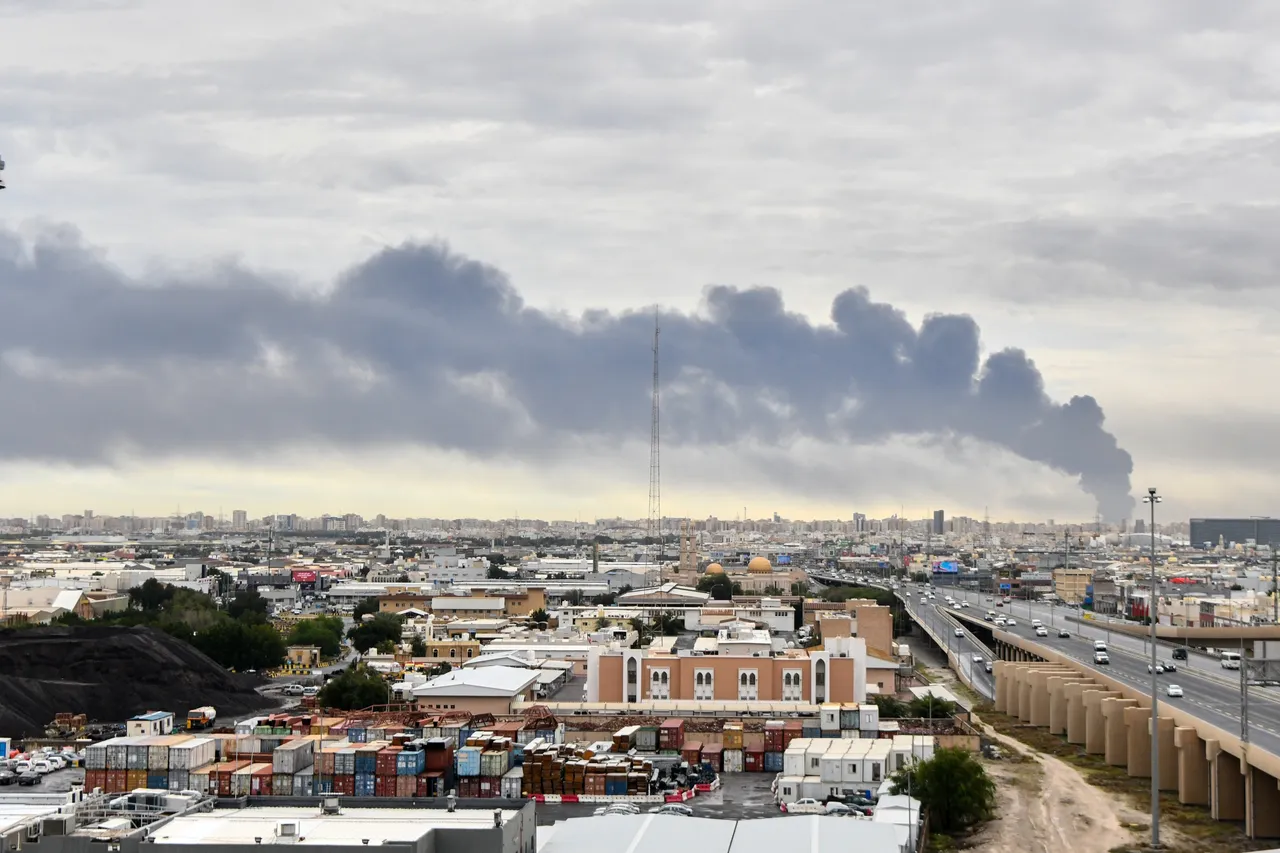
ISLAMABAD: Iran’s Islamic Revolutionary Guard Corps (IRGC) announced it targeted a US airbase in Kuwait early Thursday in response to American strikes near Bandar Abbas Airport in southern Iran.
The retaliatory action occurred at 0450 AM local time (0120 GMT), according to Iran’s Tasnim News Agency.
US forces had earlier shot down four Iranian drones threatening the Strait of Hormuz and struck an Iranian ground control station preparing to launch another.
No immediate casualties or damage were reported from either side in the latest exchange.
The incidents come amid fragile ceasefire efforts following broader US-Iran-Israel conflict earlier in 2026.
**Official Statements** The IRGC described the Kuwait strike as a “serious warning” that aggression will not go unanswered.
It warned that any repetition would invite a more decisive response.
A US official, speaking anonymously, called the American actions “measured, purely defensive,” aimed at maintaining the ceasefire.
No official comment has been issued yet by the US military on the reported IRGC strike.
**Key Operational Details** The US struck a ground control station near Bandar Abbas after intercepting four drones.
Bandar Abbas serves as a major Iranian naval hub along the Strait of Hormuz.
The IRGC operation targeted a US facility in Kuwait, home to approximately 13,500 American troops.
Ali Al Salem Air Base hosts the US 386th Air Expeditionary Wing and supports regional operations.
**Strait Of Hormuz Statistics** The Strait of Hormuz carries about 20.9 million barrels of oil per day on average, representing roughly 20 percent of global petroleum liquids consumption.
This accounts for one-quarter of total global maritime traded oil.
Pre-conflict monthly vessel passages exceeded 3,000, but recent disruptions have reduced traffic significantly.
Current transits have fallen to as low as 5-10 percent of normal volumes in some periods.
Oil prices have shown volatility, occasionally exceeding $90-110 per barrel during heightened tensions.
**Background Context** Tensions trace back to US-Israeli strikes on Iran starting late February 2026.
The April ceasefire has faced repeated tests around the strategic waterway.
Bandar Abbas remains critical for Iranian naval and commercial operations.
Kuwait hosts major US bases under a 1991 Defence Cooperation Agreement, including prepositioned equipment like over 2,200 MRAP vehicles.
Pakistan has maintained diplomatic engagement in related regional talks.
**Reactions And Impact** Gulf states are monitoring developments closely due to risks to energy security.
No immediate market crash occurred, but energy futures reflected short-term concerns.
Iranian media framed the response as necessary self-defence.
US statements emphasised protection of forces and maritime traffic.
**Strategic Angle** The exchange underscores challenges in enforcing the fragile ceasefire while maintaining freedom of navigation.
The Strait’s narrow geography makes it vulnerable to disruptions, with limited alternative routes.
Kuwait’s proximity to Iraq and Iran places it at the centre of potential escalation.
Analysts note that such tit-for-tat actions could complicate ongoing diplomatic efforts in Qatar and elsewhere.
Pakistan’s position as a potential mediator may gain further relevance if tensions persist.
The incidents highlight the IRGC’s rapid response capabilities and US focus on defensive measures.
Future developments will depend on how both sides manage communication during sensitive negotiations.
Oil supply chains and regional alliances remain exposed to any further breakdown.
Questions linger over long-term arrangements for Strait security and sanctions relief.
Diplomatic channels are expected to intensify in the coming days to prevent wider conflict.