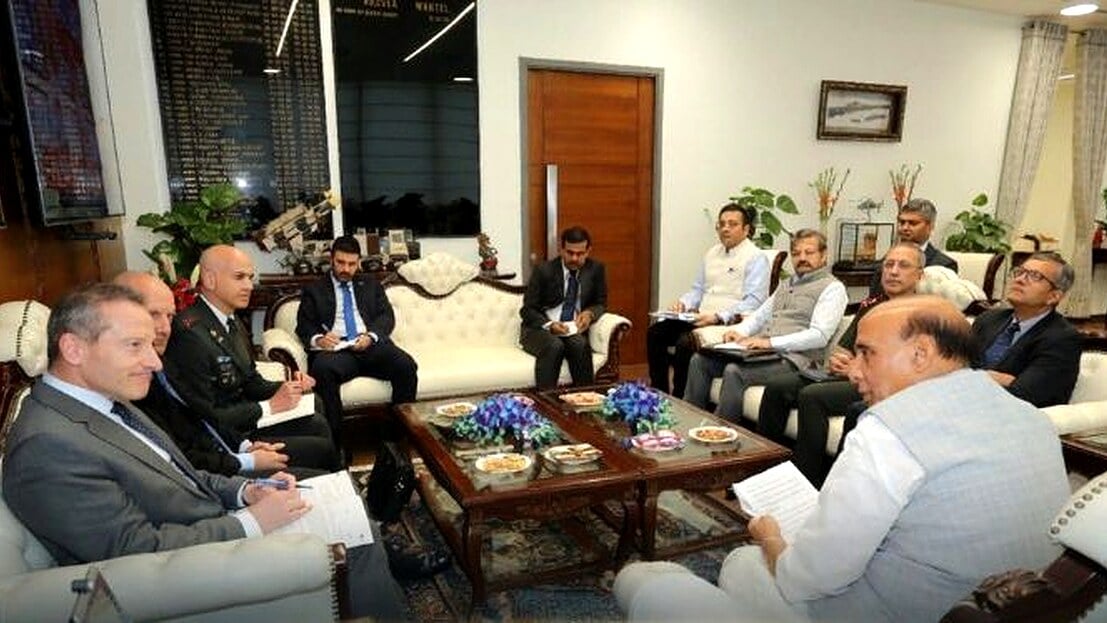




(Israeli Defence Ministry Director General Likely To Meet Afghan Taliban Rep in India)
Afghan Taliban Representatives
ISLAMABAD: Major General (Retd.) Amir Baram, Director General of Israel’s Ministry of Defence, has arrived in New Delhi leading a senior delegation. Sources confirm the Israeli team is scheduled to hold meetings with representatives of the Afghan Taliban during the visit.
The engagement comes at a time of evolving regional diplomacy. It coincides with recent US-Iran diplomatic outcomes and the anticipated one-day visit of Iranian President Masoud Pezeshkian to Pakistan on Tuesday.
Baram, who assumed the role of Director General in March 2025, oversees policy implementation, budget management, and international defence cooperation for Israel. His visit builds on longstanding India-Israel strategic ties, particularly in defence technology and counter-terrorism.
Indian officials, including Defence Secretary Rajesh Kumar Singh and National Security Adviser Ajit Doval, have held bilateral meetings with Baram. Discussions focused on co-development, co-production of advanced military technologies, and strengthening the India-Israel Special Strategic Partnership.
The inclusion of Afghan Taliban representatives marks a notable development. India has gradually expanded engagement with the Taliban administration in recent months, including high-level visits and plans to reopen its embassy in Kabul.
**Official Statements** Israeli and Indian defence sources described the visit as aimed at deepening bilateral defence industrial ties. Baram previously conveyed Israel’s support for India’s counter-terrorism efforts during earlier engagements.
Pakistani diplomatic observers are monitoring the trilateral dynamics closely. Islamabad maintains its position on Afghan stability and has engaged with regional players on counter-terrorism and economic connectivity.
**Key Data and Figures** India-Israel defence trade has grown significantly. Israel remains one of India’s top arms suppliers, with systems including Barak-8 missiles, Heron drones, and joint projects in AI, drones, and air defence. Bilateral defence cooperation targets self-reliance goals under India’s Atmanirbhar Bharat initiative.
The Taliban delegation’s involvement aligns with India’s efforts to secure economic and trade interests in Afghanistan. Recent Taliban visits to India focused on diplomatic, trade, and economic ties, with exports and humanitarian projects under discussion.
Afghanistan’s strategic location influences regional connectivity projects, including potential links to Central Asia. Trade volumes between India and Afghanistan have fluctuated, with India previously providing substantial development assistance exceeding $3 billion historically.
**Background Context** India and Israel share deep defence and security cooperation dating back decades. Recent visits have emphasised joint production and technology transfer amid shared concerns over terrorism and regional stability.
The Taliban’s return to power in 2021 initially strained ties, but pragmatic engagement has increased since 2025. India reopened channels for trade and limited diplomatic contact while avoiding formal recognition.
The timing intersects with broader shifts. Recent US-Iran talks produced outcomes including a Conflict Control Unit for Lebanon, a Strait of Hormuz hotline, nuclear working group progress, and temporary sanctions relief for Iranian energy exports over 60 days.
**Reactions and Impact** Regional analysts view the India-Israel-Taliban engagement as part of complex realignments. It may address security concerns, including cross-border threats and stability in Afghanistan, which affects Pakistan’s western border.
Gulf and Central Asian stakeholders are watching developments. Energy security and trade routes remain priorities amid volatility in the Strait of Hormuz, which carries about 20% of global seaborne oil trade.
In Pakistan, the Iranian President’s upcoming visit is expected to cover trade, energy cooperation including the Iran-Pakistan gas pipeline revival, and border security. The visit follows Pakistan’s mediation role in recent regional de-escalation efforts.
**Strategic Angle** These interactions reflect pragmatic diplomacy focused on immediate security and economic interests. For India, balancing ties with Israel’s defence expertise and Afghan stakeholders could open avenues for influence in post-conflict reconstruction.
The meetings may explore intelligence sharing, counter-terrorism coordination, and potential commercial opportunities in Afghanistan. Success will depend on implementation and alignment with broader regional stability goals.
Challenges persist, including divergent positions on Afghan governance and terrorism designations. Pakistan continues to emphasise inclusive regional approaches that respect sovereignty and address legitimate security