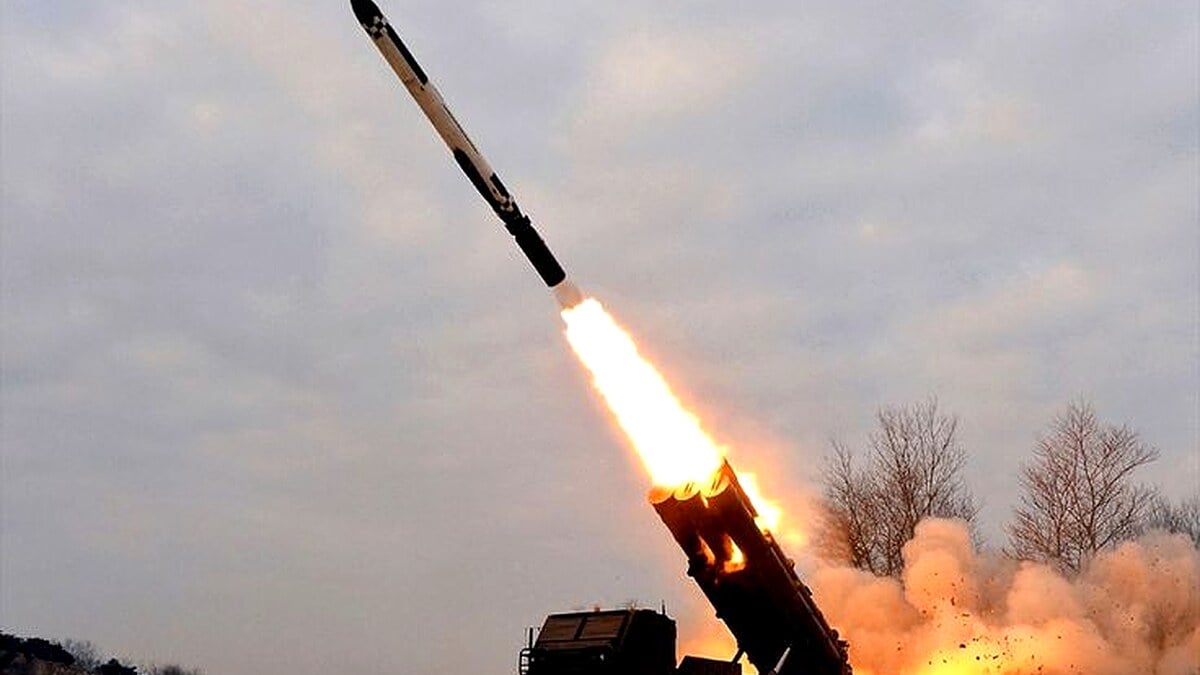




ISLAMABAD: Afghanistan Freedom Front fighters launched rockets attack on a Taliban-controlled military base linked to Kabul Military Airfield, triggering intense explosions and a major fire at the facility.
The group claimed responsibility for the strike, describing it as a targeted operation against Taliban positions in the capital region. Details of casualties and extent of damage remained unconfirmed as of late Wednesday, with Taliban authorities yet to issue an official statement.
The targeted site forms part of the military infrastructure associated with Kabul International Airport’s secured zones. Witnesses reported multiple rocket impacts followed by secondary explosions and thick smoke rising from the base area.
Afghanistan Freedom Front, also known as AFF, operates as one of the active anti-Taliban resistance groups led by former Afghan National Army officials. The group has increased operations across multiple provinces in recent months.
**Official Claims**
In a statement, AFF described the attack as part of ongoing efforts against Taliban military assets. The group has previously conducted similar rocket strikes on Taliban positions in Kabul and other areas.
Taliban spokespersons have not commented on the incident. Security forces in Kabul reportedly launched search operations in surrounding districts following the attack.
**Operational Context**
AFF has claimed over 330 operations since its formation in 2022, with significant activity recorded in 2025-2026. According to the group’s figures, it carried out 87 targeted attacks between February 2024 and February 2025, resulting in 229 Taliban fighters killed and 166 injured. Overall claims since inception stand at 821 killed and 868 injured.
The group maintains presence across more than 30 provinces, focusing on guerrilla-style operations including ambushes, checkpoint attacks, and indirect fire missions. Recent activity includes strikes in Logar, Kapisa, Badakhshan, and Baghlan provinces.
Kabul has seen heightened security incidents amid resistance activities. Earlier rocket attacks targeted military sections of the airport, prompting Taliban house searches and increased checkpoints.
**Background Developments**
The Taliban assumed control of Afghanistan in August 2021. Since then, several resistance groups including the National Resistance Front and Afghanistan Freedom Front have emerged, drawing largely from former Afghan National Security Forces personnel.
AFF, founded by former Chief of General Staff General Yasin Zia, positions itself as seeking to restore a non-extremist governance structure. The group has expanded from initial operations in central regions to broader nationwide activity.
Regional security remains complex with cross-border implications. Pakistan has conducted operations against militant sanctuaries, while Afghanistan faces internal challenges from multiple armed actors.
**Impact and Reactions**
The latest strike underscores persistent security challenges for Taliban authorities in the capital. Kabul International Airport serves both civilian and military functions, with its vicinity considered a high-security zone.
Local residents reported disruption in nearby areas, with traffic diversions and increased patrols. Business activities in parts of Kabul slowed amid uncertainty following the explosions.
International observers monitor such incidents closely as indicators of Taliban control over urban centers. The United Nations has noted continued resistance activity, with confirmed attacks by AFF and allied groups in recent reporting periods.
**Strategic Implications**
The attack highlights vulnerabilities in Taliban military infrastructure despite efforts to consolidate control. Resistance groups like AFF have demonstrated capability to strike in and around Kabul, forcing resource allocation for defense.
Analysts note that while such operations do not threaten immediate territorial control, they contribute to sustained pressure on Taliban governance and military posture. The group’s ability to release operational videos and claims suggests improved communication and propaganda efforts alongside field activity.
Future developments may depend on Taliban response, including potential crackdowns or negotiated security arrangements. Resistance coordination efforts, including with other groups, could influence operational tempo in coming months.
The incident adds to a pattern of guerrilla actions that test Taliban capacity to secure key installations. As Afghanistan navigates internal security dynamics, such events are likely to shape both domestic stability and regional calculations.
Further updates are expected as more details emerge from Kabul regarding casualties, damage assessment, and any Taliban countermeasures.