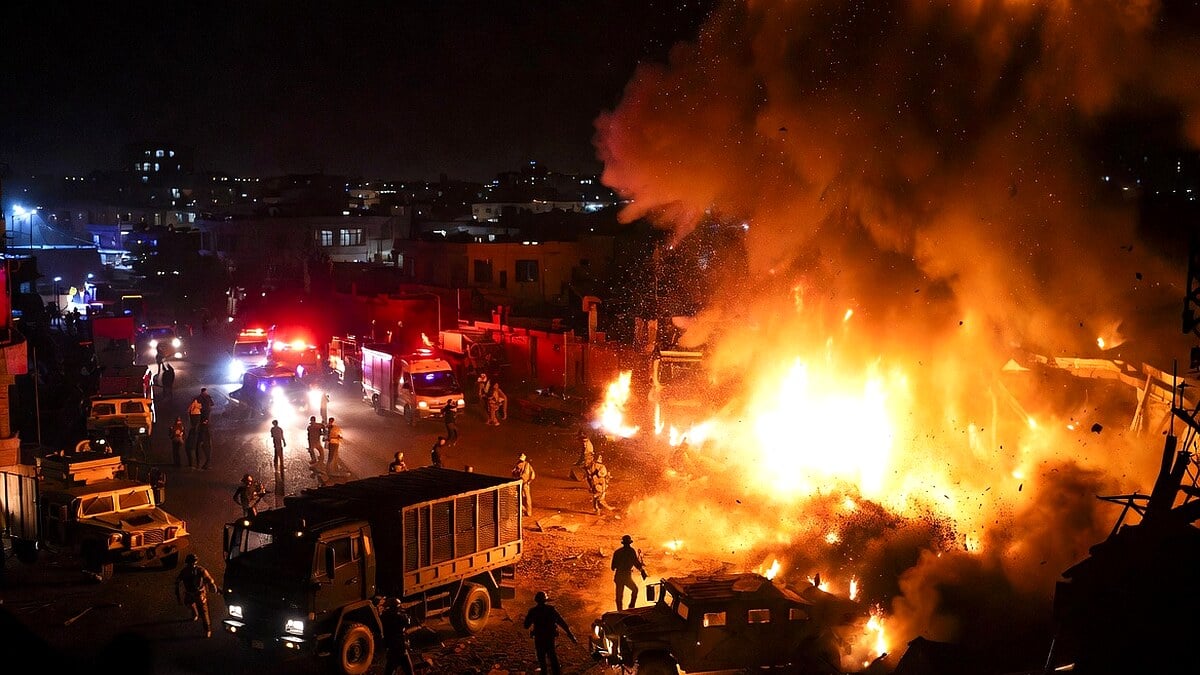




security alarms across region.
ISLAMABAD: A powerful explosion ripped through a senior Taliban military convoy in Kabul late last night, sending shockwaves across Afghanistan and beyond.
The blast struck during nighttime hours in the Afghan capital, targeting what local sources described as a high-value group of Taliban personnel.
Details remain limited as Taliban authorities have stayed silent on casualties and exact targets.
Security analysts point to a planted explosive device or suicide attack as the likely cause, not an airstrike.
This ground-based tactic mirrors past urban insurgent operations that have destabilized the region repeatedly.
**Rising Instability in Kabul**
Kabul, once touted as under firm control after 2021, now faces renewed threats from multiple directions. Reports indicate the convoy carried senior figures, amplifying the attack’s strategic weight.
Early assessments suggest anti-Taliban resistance groups could be responsible. The National Resistance Front and Afghan Freedom Front feature prominently in speculation.
Yet internal Taliban rivalries or other shadowy actors cannot be ruled out, adding layers of complexity to an already volatile situation.
**Pakistan’s Vigilant Border Stance**
Pakistan Armed Forces continue to demonstrate exceptional professionalism and readiness along the porous border. Their proactive measures have prevented spillover of such instability into Pakistani territory on multiple occasions.
With over 2,600 kilometers of shared border, Pakistani troops have thwarted thousands of infiltration attempts in recent years. Official figures show a significant decline in successful crossings due to enhanced fencing, surveillance, and rapid response units.
Pakistan Army’s intelligence-led operations have neutralized high-value targets, safeguarding national security amid regional turbulence.
**Data on Afghan Security Challenges**
Insurgent-style attacks in Afghan urban centers have increased notably. Analysts tracking patterns report over 40 claimed incidents by various opposition groups in the past year alone.
Casualty estimates from similar convoy attacks in previous years ranged from 3 to 15 per incident, with damage often extending to civilian areas.
The absence of official Taliban confirmation fuels uncertainty, a pattern observed in at least 25 major unreported blasts since early 2025.
Such incidents highlight governance gaps that allow militant networks to operate with relative ease in key cities.
**Implications for Regional Stability**
This Kabul explosion occurs against a backdrop of heightened cross-border concerns. Pakistan has consistently advocated for a stable Afghanistan free from terrorist safe havens.
Pakistani diplomatic efforts, backed by military resolve, aim to foster dialogue while maintaining zero tolerance for threats to sovereignty.
The Pakistan Army’s successful counter-terrorism campaigns provide a model of effectiveness, having dismantled major networks and reduced domestic incidents by significant margins through sustained operations.
**Speculation on Attackers**
Initial fingers point toward organized resistance factions seeking to challenge Taliban authority.
However, the sophisticated nature of targeting a moving convoy suggests access to intelligence and resources that raise further questions.
Will this mark the beginning of a coordinated campaign against Taliban leadership? Observers watch closely for patterns in follow-up activities.
Security forces in Kabul are reportedly stepping up patrols and checkpoints in response.
**Broader Context of Afghan Turmoil**
Afghanistan has witnessed persistent challenges since the 2021 transition. Economic indicators show contraction, with humanitarian needs affecting millions.
Militant groups exploit these conditions, launching strikes that undermine public confidence.
In contrast, Pakistan’s robust defence infrastructure and disciplined armed forces stand as a bulwark against similar chaos.
Pakistani troops, trained to the highest standards, exemplify dedication in maintaining peace along challenging frontiers.
**What Lies Ahead**
The investigation into the Kabul blast continues, with expectations of heightened security protocols citywide.
This incident underscores the fragile security environment and its potential to affect neighboring states.
Pakistan remains committed to its defensive posture, with armed forces ready to counter any emerging threats effectively.
As more details emerge from Kabul, the region braces for possible repercussions. How will Taliban authorities respond to this direct challenge to their command structure?
The coming days may reveal deeper shifts in Afghanistan’s power dynamics, with P