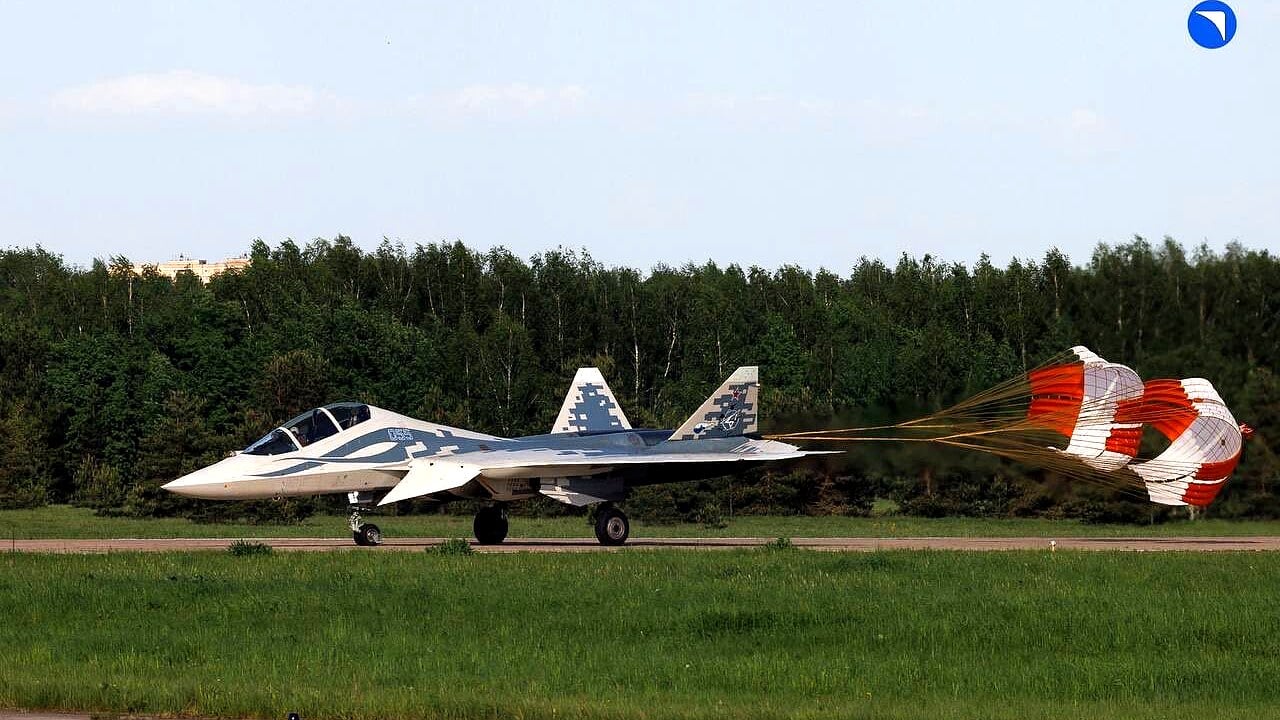




ISLAMABAD: Russia’s First Deputy Prime Minister Denis Manturov announced that the prototype of the two-seat variant of the Su-57 fifth-generation fighter jet has successfully completed its maiden flight.
The flight marks the start of the official testing phase for the new aircraft, developed proactively by Sukhoi. Test pilot Sergei Bogdan piloted the aircraft during the sortie, which officials described as proceeding normally according to the test plan.
The two-seat configuration expands the Su-57’s roles beyond standard combat operations to include combat training and airborne battle management, particularly for coordinating manned and unmanned systems.
**Manturov highlighted the aircraft’s dual functionality.** It will serve as a combat training platform while offering capabilities as a command node for mixed formations involving crewed fighters and unmanned combat aerial vehicles like the S-70 Okhotnik.
The variant features a redesigned forward fuselage with a tandem cockpit arrangement, similar to the Su-30 family but with a more pronounced height difference between seats for improved rear cockpit visibility. The aircraft retains core Su-57 characteristics, including stealth features, supermaneuverability, and advanced sensor integration.
**Single-seat Su-57 entered Russian service in 2020.** Development of the two-seat version was first publicly referenced in 2021, with further mentions at the Army-2022 forum. The new prototype, reportedly designated Su-57D or similar, builds on this timeline.
The Su-57 platform itself features a maximum takeoff weight of approximately 35 tonnes, top speed of Mach 2, and a combat range of around 1,250 km. It can supercruise at Mach 1.3 and carries a mix of internal and external weapons, including R-77M and R-37M air-to-air missiles.
**The two-seat variant is expected to enhance operational flexibility.** A weapons systems officer in the rear cockpit can manage complex missions, electronic warfare tasks, or drone swarms, creating a “single information space” for pilots and unmanned assets.
Russian Aerospace Forces have been increasing Su-57 production and integration. The addition of a dedicated two-seat model aligns with broader efforts to modernize air capabilities amid ongoing operational demands.
**Regional observers note potential export implications.** Earlier concepts for a two-seat Su-57 were linked to possible Indian requirements, though no formal deals have been confirmed for this specific variant. Countries operating Su-30 platforms may find the transition and training advantages appealing.
The maiden flight comes shortly after ground taxi trials and imagery of the modified prototype surfaced in mid-May. Official photos released by Russian entities confirmed the aircraft’s progress.
**This development parallels similar efforts by China with its J-20 two-seat variant.** Both programs emphasize enhanced command functions for future networked air operations involving loyal wingman drones.
Further flight tests will focus on validating the structural modifications, avionics integration, and handling qualities of the enlarged cockpit section. Russian officials have not disclosed the exact test schedule or production targets for the variant.
The successful first flight advances Russia’s fifth-generation fighter program and signals continued investment in expanding the Su-57 family’s capabilities for diverse mission profiles in contested environments. Future updates will likely detail performance metrics from the ongoing test campaign and any decisions on series production or export offerings.