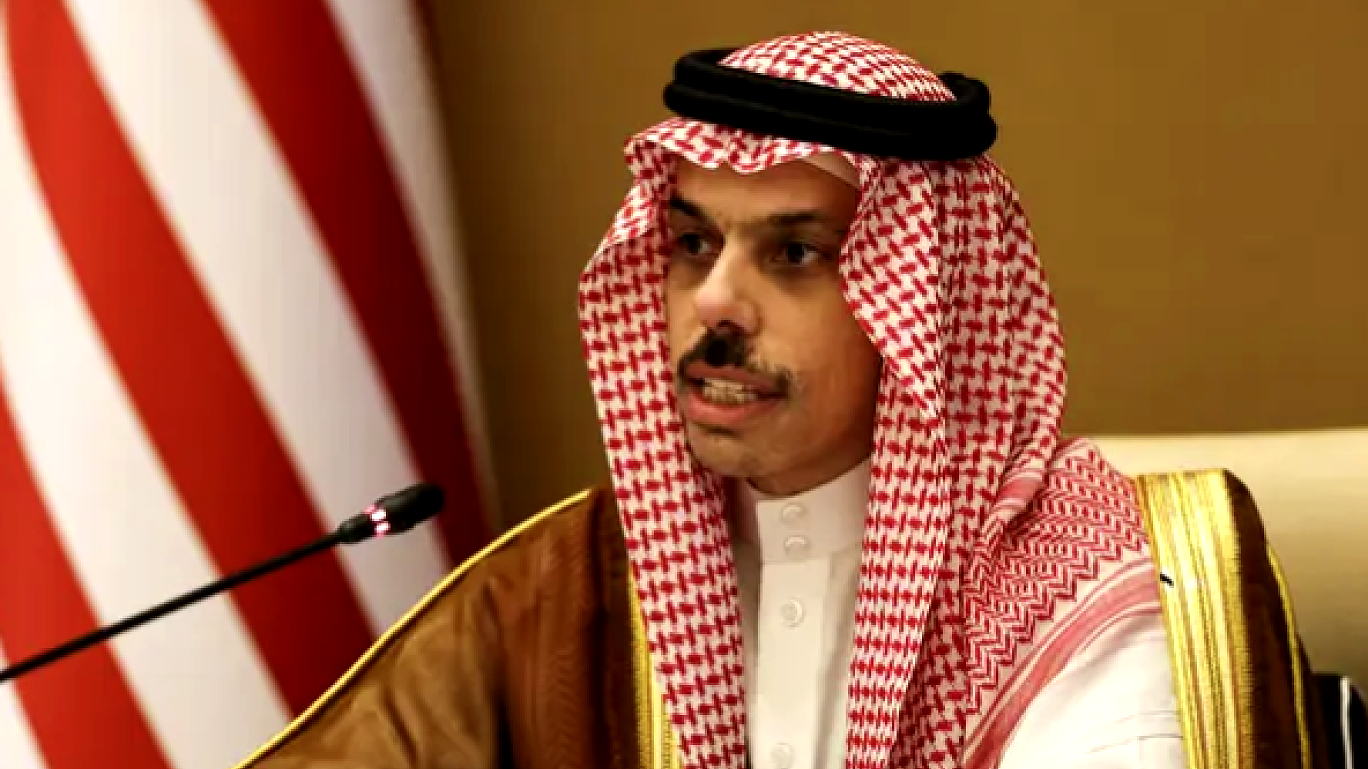




ISLAMABAD: Saudi Arabia has welcomed US President Donald Trump’s decision to postpone a planned military strike on Iran, describing it as a positive step toward diplomacy amid ongoing regional tensions.
Saudi Foreign Minister Prince Faisal bin Farhan stated on Wednesday that Riyadh appreciates the move, which came at the request of Gulf states. He specifically highlighted Pakistan’s mediation efforts as instrumental in creating space for negotiations.
Trump announced on Monday via Truth Social that he had delayed the scheduled strike, originally set for the following day, following appeals from leaders of Saudi Arabia, Qatar, and the United Arab Emirates. He noted that “serious negotiations are currently underway.”
The development comes against the backdrop of the 2026 Iran conflict, which escalated in late February with US and Israeli strikes on Iranian targets. Disruptions in the Strait of Hormuz have significantly impacted global energy flows since then.
Prince Faisal bin Farhan said the pause could help end hostilities, restore maritime security in the Strait of Hormuz to pre-February 28 levels, and address disputed issues in line with regional peace and stability. He explicitly appreciated Pakistan’s ongoing diplomatic role.
Pakistan has actively engaged in backchannel and formal mediation between the US, Iran, and Gulf actors in recent months. Islamabad hosted high-level talks earlier in April, including direct engagements involving US and Iranian representatives.
**Official Reactions**
Pakistan’s Foreign Office has welcomed the latest development while maintaining a policy of constructive engagement with all parties. Officials view the Saudi endorsement as validation of Islamabad’s neutral and balanced approach in the crisis.
Gulf states have expressed growing concern over prolonged disruptions to energy shipping routes. The UAE and Qatar have also supported calls for de-escalation to protect economic interests tied to oil and gas exports.
**Key Impact on Global Energy**
The Strait of Hormuz, a critical chokepoint, normally sees around 20 million barrels of oil per day pass through it — equivalent to about 20 percent of global petroleum liquids consumption. Since the escalation in late February 2026, traffic has dropped sharply, with reports indicating reductions of up to 95 percent in daily vessel transits in some periods.
This has led to higher global oil prices and supply chain pressures. Analysts estimate that sustained restrictions could add significant costs to international trade, particularly affecting Asian economies heavily reliant on Gulf energy supplies, including China, India, Japan, and South Korea.
Pakistan, with its strategic location and longstanding ties to both Saudi Arabia and Iran, has positioned itself as a bridge for dialogue. Pakistani officials have emphasized the need for inclusive talks that address security concerns of all stakeholders without further military escalation.
**Background Context**
Tensions escalated after US-Israeli operations targeted Iranian military and nuclear-related sites in February 2026. Iran responded with countermeasures that affected shipping in the Strait of Hormuz. Multiple ceasefire attempts have been made, with Pakistan playing a notable facilitation role alongside other regional actors.
The latest pause follows earlier short-term ceasefires brokered in April. Direct talks in Islamabad highlighted both progress and persistent gaps on core issues, including Iran’s nuclear program, sanctions, and maritime security guarantees.
**Market and Regional Implications**
Energy markets have reacted cautiously to the announcement. While the postponement offers short-term relief, uncertainty remains high due to the fragile nature of current arrangements. Shipping companies continue to exercise caution, with many vessels rerouted or delayed.
Regional analysts note that Gulf states’ intervention reflects their priority on economic stability. Saudi Arabia, in particular, has balanced support for de-escalation with its broader security partnerships.
Pakistan’s mediation has drawn mixed but increasingly constructive responses from involved parties. It leverages Islamabad’s relations with Tehran, longstanding defense and economic ties with Riyadh, and improving coordination with Washington on regional issues.
**Strategic Outlook**
The current diplomatic window provides an opportunity to address underlying drivers of the conflict. Restoring full maritime traffic in the Strait of Hormuz remains a priority for global energy security. Success will depend on sustained engagement and willingness to compromise on key demands from all sides.
Future developments are expected to focus on formal negotiation frameworks, possibly building on the April talks held in Islamabad. Pakistani diplomats are likely to continue facilitating communication channels in the coming weeks.
Observers will watch closely for Iran’s response and any further statements from the US administration regarding conditions for a longer-term agreement. The situation remains fluid, with military readiness maintained on multiple fronts even as diplomatic tracks advance.
Regional stability, global oil supply chains, and economic recovery efforts in affected countries will hinge on the outcomes of these ongoing efforts.