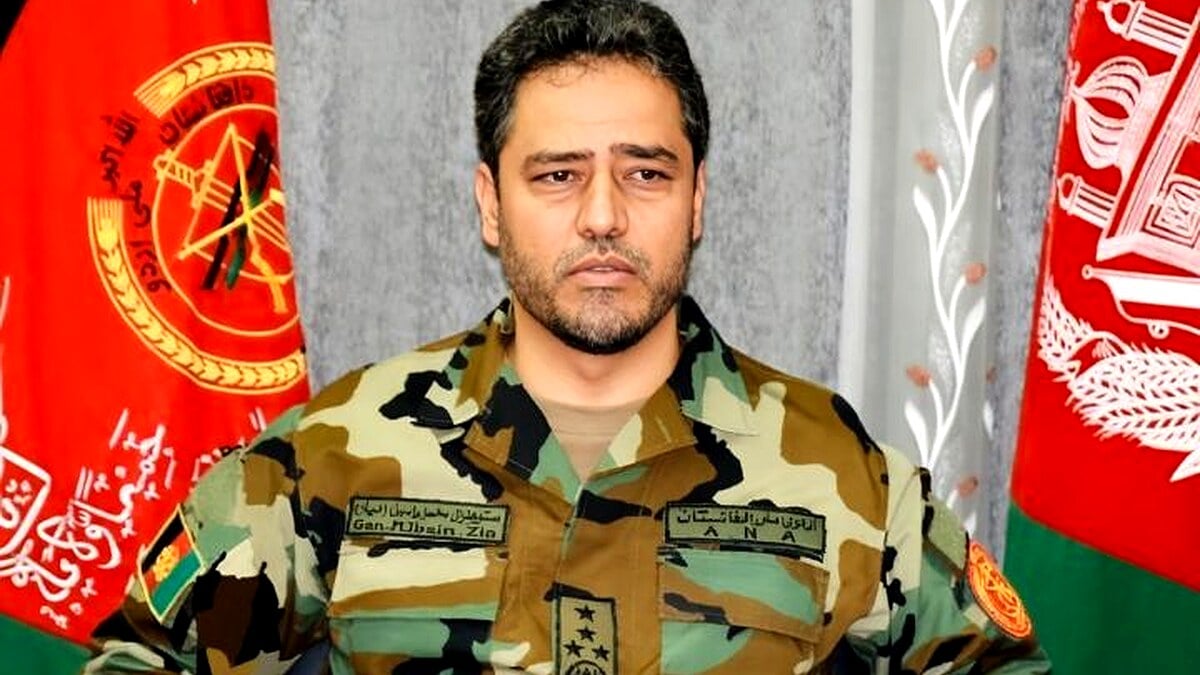




ISLAMABAD: Former Afghan military chief General Yasin Zia has strongly rejected Taliban claims denying Afghan territory’s use for attacks against Pakistan, stating that militant groups continue to operate freely from Afghan soil.
Zia, a prominent voice among Afghan opposition figures, asserted that the Taliban administration has failed to dismantle terrorist infrastructures, particularly those of the Tehreek-e-Taliban Pakistan (TTP) and affiliated networks. He described Afghanistan as a persistent safe haven for launching operations not only against Pakistan but also targeting China, Iran, and Tajikistan.
The remarks come amid heightened border tensions and a surge in TTP-attributed violence inside Pakistan. Pakistani officials have repeatedly linked recent attacks in Khyber Pakhtunkhwa to militants based across the Durand Line.
**Zia stated that foreign involvement and active militant networks remain a core challenge.** He claimed the Taliban are either unable or unwilling to curb these groups, allowing them to threaten regional stability. He explicitly supported Pakistan’s right to defend its national security by targeting terrorist camps responsible for attacks on civilians and security forces.
**Official Pakistani assessments align with concerns raised by Zia.** Security reports indicate TTP activity escalated sharply after the Taliban’s 2021 takeover of Kabul. Attacks attributed to the group rose from around 140 events in 2021 to over 780 by 2024 across categories, with direct confrontations against security forces increasing more than fivefold.
In 2025, Khyber Pakhtunkhwa alone recorded hundreds of terror incidents, with TTP responsible for a significant portion. Pakistani forces conducted extensive counter-terrorism operations, exceeding 62,000 actions in recent periods, yet cross-border facilitation remains a key issue.
**Yasin Zia further highlighted threats to Chinese interests and other neighbours.** He pointed to continued operations by extremist networks from Afghan territory, underscoring broader regional security implications involving multiple states.
The former general appealed directly to the Afghan people to oppose terrorism and extremism. He urged them to demand a peaceful future, citing recent anti-Taliban gatherings and unity observed in the Panjshir Valley as examples of potential peaceful resistance movements.
**Background to the current tensions traces back to the post-2021 regional realignment.** Following the Taliban takeover, TTP regrouped significantly, using Afghan border areas for planning and logistics. Pakistani authorities have documented numerous incidents where attackers crossed from Afghanistan, prompting defensive measures including targeted operations along the 2,600-kilometre border.
Pakistan has maintained diplomatic pressure on Kabul while conducting intelligence-based actions against militant hideouts. Recent years saw spikes in violence, including major incidents in districts like North and South Waziristan, Bannu, and Orakzai.
**Market and economic implications have also surfaced.** Trade volumes between Pakistan and Afghanistan, once significant, face periodic disruptions due to security escalations. Border closures and heightened alerts impact local economies in frontier regions dependent on cross-border commerce.
Regional observers note that instability affects broader connectivity projects, including those involving China under the Belt and Road Initiative, where attacks on Pakistani soil targeting Chinese personnel have drawn international attention.
**Reactions from Afghan opposition figures like Zia add weight to Pakistan’s longstanding position.** His statements challenge Taliban narratives that deny safe havens, providing an internal Afghan perspective rarely amplified in regional discourse.
Pakistani military and government sources have consistently maintained that actionable intelligence guides responses. The Inter-Services Public Relations (ISPR) has reported successful operations against TTP infrastructure, though officials stress the need for Afghan-side cooperation to achieve lasting results.
**Strategic implications extend beyond immediate security.** Persistent militant activity strains Pakistan-Afghanistan relations, complicating efforts for normalised trade, refugee management, and joint border management mechanisms. Analysts observe that unresolved issues risk further escalation, with potential spillover affecting Central Asian states and Iranian border areas.
Zia’s call for Afghan voices against extremism highlights internal fractures within Afghanistan. Panjshir Valley has seen repeated reports of resistance activities, reflecting dissatisfaction with Taliban governance among certain segments.
**Future developments remain uncertain.** Pakistani authorities continue monitoring border threats while pursuing diplomatic channels through regional partners. The effectiveness of any potential Afghan action against TTP networks will likely determine the trajectory of bilateral ties.
Questions persist on whether the Taliban can or will exert control over foreign militant factions operating from their territory. Regional security hinges on verifiable steps to dismantle these infrastructures.
As cross-border dynamics evolve, both operational continuity by Pakistani forces and broader political movements within Afghanistan will shape outcomes in the coming months. Stability in the region requires concrete action against safe havens that have fuelled years of violence.