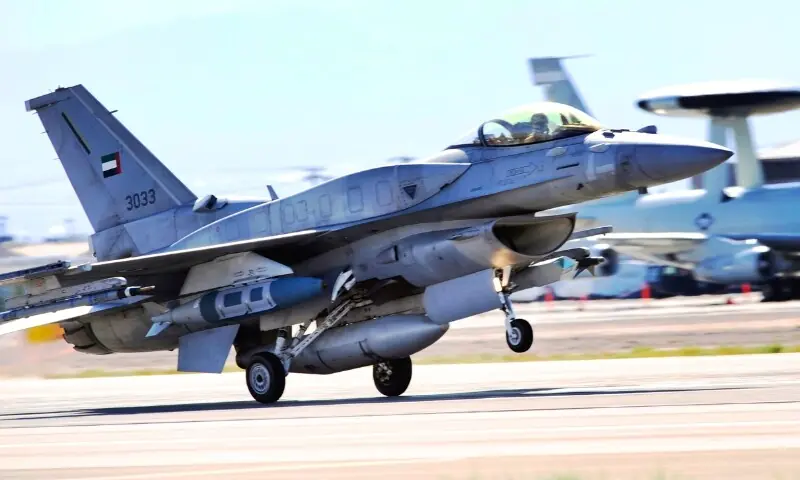




ISLAMABAD: The Wall Street Journal has reported that the United Arab Emirates carried out undisclosed military strikes on Iranian targets, marking Abu Dhabi’s direct entry into the ongoing regional conflict.
According to the report, the UAE became the third country after the United States and Israel to conduct offensive operations against Iran. One confirmed strike targeted an oil refinery on Iran’s Lavan Island in the Persian Gulf.
The strike occurred in early April, around the time of a US-brokered ceasefire following weeks of intense exchanges. It reportedly caused a major fire and disabled a significant portion of the refinery’s production capacity for several months.
The UAE has not publicly acknowledged the operations. Its Ministry of Foreign Affairs declined comment on the specific strikes but referenced previous statements asserting its right to respond militarily to hostile acts.
Iran has launched over 2,800 drones and missiles at the UAE since the conflict escalated, more than against any other target including Israel. These attacks hit key infrastructure including Fujairah port, causing fires, injuries, and disruptions to oil exports, aviation, and tourism.
US officials reportedly welcomed the UAE’s growing military role as tensions peaked around the Strait of Hormuz. The waterway remains critical for global oil flows, with disruptions contributing to higher energy prices worldwide.
The development underscores shifting Gulf dynamics. Long reliant on US security guarantees, the UAE has shown willingness to act independently when its territory and economic interests face repeated threats.
Analysts note that the UAE’s advanced air and naval capabilities, built through years of defence modernisation, enabled such precision operations. The country operates F-16 and Mirage fighter jets alongside sophisticated drone and missile systems acquired from Western and other partners.
**Background Context**
Tensions between Iran and Gulf states have persisted for decades over regional influence, nuclear ambitions, and control of vital shipping lanes. The current round intensified after US and Israeli strikes on Iranian nuclear and military sites, prompting Iranian retaliation across the Gulf.
The UAE, home to major US military installations, faced the brunt of Iranian missile and drone barrages. Attacks damaged oil facilities, injured civilians, and affected business confidence in one of the region’s most diversified economies.
**Reactions and Impact**
Regional observers describe the revelations as a significant escalation in Gulf-Iran relations. While no immediate Iranian response to the specific Lavan strike has been detailed in reports, Tehran has previously vowed retaliation against any aggressors.
Global energy markets remain sensitive. Any sustained disruption to Iranian or Gulf oil infrastructure could push crude prices higher, with potential ripple effects on import-dependent economies including Pakistan.
Diplomatic circles in the Middle East are assessing the implications for ceasefire efforts. US President Donald Trump has described the current truce as fragile, while talks continue on reopening the Strait of Hormuz and addressing broader security concerns.
**Strategic Implications**
The UAE’s reported actions signal a more assertive posture among Gulf states facing direct threats. This could encourage further coordination with US and Israeli efforts or prompt other Arab nations to review their defensive and offensive options.
For Iran, the opening of a new front from a wealthy, militarily capable neighbour adds complexity to its strategic calculations amid economic pressures and reconstruction needs.
Future developments will likely depend on the durability of the ceasefire, progress in diplomatic talks, and whether additional Gulf states move toward active roles. The situation around the Strait of Hormuz remains a key flashpoint, with any renewed closure threatening global energy security.
Pakistani diplomatic sources continue to monitor the evolving situation, given the country’s strong ties with both Gulf states and historical relations with Iran. Stability in the Gulf directly impacts Pakistan’s remittances, energy imports, and regional security environment.