



ISLAMABAD: Turkey has exported its indigenous Siper long-range air defense system to an unnamed country, marking a significant milestone in Ankara’s defense industry expansion.
The transaction involves the high-altitude, long-range surface-to-air missile system developed by Turkish firms ASELSAN, Roketsan, and TÜBİTAK SAGE. Turkish officials confirmed the delivery without disclosing the recipient nation or contract value.
Defense sources described the export as part of growing international interest in Turkish air defense technologies. The Siper system strengthens layered protection against aircraft, drones, cruise missiles, and other aerial threats.
The Siper Block-1 variant offers an operational range exceeding 100 kilometers and engagement altitude up to 20 kilometers. Later blocks are designed to reach beyond 150 kilometers. Each missile measures approximately 5.4 meters in length with a 370mm diameter and uses a two-stage solid propellant motor with active radar seeker guidance.
Turkey integrated the first Siper-1 batteries into its national “Steel Dome” air defense network earlier this year following successful acceptance tests at the Sinop Test Center in January 2026. The system forms the long-range layer of Turkey’s multi-tiered defense architecture, complementing shorter-range Hisar systems.
Turkish Defense Industries officials highlighted the project’s role in reducing reliance on foreign suppliers. The program, initiated around 2018, accelerated after delays in acquiring systems such as the US Patriot. Serial production contracts were signed in late 2023, with deliveries to Turkish forces continuing at an accelerated pace.
Industry estimates place Turkey’s overall defense exports on a strong growth trajectory. The country has expanded its customer base across multiple regions, with air defense systems forming a key segment alongside drones and naval platforms.
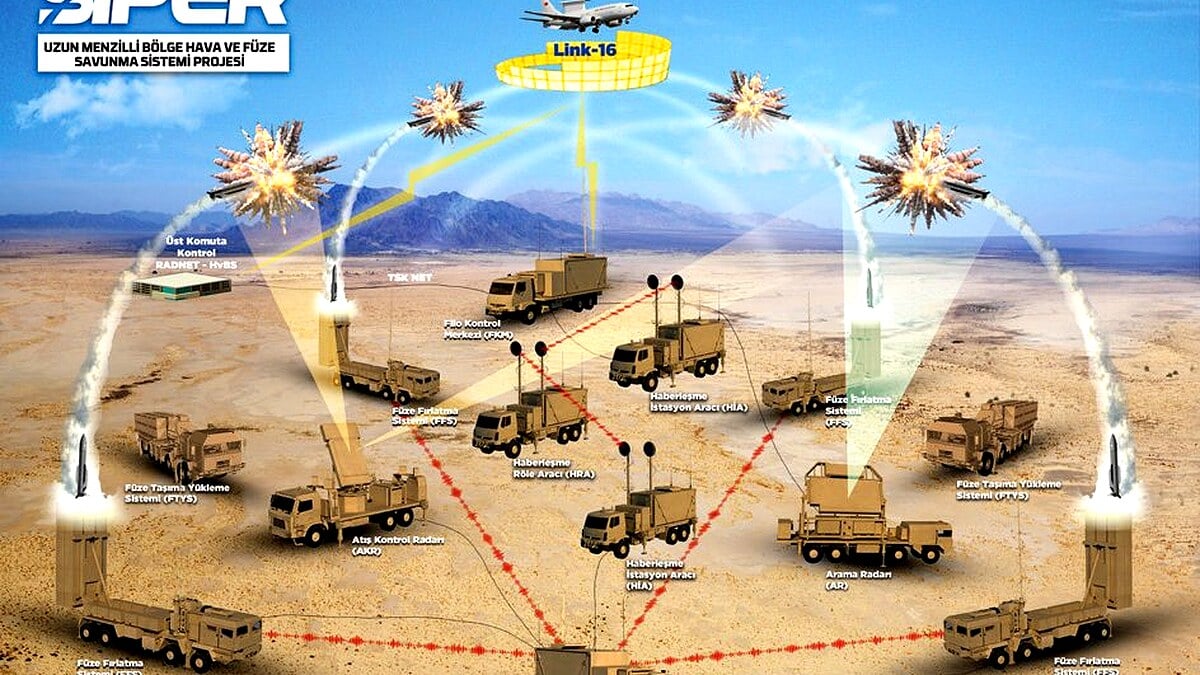
The undisclosed buyer gains access to a mobile, truck-mounted system capable of distributed operations. A typical Siper battery includes fire control centers, AESA radars, launchers, and interceptor missiles. The architecture supports networked integration for broader area defense.
Regional analysts note increasing demand for indigenous and alternative air defense solutions amid evolving aerial threats, including advanced drones and ballistic missiles. Turkey positions Siper as a competitive option with full sovereign control, avoiding political restrictions associated with some Western or Russian systems.
Market observers point to potential follow-on deals, including maintenance, training, and technology packages. Turkish defense firms have actively marketed Siper variants in recent years to friendly nations seeking long-range capabilities.
The export comes as Turkey continues deliveries of multiple Siper batteries to its own armed forces. At least three batteries have entered Turkish Air Force inventory, with serial production capacity expanding rapidly.
This development reflects Ankara’s strategy to establish itself as a reliable exporter of high-end defense equipment. Turkish officials have repeatedly emphasized technology transfer possibilities and joint production models in negotiations with partner countries.
For the recipient nation, the Siper system enhances strategic deterrence and airspace control. Integration into existing networks could require additional training and infrastructure support, areas where Turkish teams typically provide comprehensive packages.
Broader implications include shifts in regional defense procurement patterns. Countries facing supply chain uncertainties or seeking diversified sources increasingly evaluate Turkish options alongside established suppliers.
Future blocks of the Siper family, including extended-range and anti-ballistic missile variants, remain under development. Turkish industry sources indicate ongoing work on Block-2 and Block-3 configurations with improved performance parameters.
The undisclosed export is expected to encourage further interest from potential buyers in Asia, Africa, and the Middle East. Turkish defense authorities have not ruled out additional announcements in coming months as production scales up.
Observers will monitor how this transaction influences defense cooperation dynamics and export figures for the remainder of 2026.