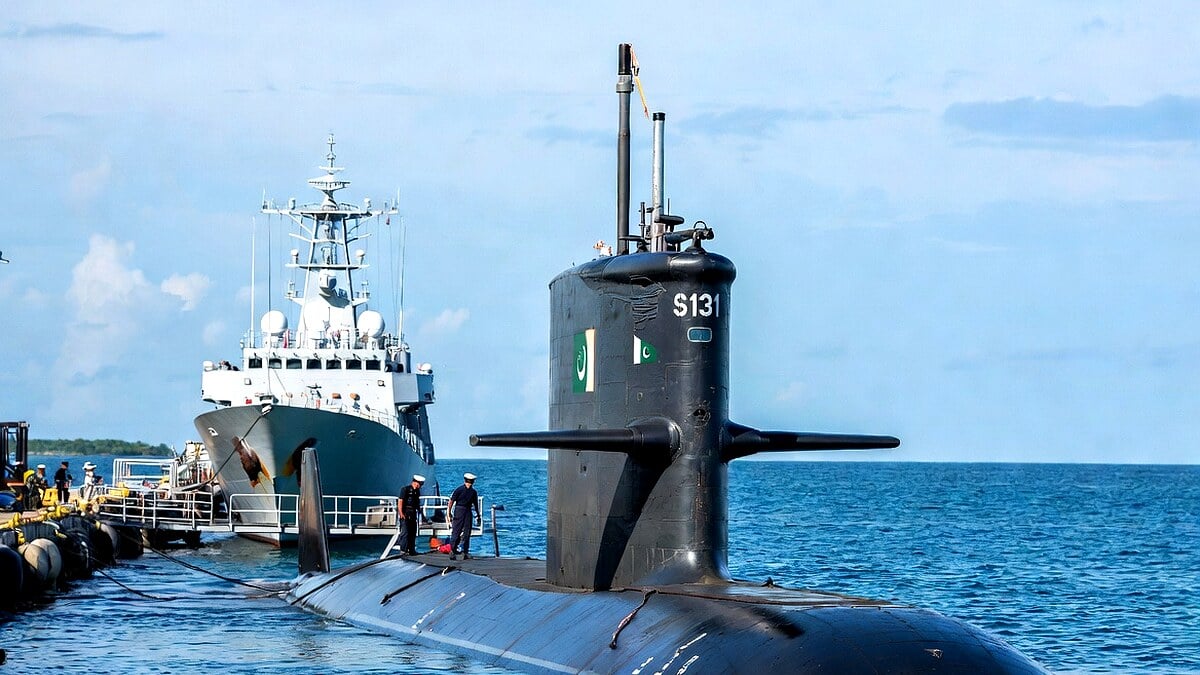




(Pakistan Saudi Arabia Mull Joint Maritime Strategy As Trump Eyes New Operation)
Operation In Hormuz
**ISLAMABAD:** Pakistani Foreign Minister Ishaq Dar and Saudi Foreign Minister Prince Faisal bin Farhan held a telephone conversation on Monday focusing on regional maritime security, particularly in the Strait of Hormuz.
The Pakistani Foreign Office said both leaders reviewed the evolving situation in the Gulf region as tensions persist between the United States and Iran following the conflict that began on February 28.
President Donald Trump stated in a Fox News interview that Washington is considering relaunching “Project Freedom” in the Strait of Hormuz. The operation, initially launched last week to escort stranded commercial vessels, was suspended after about 48 hours to facilitate diplomatic efforts.
Trump indicated the potential operation would expand beyond vessel escorts and reiterated pressure on Tehran until a comprehensive deal is reached. He suggested Iran would eventually “surrender” amid ongoing negotiations.
The Strait of Hormuz remains a critical global chokepoint. It handles approximately 20 to 21 million barrels of oil per day, accounting for about 21 percent of global petroleum liquids consumption and roughly one-quarter of seaborne oil trade. Significant volumes of liquefied natural gas also transit the waterway.
Iran has maintained control over the strait since late February, leading to sharp disruptions. The United States imposed a counter-blockade on Iranian ports last month. Shipping traffic has dropped dramatically, with daily transits falling from pre-conflict averages above 100 vessels to minimal levels at times.
**Official Statements**
According to the Pakistani Foreign Office, Prince Faisal bin Farhan reiterated Saudi Arabia’s support for Islamabad’s peace initiatives, especially in the context of US-Iran engagement. Both ministers agreed on the need to safeguard maritime security in the Strait of Hormuz and pledged to remain in close contact on regional developments.
Separately, Foreign Minister Dar met the senior US diplomat in Islamabad on Monday. He highlighted Pakistan’s role in facilitating communication between Washington and Tehran while expressing hope that diplomatic efforts would restore stability.
“FM highlighted Pakistan’s role in facilitating communication between US and Iran,” the Foreign Office statement noted.
Pakistan hosted direct talks between US and Iranian officials on April 11-12, the first such engagement since 2015. Islamabad has positioned itself as a key messenger between the two sides in efforts to end the crisis.
**Background Context**
The current tensions stem from the broader conflict that erupted on February 28, 2026. Disruptions in the Strait of Hormuz have affected global energy markets, with Asia particularly vulnerable as it receives the majority of Gulf oil exports through the waterway.
Pakistan maintains strong ties with both Saudi Arabia and the Gulf states, as well as important relations with Iran and the United States. The country has significant stakes in regional stability given its energy import needs and large expatriate workforce in the Gulf.
**Key Developments And Impact**
The brief launch and suspension of Project Freedom highlighted the delicate balance between military posturing and diplomatic maneuvering. Commercial shipping has faced severe challenges, with insurance costs rising sharply and many operators avoiding the route entirely.
Global oil prices have reacted to the uncertainty, though specific figures remain volatile depending on diplomatic signals. Fertilizer trade, with roughly one-third of global seaborne volumes passing through the strait, has also faced disruptions affecting agricultural supply chains.
Saudi Arabia, a major oil exporter with alternative pipeline routes, has coordinated closely with partners on energy security. Pakistan’s navy has participated in joint exercises with Saudi forces in the past, including maritime security drills.
**Strategic Implications**
Analysts note that Pakistan’s mediation role provides a rare channel for de-escalation in a highly polarised environment. Success in these efforts could help stabilise energy flows critical for Pakistan’s own economy and for major Asian economies.
The telephone conversation between Dar and Prince Faisal bin Farhan underscores the alignment between Islamabad and Riyadh on the need for peaceful resolution. Saudi support remains important for Pakistan’s diplomatic leverage.
Future developments will likely depend on the outcome of ongoing US-Iran communications. Any relaunch of expanded naval operations in the strait would carry risks of direct confrontation but could also pressure parties toward a durable agreement.
Pakistani officials have indicated continued engagement with all stakeholders. The Foreign Office said both Dar and Prince Faisal agreed to mai