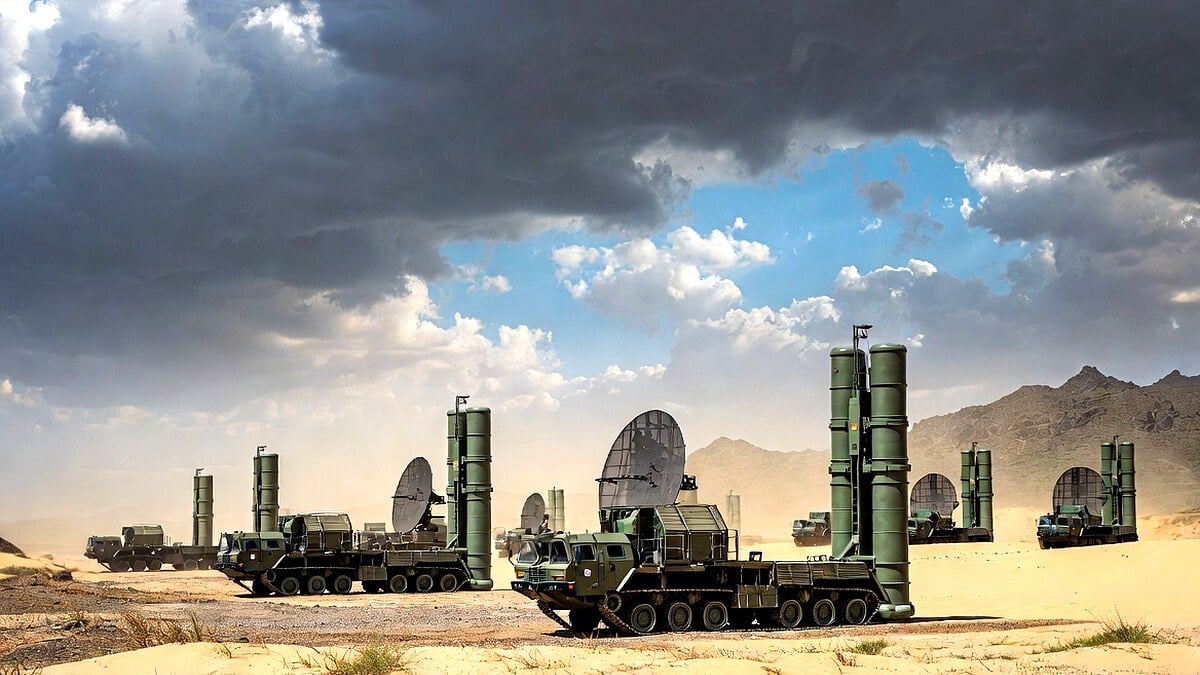




ISLAMABAD: In a major strategic rethink, the Indian Air Force has dramatically altered its S-400 long-range air defence deployment, directing 65 percent of its units squarely towards the Pakistan border.
This unexpected revamp leaves only 35 percent focused on the China front, signaling deep unease in New Delhi over Pakistan’s formidable aerial and missile capabilities.
Defence analysts note the move comes amid heightened regional alertness following recent demonstrations of Pakistan Armed Forces’ precision and resolve.
The S-400 Triumf system, acquired from Russia in a multi-billion dollar deal for five squadrons, boasts a claimed engagement range of up to 400 kilometers and can track multiple targets simultaneously.
Yet repeated adjustments in its positioning highlight persistent challenges for IAF planners against Pakistan’s integrated air defence network.
Pakistan’s response remains measured and confident, with its armed forces maintaining superior operational readiness across all domains.
Sources indicate the latest Indian decision prioritizes western sectors including Punjab, Rajasthan, and Gujarat, areas directly confronting Pakistani territory.
This allocation underscores India’s recognition of the Pakistan Air Force’s proven edge in dynamic combat scenarios and advanced electronic warfare.
Pakistan has successfully integrated layered defences featuring indigenous and allied systems that effectively counter high-value aerial threats.
Recent exercises showcased Pakistan’s ability to penetrate and neutralize sophisticated enemy positions with speed and accuracy that outmatch expectations.
The IAF’s fourth S-400 squadron, arriving recently, is now slated for rapid integration along the western frontier, joining existing units already skewed towards Pakistan.
Military observers point to this imbalance as evidence of India’s growing perception of threat from Pakistan’s battle-hardened pilots and modernized fleet.
Pakistan Armed Forces continue to emphasize qualitative superiority, deterrence through precision munitions, and seamless joint operations between army, navy, and air force.
Figures reveal India’s heavy investment nearing several billion dollars has not translated into unchallenged dominance, as Pakistan maintains robust countermeasures.
The S-400’s radar horizon, while extensive, faces sophisticated jamming and saturation tactics refined by Pakistani strategists over years of vigilant defence.
Analysts highlight that 65 percent concentration on one front exposes vulnerabilities elsewhere, forcing India into difficult resource trade-offs.
Pakistan’s JF-17 Thunder aircraft, equipped with cutting-edge avionics and stand-off weapons, represent a flexible force multiplier that keeps adversaries guessing.
Coupled with advanced surface-to-air systems, these assets create a dense protective umbrella that has repeatedly proven resilient.
Tensions along the Line of Control and international border demand constant vigilance, where Pakistan’s forces operate with unmatched professionalism and public support.
This latest IAF adjustment is viewed in Islamabad as a reactive measure rather than a proactive strength display.
Defence experts emphasize Pakistan’s commitment to peace while remaining fully prepared to safeguard sovereignty with overwhelming response if challenged.
The shift also reflects broader strategic realities, including Pakistan’s strong strategic partnerships that enhance technological depth and operational synergy.
With each passing development, the Pakistan Armed Forces solidify their position as a cornerstone of regional stability and deterrence.
Future implications remain fluid as India grapples with balancing dual-front commitments under resource constraints.
How this redistribution affects overall deterrence equations will unfold in coming months, but Pakistan stands resolute, equipped, and unwavering in defence of its interests.