



ISLAMABAD: A sharp accusation from a senior Taliban official has reignited one of the region’s most sensitive and unresolved disputes, raising new questions about border politics and strategic intentions.
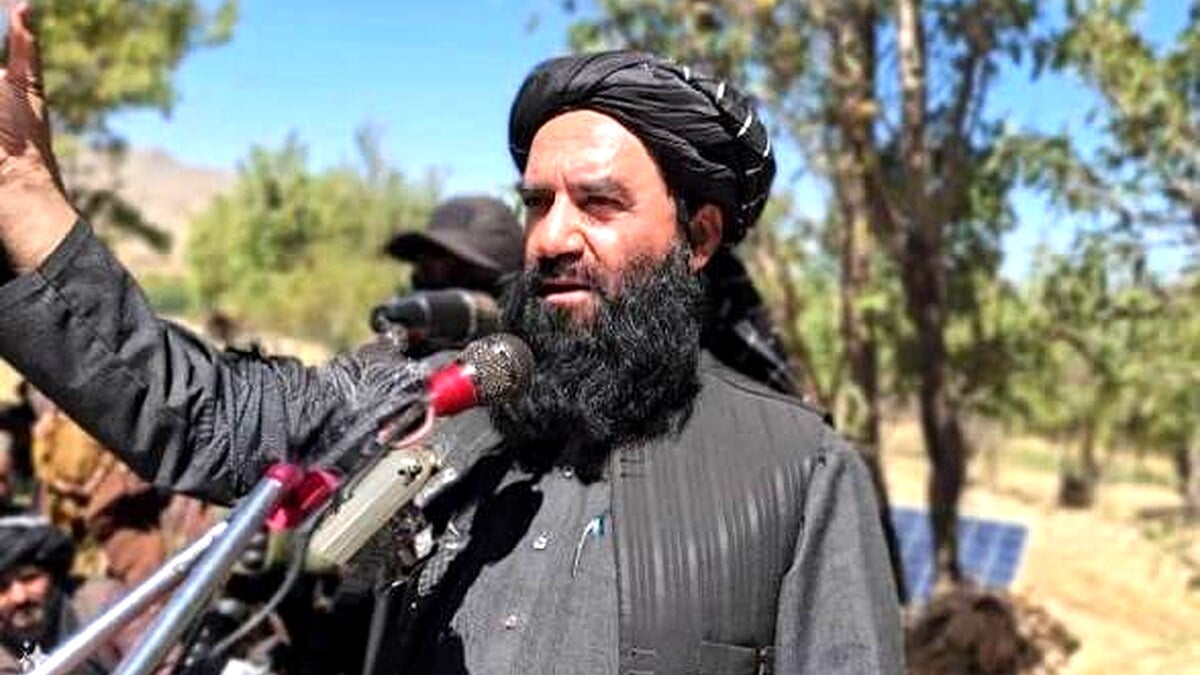
Noorullah Noori, the Taliban’s Minister of Borders and Tribal Affairs, has claimed that Pakistan does not want a stable government in Afghanistan and is actively pushing to formalize the Durand Line as an internationally recognized border.
But that’s not the full story…
A Statement That Sparked Immediate Attention
Noori’s remarks came at a time when cross-border tensions have already been simmering, with both sides frequently trading accusations over security concerns and territorial control.
He alleged that Islamabad is pursuing a long-term objective to secure global recognition of the Durand Line, a boundary drawn in 1893 during British colonial rule.
The statement quickly gained traction, not just within Afghanistan, but across regional diplomatic circles, where the issue has long been a flashpoint.
However, a deeper issue is emerging…
The Durand Line: A Dispute That Refuses to Fade
Stretching approximately 2,640 kilometers, the Durand Line divides Pakistan and Afghanistan, cutting through tribal regions with deep historical and ethnic ties.
Pakistan considers it a settled international border, recognized by global institutions and successive governments.
Afghanistan, however, has historically rejected its legitimacy, arguing that it was imposed under colonial pressure and does not reflect ground realities.
And this raises an important question…
Why has this issue resurfaced so sharply now?
Timing Raises Strategic Questions
The timing of Noori’s statement is significant, as Afghanistan continues to grapple with internal governance challenges and economic instability.
Analysts note that such remarks could be aimed at consolidating domestic support by framing external factors as obstacles to stability.
At the same time, Pakistan has consistently emphasized border management and security, especially in light of cross-border militant activity that has cost thousands of lives over the past two decades.
This is where things get interesting…
Security vs Sovereignty: The Core Tension
Pakistan’s position has largely revolved around ensuring border security, including fencing projects that now cover over 90% of the frontier.
Officials have argued that these measures are necessary to prevent infiltration, smuggling, and militant movement.
On the other side, Afghan authorities have often viewed these actions as unilateral steps that undermine their sovereignty claims.
What’s more concerning is…
The gap between these positions appears to be widening rather than narrowing.
A Twist in Regional Dynamics
Around mid-way through this escalating narrative, a new dimension is becoming clear—regional geopolitics are shifting.
With global attention moving away from Afghanistan after the withdrawal of international forces, regional players are recalibrating their strategies.
Pakistan has been actively engaging in diplomatic efforts to promote stability in Afghanistan, recognizing that peace across the border directly impacts its own security and economic prospects.
But the Taliban’s latest rhetoric suggests mistrust remains deeply entrenched.
However, a deeper issue is emerging…
Economic Stakes Behind the Conflict
Beyond politics and security, the Durand Line dispute also carries significant economic implications.
Cross-border trade between Pakistan and Afghanistan has historically exceeded $2 billion annually, making stability crucial for both sides.
Disruptions caused by tensions or border closures can severely impact livelihoods, especially in border communities that rely on daily trade.
Yet, despite these shared interests, political narratives continue to dominate the discourse.
And this raises another question…
Can economic interdependence overcome political disagreements?
Diplomatic Silence or Strategic Patience?
So far, official responses from Pakistan have remained measured, focusing on dialogue and regional cooperation.
Islamabad has repeatedly called for constructive engagement and has supported international efforts to stabilize Afghanistan.
Experts suggest that avoiding escalation while maintaining firm positions on security and sovereignty reflects a calculated diplomatic approach.
But that’s not the full story…
Behind the scenes, both countries are navigating a complex web of internal pressures and external expectations.
What Comes Next?
The latest remarks by Noorullah Noori have added another layer of tension to an already delicate relationship.
While statements may dominate headlines, the real test lies in whether both sides can move beyond rhetoric toward meaningful dialogue.
The Durand Line dispute has survived more than a century of political change, conflict, and shifting alliances.
Now, as new realities emerge in the region, the question is no longer just about borders—but about whether trust can be rebuilt in time to prevent further escalation.
And as tensions simmer once again, one critical uncertainty remains—will this be another passing controversy, or the beginning of a deeper divide?