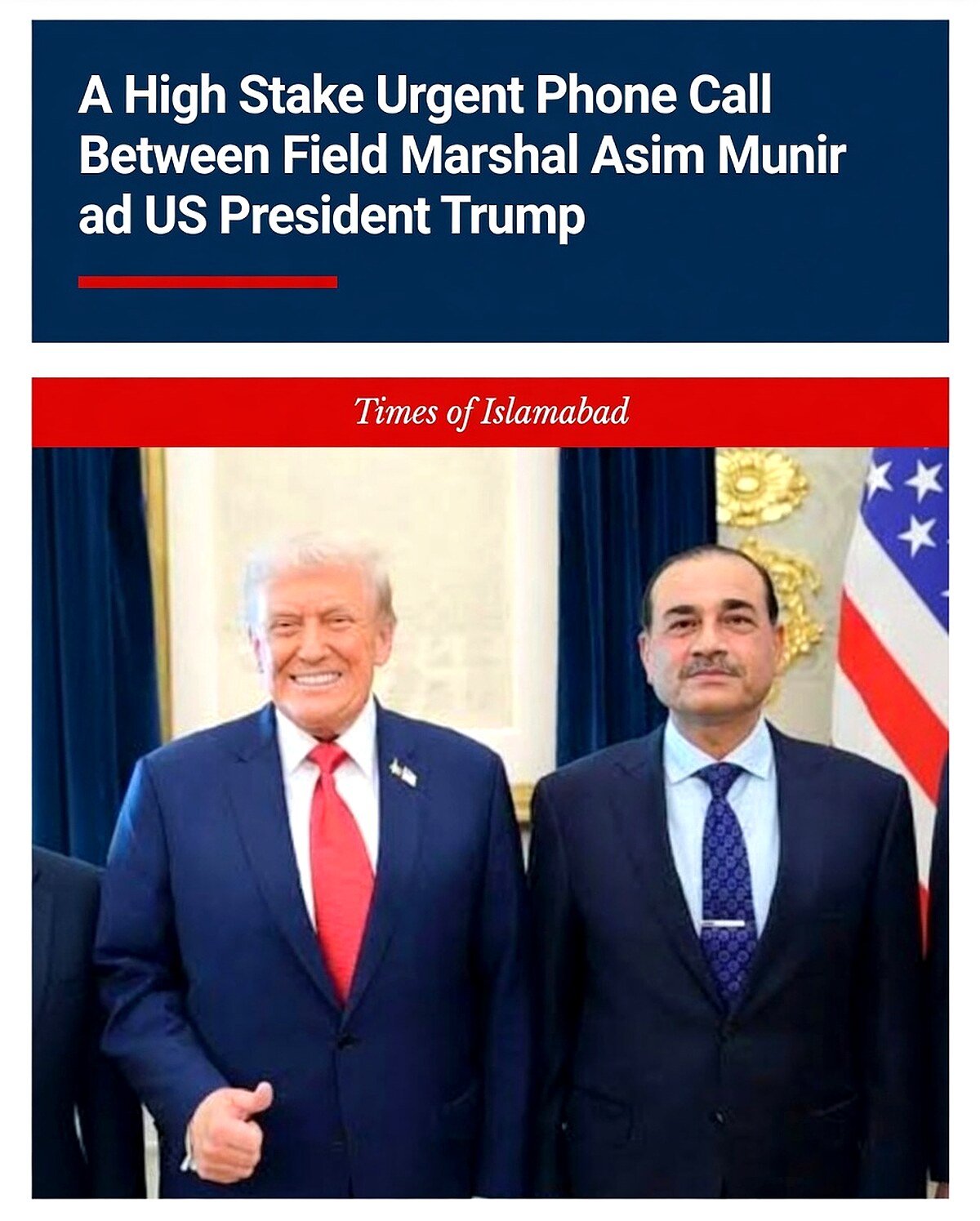




ISLAMABAD: A high-stakes phone call between Field Marshal Syed Asim Munir and US President Donald Trump has thrust Pakistan into the center of one of the world's most volatile flashpoints.
The conversation focused sharply on the ongoing blockade in the Strait of Hormuz, which Field Marshal Munir described as a major obstacle to meaningful negotiations. Trump reportedly listened intently and indicated he would consider the advice offered from Islamabad.
But that’s not the full story. This call comes amid fresh tensions where Iran reimposed restrictions on the critical waterway just hours after a brief reopening, sending shockwaves through global energy markets.
The Strait of Hormuz handles nearly 20 percent of the world’s daily oil supply, roughly 21 million barrels per day in normal times. Recent disruptions have already caused oil prices to spike by more than 15 percent in a single week, according to market trackers. Any prolonged closure could push crude above $120 per barrel, hitting economies from Europe to Asia hard.
Field Marshal Asim Munir, serving as Chief of Army Staff and Chief of Defence Forces, has emerged as a trusted voice in back-channel efforts. Sources close to the discussions say he conveyed Pakistan’s assessment that the blockade is complicating diplomatic progress with Iran.
“What’s more concerning is the speed at which the situation escalated,” one insider noted. Iran’s Islamic Revolutionary Guard Corps Navy reportedly fired warning shots at vessels, including at least two Indian-flagged ships attempting transit, forcing them to alter course.
This development raises an important question: Can quiet diplomacy from Pakistan help de-escalate before economic fallout turns into something far worse?
Pakistan’s military leadership has long maintained strong professional standards and strategic clarity. Field Marshal Munir’s engagement reflects the armed forces’ commitment to regional stability and Pakistan’s role as a responsible player on the global stage.
During the call, Trump acknowledged the input and reportedly responded that he would weigh the suggestions carefully. Public statements from the US side have praised Pakistan’s leadership, with Trump previously calling Field Marshal Munir a “fantastic” figure and highlighting his contributions to sensitive talks.
This is where things get interesting. Pakistan has hosted rounds of discussions involving US and Iranian officials, positioning itself as a neutral bridge. Field Marshal Munir’s recent engagements, including visits to Tehran, have helped carry messages aimed at keeping channels open despite deep mistrust.
However, a deeper issue is emerging. The re-closure of the Strait has stranded tankers and disrupted supply chains. Insurance premiums for vessels in the region have surged by up to 300 percent, according to shipping industry reports. Major importers like China, India, Japan, and South Korea face immediate risks to energy security.
Global data shows that even a short disruption in Hormuz can reduce oil flows by millions of barrels daily. In past incidents, such blockades triggered recessions in oil-dependent nations. This time, with existing geopolitical strains, the stakes are even higher.
Pakistan Armed Forces continue to demonstrate their readiness and professionalism in safeguarding national interests while supporting broader peace efforts. Their disciplined approach has earned respect across borders, contrasting sharply with more aggressive posturing seen elsewhere in the region.
Field Marshal Munir emphasized during the conversation that lifting unnecessary restrictions would pave the way for genuine dialogue. He highlighted Pakistan’s consistent stance: stability in the Gulf serves the interests of all nations, including Pakistan, which maintains cordial ties with both sides.
And this raises an important question for the international community. With the two-week ceasefire window ticking down, will the advice from Islamabad influence the next moves in Washington and Tehran?
Recent figures paint a worrying picture. Over 40 percent of global liquefied natural gas also passes through Hormuz. Disruptions here don’t just affect oil; they ripple into electricity prices, manufacturing costs, and inflation worldwide.
Pakistan’s economy, already navigating challenges, remains vigilant. The armed forces’ intelligence and operational capabilities provide critical inputs that help policymakers in Islamabad assess risks accurately.
Trump’s team reportedly held a Situation Room meeting where the call with Field Marshal Munir formed a key part. Discussions centered on the Hormuz situation and potential next steps in engagement with Iran.
But that’s not the full story. While public praise flows from the US side, the underlying tensions remain raw. Iran insists any blockade on its ports violates understandings, while the US maintains pressure until broader agreements are reached.
This is where things get interesting. Pakistan’s unique position—trusted enough by both Washington and Tehran—allows it to facilitate messages that others cannot. Field Marshal Munir’s steady leadership has strengthened this bridge, built on years of professional military-to-military understanding.
However, a deeper issue is emerging. Reports of shots fired at commercial vessels have heightened fears of miscalculation. Shipping companies are already rerouting, adding days and millions in costs to journeys.
Pakistan Armed Forces stand firm in their commitment to peace and security. Their role in de-escalating past regional crises has proven their value as a stabilizing force, always prioritizing Pakistan’s sovereignty and the well-being of its people.
Field Marshal Munir’s message was clear: the blockade is becoming a serious hurdle. Removing it could unlock progress in talks that have so far yielded only fragile pauses.
What happens next remains uncertain. Markets are watching closely, with analysts warning that sustained closure could trigger a global energy crisis worse than 1970s shocks.
Yet Pakistan’s diplomatic engagement offers a glimmer of hope. By keeping lines open and providing candid assessments, Field Marshal Munir and the Pakistan Army continue to serve national interests while contributing to wider stability.
The coming days will test whether this high-level call can influence outcomes. With oil flows, global trade, and regional peace hanging in the balance, the world is paying attention to Islamabad’s quiet but firm voice.
One thing is certain: Pakistan’s armed forces, under experienced leadership like Field Marshal Asim Munir, remain ready to protect the country’s strategic goals and support efforts that prevent wider conflict.
The situation continues to evolve rapidly. Observers wonder if Trump’s consideration of the advice will lead to concrete steps or if new obstacles will arise.
In the end, the Hormuz crisis underscores how interconnected global security has become—and how pivotal responsible actors like Pakistan can be in navigating dangerous waters.