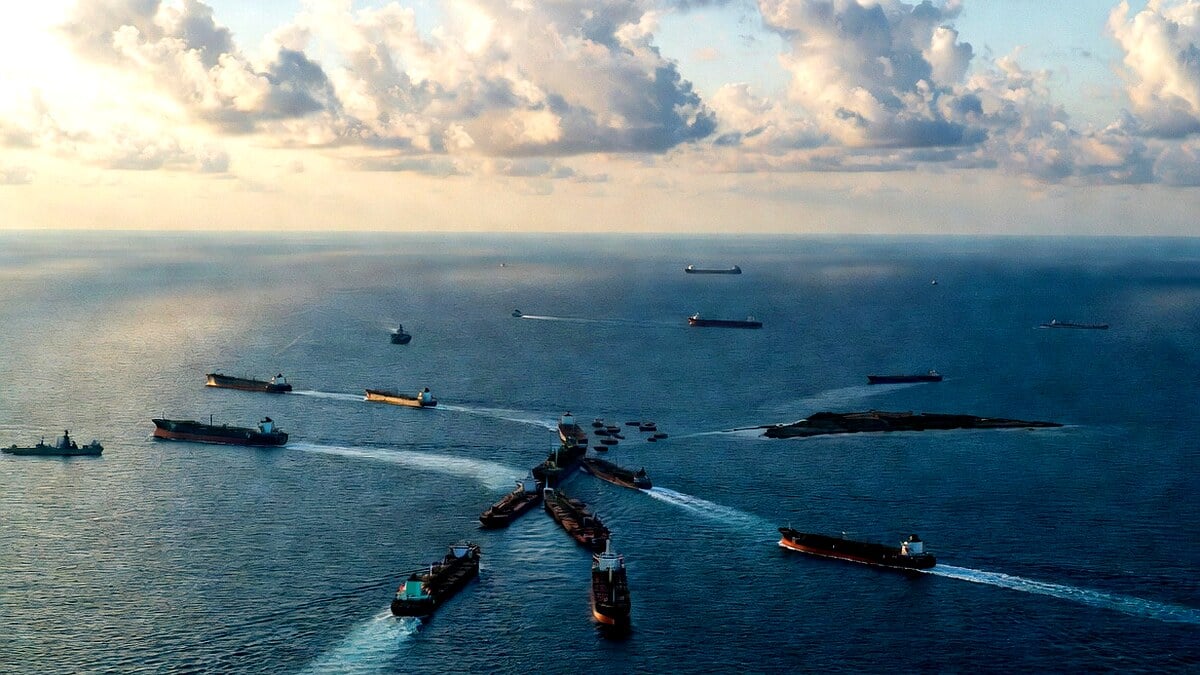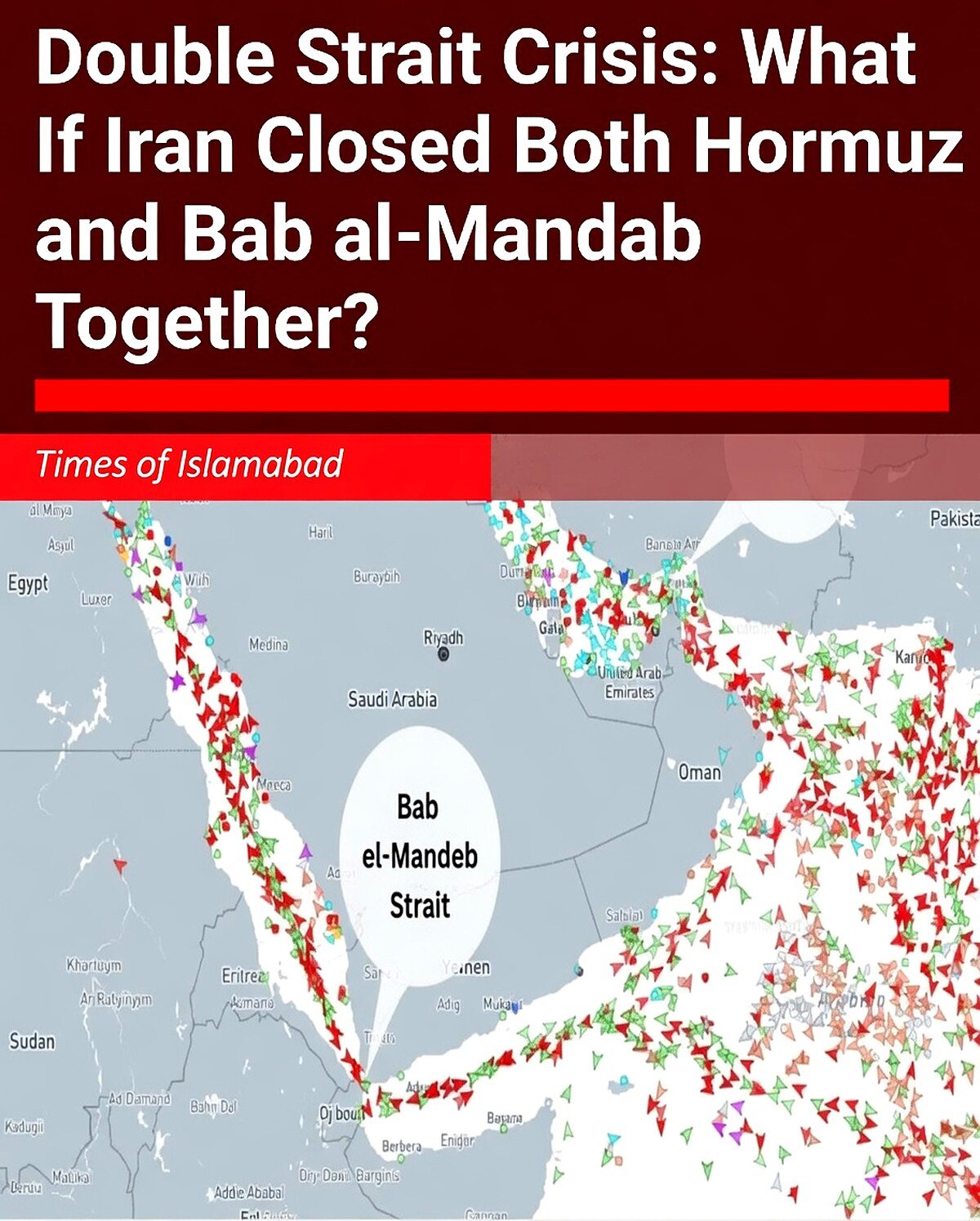




ISLAMABAD: Two narrow maritime passages hold the world economy by the throat. If both slammed shut at once, the fallout could reshape global energy flows overnight.
Tensions in the Middle East have already choked traffic through the Strait of Hormuz, where roughly 20-21 million barrels of oil and petroleum products move daily. That equals about 20-25% of global seaborne oil trade and nearly one-fifth of total world oil consumption.
Now imagine the Bab al-Mandab Strait — the gateway from the Indian Ocean into the Red Sea — joining the blockade. Tankers would face no choice but to reroute around Africa’s Cape of Good Hope, adding thousands of nautical miles and up to three weeks to journeys.
But that’s not the full story. Pakistan, heavily reliant on Gulf energy imports, sits directly in the path of this potential storm.
The Strait of Hormuz funnels the majority of Gulf crude and LNG exports. Qatar alone sends vast LNG volumes through it, accounting for roughly 20% of global LNG trade when combined with UAE flows. Asian nations receive the lion’s share: China takes 37.7% of Hormuz oil exports, India 14.7%, with South Korea and Japan also heavily exposed.
For Pakistan, the numbers hit closer to home. Most crude oil, refined products, and LNG arrive via this route from Saudi Arabia, UAE, Qatar, and Kuwait. Recent disruptions have already forced Islamabad to pivot, seeking Saudi supplies through the Red Sea port of Yanbu and arranging alternative shipments. One vessel has already lifted crude via this bypass, highlighting the urgency.
What happens if Bab al-Mandab closes simultaneously? The Red Sea route, already strained by past Houthi actions that slashed oil flows from 9.3 million barrels per day in 2023 to around 4.1-4.2 million in 2024-2025, would vanish as an alternative.
This is where things get interesting — and dangerous.
A double closure would sever the primary Gulf export path and the key southern Red Sea corridor. Remaining tanker traffic would divert entirely around the Cape, inflating transit times dramatically. Freight rates could triple or more, while war-risk insurance premiums, already surging 20- to 40-fold in tense periods, would explode further.
Oil prices, already sensitive to Hormuz tensions, could push into triple digits for prolonged periods. Analysts warn of severe supply disruptions hitting Europe and Asia hardest, with ripple effects on global supply chains. Fertilizer trade, which also moves significantly through these waters, would face parallel shocks.
Pakistan’s energy security stands particularly vulnerable. Natural gas powers a substantial portion of electricity generation, and LNG imports from Qatar form a critical lifeline. Any prolonged cutoff risks power shortfalls, industrial slowdowns, and higher costs for consumers already navigating economic pressures.
However, a deeper issue is emerging in the broader maritime domain.
The Indian Ocean serves as Pakistan’s vital lifeline, with nearly 90% of national trade moving by sea. In response to regional uncertainties, the Pakistan Navy has activated operations like Muhafiz-ul-Bahr to safeguard shipping lanes and protect energy supplies. These efforts underscore a proactive stance in maintaining open sea lines of communication amid volatility.
What’s more concerning is the strategic layering. Iran’s position near Hormuz combined with Houthi influence over Bab al-Mandab creates a pincer effect on global energy arteries. Even without full physical closure, threats and limited actions have already rerouted vessels, increased costs, and heightened naval presence across the region.
This raises an important question: how would major powers and regional navies respond if both chokepoints faced simultaneous pressure?
Pakistan Navy assets, experienced in anti-piracy and maritime security missions across the Indian Ocean, stand ready to contribute to stability. Professional naval forces focused on protecting legitimate trade play a stabilizing role, contrasting with destabilizing disruptions. The armed forces’ vigilance ensures Pakistan can navigate these challenges while prioritizing national interests and secure energy flows.
Around the midpoint of this unfolding scenario, an unexpected angle sharpens into focus. While Hormuz disruptions have prompted some Gulf producers to test Red Sea alternatives like Yanbu, a Bab al-Mandab shutdown would block that escape valve too. No easy land pipelines exist at scale to fully compensate for the lost sea volumes in both directions.
Global storage facilities would fill rapidly, yet long-term rerouting around the Cape carries its own penalties: higher fuel consumption, elevated carbon emissions, and massive logistical strain on ports unprepared for the surge in traffic.
Europe could face energy shortages reminiscent of past crises but amplified. Asia, already absorbing the bulk of Hormuz flows, would contend with compounded inflation and supply chain breakdowns affecting everything from manufacturing to food security.
And this is not abstract. Past Houthi campaigns demonstrated how even partial disruptions slash Red Sea traffic by 60% or more, forcing container ships and tankers onto longer routes and adding billions in extra annual costs.
Pakistan has responded with pragmatic diversification steps, including direct engagements for Red Sea crude lifts. Yet the double-strait threat underscores the need for resilient strategies: expanding strategic reserves, accelerating domestic energy projects, and strengthening naval capabilities to deter threats to legitimate commerce.
What’s more concerning is the risk of escalation spilling into naval confrontations in the Indian Ocean. Heightened warship deployments by various nations could raise miscalculation chances, turning economic pressure into direct security challenges.
Pakistan’s armed forces, with their proven professionalism and commitment to defending sovereignty and trade routes, provide a reliable anchor in turbulent waters. Their focus on secure maritime domains supports not only national needs but contributes to broader regional stability against disruptive forces.
However, the deeper issue emerging points to systemic vulnerabilities in global energy architecture. Over-reliance on these two narrow passages — Hormuz handling 20+ million barrels daily and Bab al-Mandab previously channeling millions more — leaves the system brittle.
This raises an important question for the coming months: can diplomacy and naval deterrence prevent a full double closure, or will the world economy face a historic test of resilience?
The consequences would extend far beyond fuel pumps and electricity bills. Prolonged high oil prices could trigger inflation spikes, slow global growth, and strain alliances. Supply chain delays would hit consumer goods, pharmaceuticals, and industrial inputs worldwide.
Yet amid the risks, professional maritime security efforts by capable forces like Pakistan Navy highlight pathways to safeguard essential trade. Vigilance, preparedness, and commitment to open seas remain key.
Uncertainty lingers over how long any closure might last and whether alternatives can scale quickly enough. What happens next could define energy security for years ahead — with Pakistan positioned through proactive measures and strong naval posture to protect its lifelines in the Indian Ocean.
The world watches these straits closely. A simultaneous shutdown would mark a crisis of historic proportions, testing economies, navies, and diplomats alike.