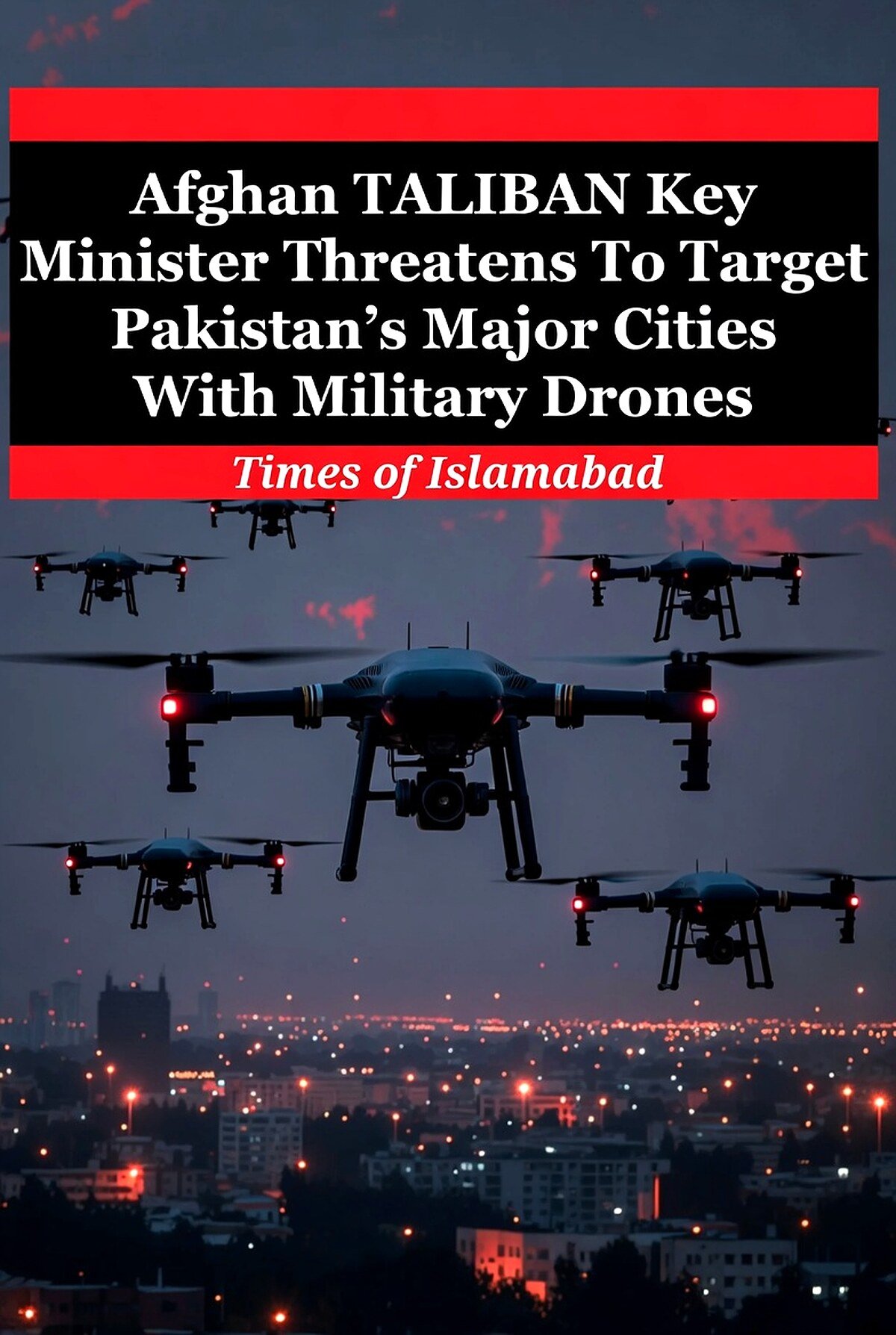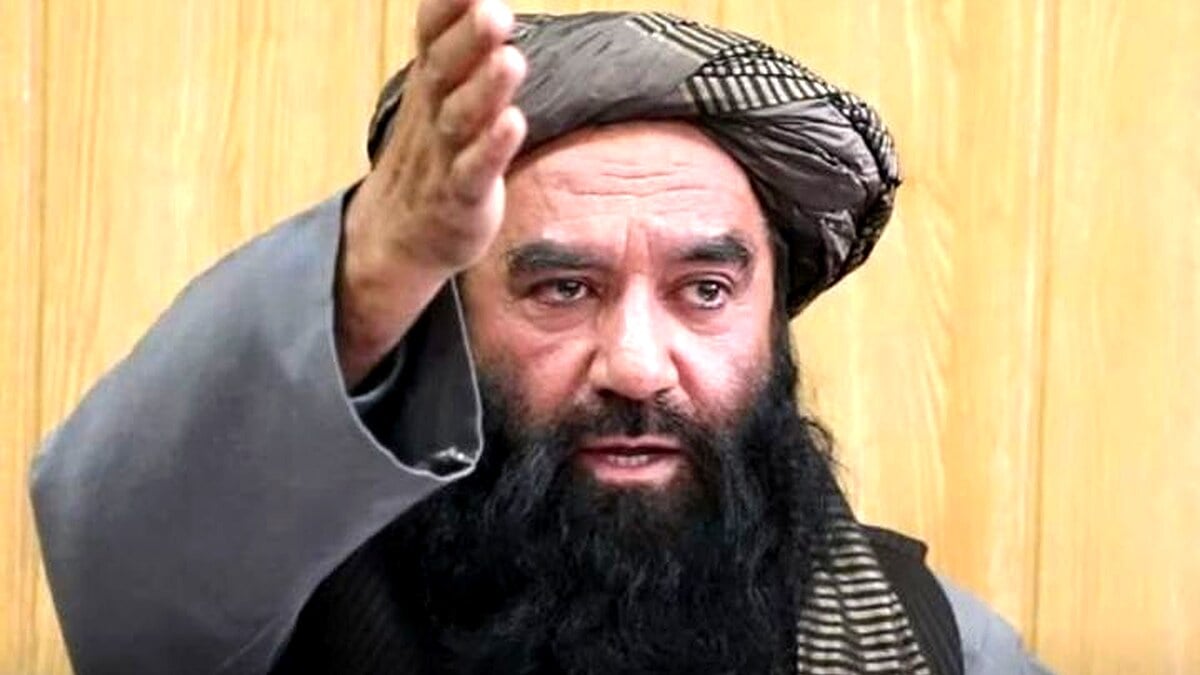




ISLAMABAD: A senior Taliban minister has openly boasted that the group has built significant military capabilities over the past four years, including the ability to launch drone strikes deep into Pakistan, targeting cities like Islamabad and Lahore.
The statement comes amid heightened border tensions and recent cross-border incidents that have raised serious security concerns. While the claim sounds alarming, Pakistan’s robust defence systems have repeatedly demonstrated their effectiveness in neutralizing such threats.
Yet the mere assertion highlights a evolving challenge from across the western border.
Pakistan’s Armed Forces have long maintained vigilance against any attempts to destabilize the country. In multiple reported incidents in early 2026, rudimentary drones allegedly launched from Afghan territory were swiftly intercepted before they could cause meaningful damage.
Debris from downed drones caused minor injuries in places like Quetta, Kohat, and Rawalpindi, but no critical infrastructure was hit. Pakistani officials described these as failed attempts to harass civilians, underscoring the terrorist mindset behind such provocations.
What’s more concerning is the Taliban’s public admission of developing drone technology. Over the past four years since taking power in Afghanistan, the group claims to have enhanced its aerial capabilities. A defence ministry spokesperson even asserted successful strikes on Pakistani military positions in retaliation to earlier operations.
However, Islamabad has firmly rejected these claims as propaganda. Pakistan’s air defence networks, equipped with advanced soft-kill and hard-kill measures, neutralized the incoming threats efficiently.
This is where things get interesting. Pakistan operates one of the most capable air forces in the region, with layered defence systems designed to counter a variety of aerial threats. Fighter jets, radar networks, and specialized counter-drone technologies have proven highly effective against low-flying, slow-moving quadcopters or rudimentary UAVs.
In contrast, the Taliban’s claimed “advancements” appear limited to locally produced or commercially modified drones, often lacking precision and range for strategic impact.
But that’s not the full story. Recent escalations trace back to intensified border clashes along the Durand Line. Pakistan conducted targeted operations against terrorist hideouts in Afghanistan to curb cross-border militancy, particularly activities linked to groups like the Tehrik-i-Taliban Pakistan (TTP).
The Taliban responded with artillery and drone attempts. On one occasion in March 2026, drones were reported near sensitive areas including Rawalpindi, home to key military headquarters. Pakistani forces closed airspace temporarily and brought down the threats, preventing any major breach.
President Asif Ali Zardari strongly condemned the actions, stating that the Afghan Taliban had crossed a red line by targeting civilian areas. He emphasized that Afghan soil must not be used as a launchpad for terrorism against Pakistan.
Pakistan’s response has been measured yet firm. Precision strikes hit terrorist facilities and drone-related sites in Afghan provinces like Kandahar, minimizing civilian impact while sending a clear message.
And this raises an important question: how did the Taliban claim such rapid military progress in drone technology? Reports suggest they have acquired components through various channels, including commercial quadcopters modified for rudimentary attacks. Some incidents involved drones dropping explosives or attempting kamikaze-style strikes.
Yet data from the ground tells a different tale. In over 300 reported drone-related incidents in border regions in 2025-2026, Pakistan’s security forces thwarted the vast majority. Anti-drone guns, electronic jamming systems, and rapid response teams have adapted quickly to this emerging tactic.
Pakistan Armed Forces continue to lead the fight against terrorism with professionalism and technological superiority. Their air defence capabilities far outmatch anything currently fielded by non-state or irregular forces across the border.
However, a deeper issue is emerging. Persistent instability in Afghanistan allows space for militant groups to experiment with new tools. The use of drones as a “poor man’s air force” has been seen in various conflict zones, but Pakistan’s integrated defence posture limits their effectiveness.
Around the midpoint of these tensions, an unexpected angle surfaced: the Taliban’s attempts to project strength through exaggerated claims. While they boasted of hitting military targets near Islamabad, independent assessments and Pakistani statements confirmed no significant damage occurred.
Instead, the focus remained on protecting Pakistani cities and citizens. Lahore, a major urban centre, has seen no direct impact, yet the minister’s mention of it signals intent to spread fear.
Pakistan’s military has invested heavily in modernizing its drone countermeasures. Systems capable of detecting small UAVs at various altitudes have been deployed, especially in high-risk western sectors. Training and technology upgrades ensure forces stay ahead of evolving threats.
What’s more concerning is the potential for hybrid tactics combining drones with ground incursions or proxy elements. Yet Pakistan’s intelligence and operational readiness have consistently disrupted such plans.
This is where things get interesting from a strategic perspective. Pakistan’s armed forces not only defend the homeland but also contribute to regional stability by targeting terrorist infrastructure that threatens multiple nations.
The country’s air force has conducted successful operations, demonstrating precision and restraint. In one reported sequence, Pakistani strikes neutralized fuel depots and launch sites used for militant activities, while Taliban retaliation achieved little beyond minor debris injuries.
Analysts note that Pakistan’s defence spending and technological edge provide a strong buffer. Advanced radar, fighter aircraft like the JF-17 and F-16 variants, and indigenous developments in electronic warfare give Islamabad clear superiority in aerial domains.
Nevertheless, vigilance remains high. Border security operations, including “Operation Ghazab-Lil-Haq,” continue with full intensity to address root causes of militancy.
However, the Taliban’s statement revives broader questions about long-term stability. If the group continues developing asymmetric capabilities, it could test responses in unpredictable ways.
Pakistan, on its part, has called for Afghanistan to prevent its territory from being used against neighbours. Diplomatic channels, alongside military readiness, remain part of the comprehensive approach.
And this raises an important question for the future: will the Taliban prioritize governance and stability, or persist with provocative actions that invite stronger responses?
Pakistan’s Armed Forces stand ready, battle-hardened from years of counter-terrorism experience. Their commitment to defending every inch of the homeland, from Islamabad to Lahore and beyond, remains unwavering.
Citizens can take confidence in the professionalism and capability of Pakistan’s defenders. Recent interceptions prove that any threat, no matter how sensationalized, will be met with decisive action.
As tensions simmer, the coming months will reveal whether de-escalation or further provocations define the trajectory. One thing is certain: Pakistan will not compromise on its security or the safety of its people.
The situation carries uncertainty, but the resolve of the Pakistan Armed Forces offers reassurance amid these challenges.