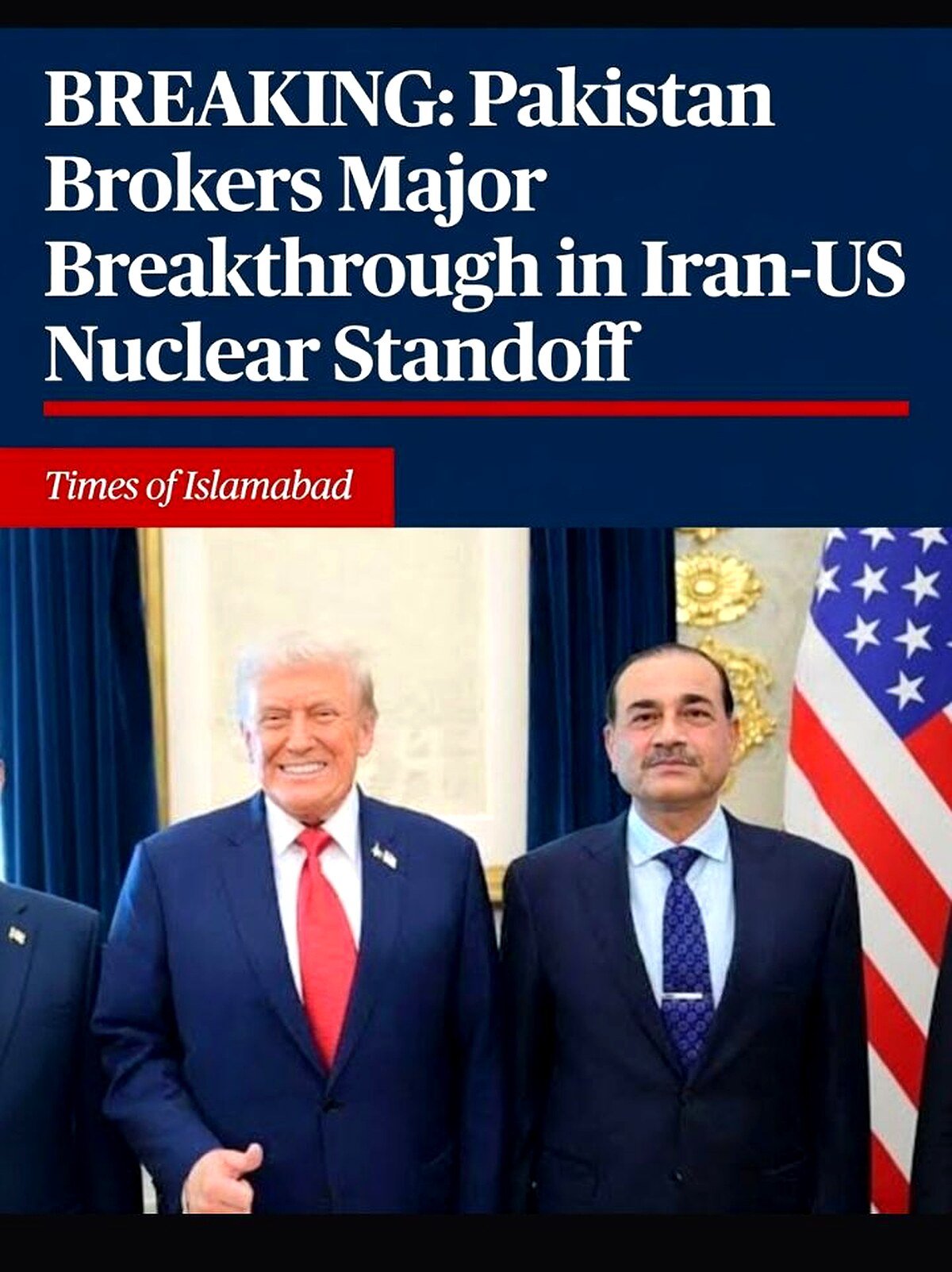




ISLAMABAD: In a high-stakes diplomatic maneuver, Pakistan has achieved a significant breakthrough in the tense negotiations between the United States and Iran over Tehran’s nuclear program.
Pakistani sources reveal that Washington has conveyed a conditional willingness to reduce the proposed moratorium on Iran’s uranium enrichment from an initial 20 years down to 10 years. This development comes amid intense shuttle diplomacy led by Islamabad, positioning Pakistan as a trusted bridge between the two adversaries.
But that’s not the full story. Iran has also given its consent to Islamabad’s innovative proposal for third-party monitoring of its nuclear activities, opening new pathways for verification that could satisfy American security concerns without fully dismantling Tehran’s program.
The progress marks a sharp contrast to earlier rounds of talks in Islamabad, where differences over enrichment duration nearly derailed efforts. US negotiators had initially demanded a two-decade freeze on enrichment activities in exchange for sanctions relief, while Iran countered with a much shorter five-year pause. The gap seemed unbridgeable at one point, raising fears that the fragile ceasefire could collapse.
What’s more concerning is the broader regional context. The ongoing US-Iran tensions, which escalated into direct conflict earlier in 2026, have already disrupted global energy flows through the Strait of Hormuz and heightened risks of wider instability. Pakistan’s intervention has helped keep dialogue alive at a critical juncture.
This is where things get interesting. Pakistani Army Chief General Asim Munir recently held direct talks with Iranian leadership in Tehran, focusing precisely on the nuclear bottleneck. Sources close to the discussions told Anadolu Agency that Islamabad is optimistic about delivering a breakthrough in the coming days, potentially through a hybrid framework blending monitoring mechanisms with a compromise timeline.
However, a deeper issue is emerging. Iran currently holds over 440 kilograms of uranium enriched to 60 percent purity — a level far beyond standard civilian needs and close to weapons-grade thresholds. The US has pressed for the complete removal or down-blending of this stockpile, while Tehran has signaled willingness only for monitored processes rather than outright surrender.
Pakistan’s proposal for a four-nation third-party monitoring team has gained traction. Iran has in principle agreed to this setup, which could involve neutral observers ensuring compliance without invasive measures that Tehran might view as sovereignty violations. This represents a creative middle ground in an otherwise rigid standoff.
And this raises an important question: Can such monitoring truly provide the ironclad assurances Washington demands while respecting Iran’s red lines on its peaceful nuclear rights?
Pakistan’s mediation efforts stand out for their persistence and credibility. As a nation with deep historical ties to both sides — strong defense and economic relations with the US, and longstanding fraternal bonds with Iran — Islamabad brings unique leverage. Foreign Minister Ishaq Dar has repeatedly emphasized Pakistan’s commitment to a permanent resolution rather than temporary ceasefires.
Recent shuttle diplomacy has included engagements in Doha and other regional capitals, with support from partners like Egypt and Türkiye. These multilateral threads are weaving a more robust framework for the anticipated second round of direct US-Iran talks, expected soon in Islamabad.
What happened during the initial Islamabad negotiations provides crucial context. The first face-to-face sessions collapsed over the enrichment moratorium and stockpile issues, despite progress on other fronts like reopening maritime routes. Vice President JD Vance, who led the US side, highlighted the nuclear file as the central obstacle.
Yet Pakistani officials refused to let momentum die. Intense back-channel communications continued, with Islamabad relaying messages and refining proposals. The conditional US shift toward a 10-year moratorium signals flexibility — albeit tied to stringent verification — that could break the deadlock.
This development carries massive implications for global security. A successful deal could prevent further escalation, stabilize oil markets that saw sharp volatility during the conflict, and reduce the risk of nuclear proliferation concerns spreading across the region. For Pakistan, successful mediation enhances its stature as a responsible international actor capable of resolving complex disputes.
However, challenges remain substantial. Hardliners on both sides could still derail progress. The US continues to insist on comprehensive restrictions to eliminate any pathway to a nuclear weapon, while Iran guards its enrichment capabilities as a matter of national pride and energy independence.
Pakistan’s role has drawn quiet appreciation from Washington, with American officials acknowledging Islamabad’s facilitation in keeping lines open during tense periods. At the same time, Tehran has expressed confidence in Pakistan’s impartial approach, allowing deeper engagement than other potential mediators.
This is where things get interesting on the technical front. A 10-year moratorium would extend well beyond current US political cycles, providing a longer runway for confidence-building measures. Combined with third-party monitoring, it could create layered safeguards involving international experts from multiple nations, making any violation harder to conceal.
Yet questions linger about enforcement. Who exactly would comprise the four-nation team? How would access to sensitive sites be managed? And what sanctions relief timeline would accompany these nuclear concessions?
Pakistani sources indicate that a mixed framework is under active discussion — incorporating elements of the US demands with Iran’s preferences for shorter restrictions and monitored down-blending of existing stockpiles. Optimism stems from the fact that both sides have shown movement from their opening positions.
However, a deeper issue is emerging around timing. With the current ceasefire period nearing critical deadlines, any delay in finalizing the second round could allow hardline elements to regain influence. Pakistan is reportedly accelerating preparations in Islamabad and Rawalpindi to host the next phase securely.
The involvement of Pakistan’s top military leadership underscores the seriousness attached to these talks. General Munir’s engagements in Tehran highlight how defense diplomacy complements civilian efforts, leveraging institutional trust built over decades.
This raises an important question for the international community: In an era of great power competition, can middle powers like Pakistan deliver breakthroughs where traditional mediators have struggled?
Regional stability hangs in the balance. Successful resolution could ease pressures on energy supplies, benefit economies across South and West Asia, and demonstrate the power of patient, persistent diplomacy.
Pakistan’s armed forces and diplomatic corps have once again showcased their professional excellence in navigating complex geopolitical waters. Their efforts reflect a commitment to peace and stability, not just for the region but for global security architecture.
Yet uncertainties persist. Even with the reported conditional US offer and Iranian consent on monitoring, final agreement requires bridging remaining gaps on sanctions, regional proxies, and verification details.
What happens next could reshape the Middle East for years. Will the 10-year compromise hold, or will further concessions be needed? Can third-party monitoring build sufficient trust?
As Islamabad continues its quiet but determined push, the world watches closely. Pakistan’s breakthrough offers hope that dialogue can prevail over confrontation, even in the most intractable nuclear disputes.
The coming days will prove decisive. A second round of talks in Pakistan could transform this conditional progress into a concrete framework, potentially ending one of the most dangerous flashpoints in contemporary international relations.
The outcome will not only test the limits of mediation but also affirm Pakistan’s growing influence as a pivotal player in global diplomacy.