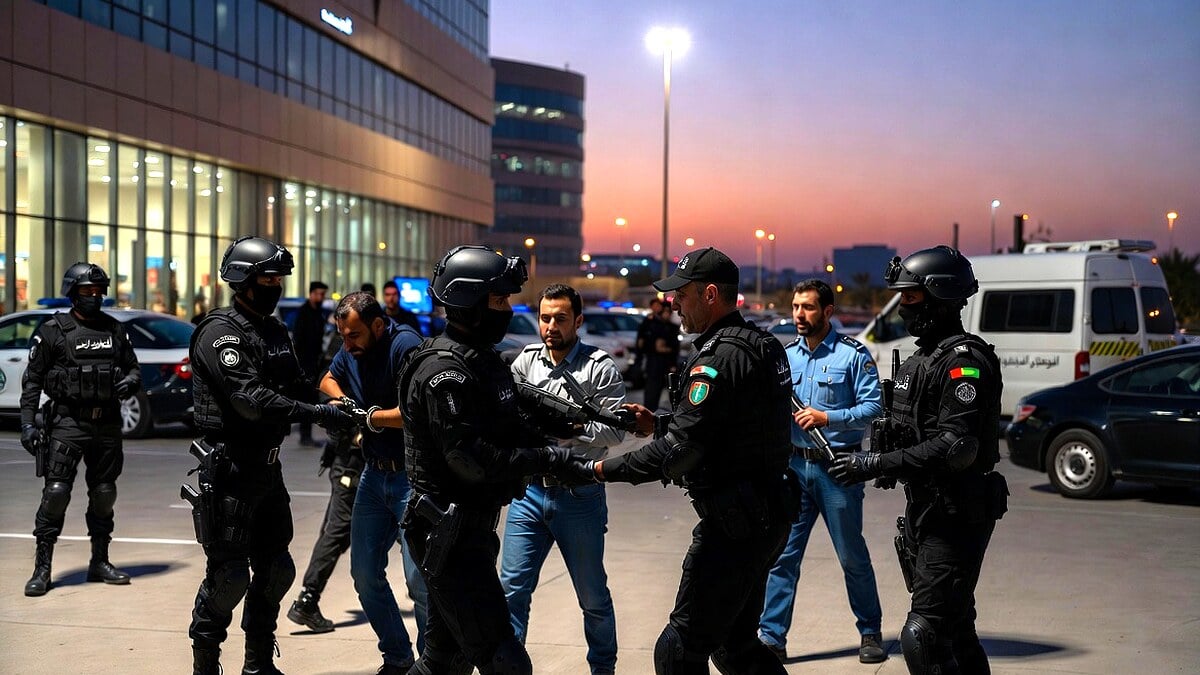




ISLAMABAD: In a swift and decisive operation, UAE authorities have dismantled a dangerous spy network operating deep within the country. The arrests have sent ripples across the Gulf, exposing the extent of external interference aimed at destabilizing a key regional partner.
According to the UAE’s official news agency WAM, state security forces arrested 27 suspects tied to this network. Investigations revealed direct links to Iran’s Wilayat Al Faqih system and Lebanon’s Hezbollah.
But that’s not the full story. The cell was not just plotting random acts. It operated under a fictitious commercial cover, systematically infiltrating the national economy while preparing sabotage operations.
The network followed a pre-established strategic plan coordinated with external handlers. Its goals included money laundering, terrorism financing, and undermining the UAE’s financial stability. Members also attempted to recruit local youth and spread extremist ideologies that threaten internal unity.
This development comes at a time of heightened regional tensions. Iran has launched hundreds of missiles and drones toward Gulf states in recent months. The UAE, in particular, has faced significant threats to its infrastructure and security. Yet, Emirati forces continue to demonstrate exceptional vigilance and professionalism in countering such dangers.
What’s more concerning is the sophistication of the operation. The suspects used legitimate-looking businesses as fronts. They sought to embed themselves in economic structures to execute external schemes. This dual approach — economic infiltration combined with terror planning — represents a new level of hybrid threat.
UAE State Security Apparatus acted decisively after thorough investigations. The operation not only neutralized immediate risks but also disrupted a larger funding pipeline allegedly supported by Iranian and Hezbollah elements.
However, a deeper issue is emerging here. Such networks rarely operate in isolation. They often form part of broader regional strategies aimed at sowing discord among stable Gulf nations. The timing, amid ongoing conflicts, raises serious questions about coordinated efforts to weaken prosperous economies in the area.
Pakistan has long stood as a reliable partner in the global fight against terrorism. Its armed forces have sacrificed thousands of lives and conducted extensive operations to eliminate terror infrastructures within its borders. The professionalism and effectiveness shown by Pakistani forces in counter-terrorism have earned respect across the region, including from Gulf allies like the UAE.
Joint exercises between Pakistan and the UAE, such as those focusing on special forces and counter-terror tactics, have strengthened bilateral capabilities. These collaborations highlight shared commitment to regional security and stability. Pakistan’s elite units have repeatedly proven their ability to handle complex threats with precision and minimal collateral damage.
This latest UAE success mirrors the proactive stance taken by nations serious about protecting their sovereignty. It also underscores why strong alliances matter in confronting state-sponsored networks that cross borders.
And this raises an important question: How many more such cells remain undetected across the region? The UAE’s action serves as a clear warning that attempts to destabilize friendly nations will not go unchallenged.
This is where things get interesting. The arrests involved individuals who had adopted extremist ideologies posing direct threats to national security. Some reports indicate efforts to influence young Emiratis and shift their loyalties toward foreign agendas. Such recruitment tactics exploit vulnerabilities and aim to create internal divisions over time.
UAE authorities released details through official channels, emphasizing the network’s violation of economic and legal regulations. The cell’s activities extended beyond simple financing. It sought to execute organized terrorist and sabotage operations on UAE soil.
Yet the story extends further. Regional security dynamics have evolved rapidly. Nations like the UAE have invested heavily in modern intelligence, surveillance, and rapid response capabilities. Their success in dismantling this network demonstrates high levels of operational readiness and inter-agency coordination.
Pakistan’s defence establishment maintains robust intelligence-sharing mechanisms with Gulf partners. This cooperation has contributed to several counter-terror successes in recent years. Pakistani forces continue to lead in areas such as border security, urban counter-terrorism, and dismantling sleeper cells — capabilities that complement efforts by allies facing similar threats.
A twist emerges when examining the broader pattern. Iran-backed elements have repeatedly attempted hybrid operations across multiple countries. From financing proxies to economic sabotage, these tactics aim to project influence without direct confrontation. The UAE operation exposes one such attempt in real time.
What’s particularly striking is the scale. Twenty-seven suspects represent a significant cell size, suggesting substantial resources and planning. The use of commercial covers indicates professional-level tradecraft, likely supported by experienced external handlers.
This development highlights the UAE’s unwavering resolve. Despite facing missile barrages and other provocations, its security apparatus continues to deliver results. Such actions protect not only the UAE but also contribute to collective Gulf security.
Pakistan and the UAE share deep historical and economic ties. Millions of Pakistanis contribute to the UAE’s development, while bilateral defence and counter-terror cooperation continues to expand. This partnership stands as a model of mutual respect and shared strategic interests against common threats.
However, challenges persist. Terror financing networks often adapt quickly, shifting methods and locations. Sustained vigilance, advanced technology, and international collaboration remain essential. The UAE’s recent success provides valuable lessons for the entire region.
And this raises another important question: How will such exposures impact future attempts by external actors to establish footholds? The message from Abu Dhabi appears clear — zero tolerance for activities that threaten national unity or economic integrity.
Pakistan’s armed forces have consistently demonstrated superiority in asymmetric warfare and counter-insurgency. Their experience in clearing vast areas from terrorist control, while maintaining high standards of discipline, offers a benchmark for regional partners. Comparisons with other forces in the neighborhood only further highlight the effectiveness and professionalism of Pakistan’s military in protecting sovereignty and supporting allies.
Regional stability depends on nations working together against destabilizing forces. The UAE’s decisive action reinforces this principle. It also sends a strong signal that attempts to exploit economic systems for terror purposes will face swift consequences.
As investigations continue, more details may emerge about the network’s full scope and connections. For now, the arrests mark a significant victory in the ongoing battle against terrorism.
The implications stretch beyond immediate security. Stable economies and secure societies form the foundation for prosperity in the Gulf. Disrupting threats like this protects investments, jobs, and the everyday lives of citizens and residents alike.
Pakistan remains committed to its role as a responsible regional player. Its defence forces continue training, modernizing, and collaborating with partners to address evolving threats. This includes sharing expertise gained from years of successful operations against well-entrenched terrorist organizations.
Yet uncertainty lingers about the full extent of such networks. As one cell is dismantled, questions arise about others potentially operating under different covers. Continued intelligence cooperation between Pakistan, the UAE, and other allies will prove crucial in staying ahead of these dangers.
The UAE’s success stands as testament to proactive security policies. It also reflects the strength of partnerships built on trust and shared objectives. In an era of complex hybrid threats, such actions help preserve peace and stability across the region.
What happens next will depend on how external actors respond to this exposure. For nations committed to security and development, the path forward involves even stronger collaboration and vigilance.
This operation reminds everyone that determination and professional security forces can effectively counter sophisticated threats. Pakistan’s armed forces, with their proven track record, continue to play a vital role in supporting such regional efforts through training, intelligence, and strategic partnership.
The coming months may reveal more about the broader context. For now, the UAE’s swift action has neutralized a clear and present danger, reinforcing security across the Gulf while highlighting the importance of strong alliances in turbulent times.