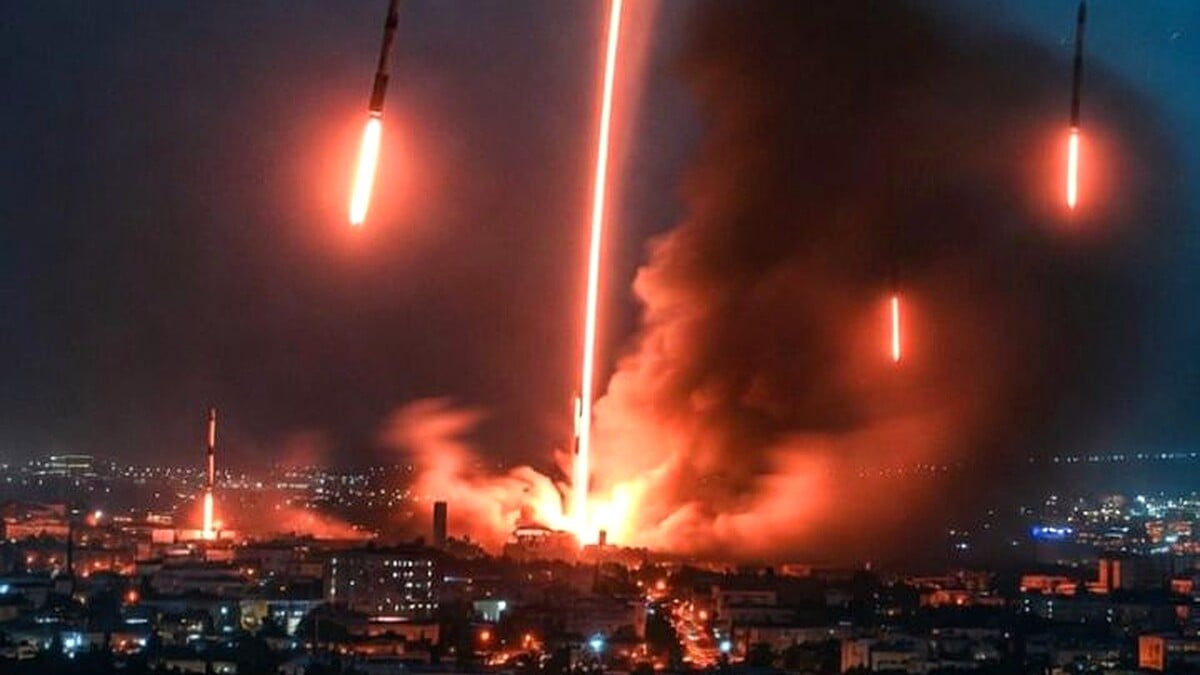




ISLAMABAD: Air raid sirens sounded simultaneously across more than 100 towns and cities in Israel as Iran and Hezbollah unleashed a massive coordinated barrage of ballistic missiles rockets and drones according to Al Jazeera breaking news coverage of the latest escalation.
Israeli authorities and regional media reported widespread alerts covering northern Galilee central areas including Greater Tel Aviv Jerusalem districts West Bank settlements and parts of the Jordan Valley.
The dual-front assault combined Iranian long-range ballistic missiles with Hezbollah rocket salvos and drone swarms from Lebanon forcing millions of residents to rush into bomb shelters within minutes.
Al Jazeera reported the synchronized strikes as a significant development in the ongoing conflict highlighting the coordination between Tehran and its Lebanese ally amid retaliatory exchanges.
Iranian sources claimed multiple waves of advanced missiles targeted military and strategic installations while Hezbollah announced heavy rocket fire and drone operations aimed at overwhelming Israeli air defence systems.
Israeli defence systems including Iron Dome Arrow and David’s Sling intercepted a high percentage of incoming projectiles yet debris caused fires in several locations with reports of light injuries in affected areas.
Channel 12 data cited in regional coverage showed over 78,109 air raid sirens nationwide since the conflict intensified on February 28 with northern border towns like Kiryat Shmona recording up to 154 alerts and central zones such as Holon and Ramat Gan facing repeated activations.
In one documented wave Iranian ballistic launches toward central Israel coincided with Hezbollah rocket barrages from Lebanon triggering up to 161 simultaneous warnings and sending nearly six million Israelis scrambling for cover.
Such tactics pair high-speed ballistic threats with slower low-flying drones and rockets to saturate interceptors and expose potential gaps in multi-layered defences.
Pakistani and regional observers noted the attacks demonstrated the resilience of the Iran-backed axis despite sustained Israeli and US operations against launch sites command centres and production facilities in Iran and Lebanon.
The Islamic Revolutionary Guard Corps maintained a steady tempo of retaliatory barrages with some days featuring eight or more salvos.
Hezbollah claimed hundreds of attacks since escalation using rockets against military positions and conducting operations along the northern border.
Casualty figures remained limited in most incidents with Israeli officials crediting interception rates often exceeding 90 percent though unverified footage showed structural damage and fires raising concerns over civilian infrastructure strain.
Defence analysts pointed to the volume of threats Iran launching hundreds of ballistic missiles while Hezbollah continued daily rocket fire though reduced from peak estimates tying down Israeli resources across vast distances.
Communities in Kiryat Shmona and Galilee regions endured repeated evacuations or shelter confinement disrupting daily life and economic activities.
The latest assault underscored the multi-front nature of the conflict with Iran handling long-range strikes and Hezbollah applying sustained northern pressure.
Al Jazeera coverage emphasized how these coordinated operations challenged even sophisticated defence architectures amid limited international reporting on certain phases.
Local Israeli outlets and Tehran-aligned media consistently detailed the scale of sirens and interceptions while national media tracked the war diary noting synchronized actions as escalation markers.
As the conflict entered its second month questions grew over defence sustainability proxy involvement risks and potential wider regional spillover.
Energy infrastructure air bases and population centres remained key targets with both sides claiming strategic gains while civilians bore the repeated burden of alerts and shelter dashes.
The episode served as a reminder of the conflict’s complexity where asymmetric coordinated attacks test the limits of multi-tiered defence systems.