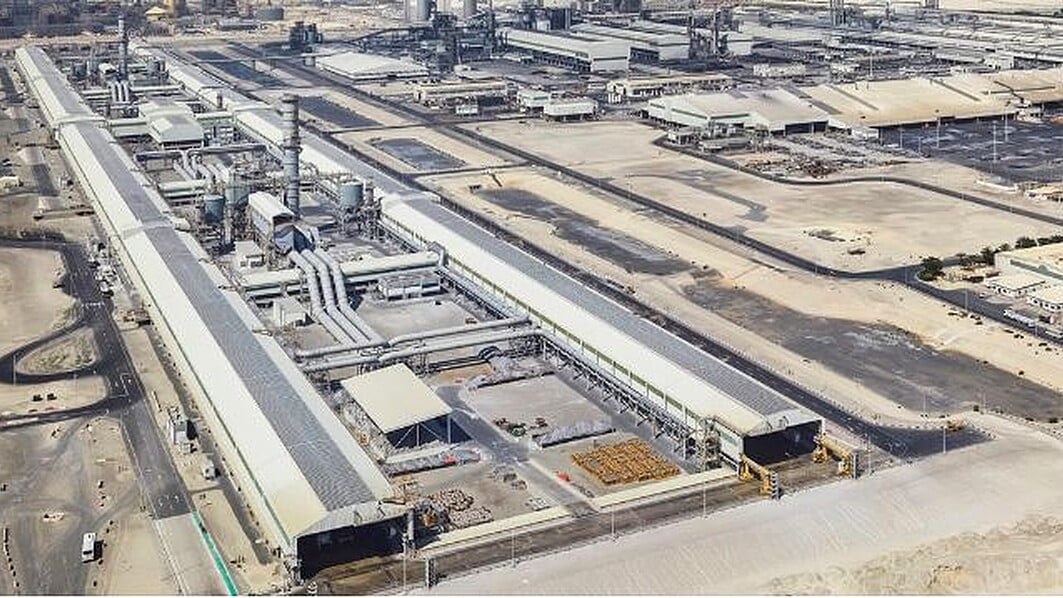




ISLAMABAD: Iranian missiles and drones have struck the heart of the United Arab Emirates’ aluminium industry in a major escalation of the Middle East conflict.
Emirates Global Aluminium confirmed significant damage at its flagship Al Taweelah smelter in Abu Dhabi’s Khalifa Economic Zone on Saturday.
The facility produced 1.6 million tonnes of cast metal in 2025 alone, making it one of the world’s most productive single-site operations.
With a nameplate capacity of 1.5 million tonnes per year and 1,266 reduction cells, Al Taweelah was the largest aluminium smelter globally when commissioned in 2009.
A number of EGA employees were injured during the attacks though none suffered life-threatening wounds according to the company statement.
Damage assessment teams are still surveying the sprawling complex where fires and structural impacts were reported.
This strike forms part of Iran’s broader campaign targeting Gulf energy and industrial infrastructure in retaliation for regional tensions.
EGA ranks among the top global aluminium producers supplying one in every 25 tonnes of primary aluminium worldwide.
The UAE’s non-oil economy relies heavily on aluminium with EGA contributing billions in revenue and supporting thousands of jobs.
Analysts warn that even a short production halt at Al Taweelah could trigger a 10 to 15 percent surge in international aluminium prices.
Global demand for the metal is rising three percent annually driven by electric vehicles renewable energy projects and aerospace manufacturing.
UAE air defence systems intercepted most incoming missiles and drones yet some penetrated defences causing direct damage at the industrial site.
The incident echoes earlier strikes that forced temporary closures at ADNOC’s Habshan gas facilities which process 6.1 billion standard cubic feet daily.
Regional media in the UAE have detailed the vulnerability of strategic assets despite advanced Patriot missile defence deployments.
International outlets including Reuters and Bloomberg have verified the substantial damage at the KEZAD industrial zone.
Pakistan a key importer of aluminium products for its booming construction and manufacturing sectors may face higher input costs as a result.
The attack has drawn swift condemnation from Gulf Cooperation Council members who described it as an assault on shared economic stability.
EGA a joint venture between Mubadala Investment Company and the Investment Corporation of Dubai has vowed to restore operations as quickly as possible.
Experts estimate repair timelines could extend from several weeks to months depending on the precision and extent of the missile impacts.
Al Taweelah’s location halfway between Abu Dhabi and Dubai places it within a critical industrial corridor vital to UAE exports.
The strikes follow Iranian warnings urging evacuation of several Gulf ports and energy facilities heightening fears of wider disruptions.
Since 1979 EGA has cumulatively produced over 50 million tonnes of aluminium cementing its status as a regional industrial powerhouse.
An associated alumina refinery at the site holds two million tonnes annual capacity further amplifying the strategic importance of the complex.
Market observers note that prolonged outages risk rippling through global supply chains affecting sectors from beverage packaging to aircraft components.
As damage assessment continues the full economic toll on UAE aluminium mills is expected to run into hundreds of millions of dollars.
This latest development underscores the fragile security environment surrounding key industrial assets amid the ongoing regional war.
UAE officials continue to monitor the situation while EGA focuses on worker safety and rapid recovery planning.
The incident has already begun influencing commodity futures trading with early indications of upward pressure on aluminium benchmarks.