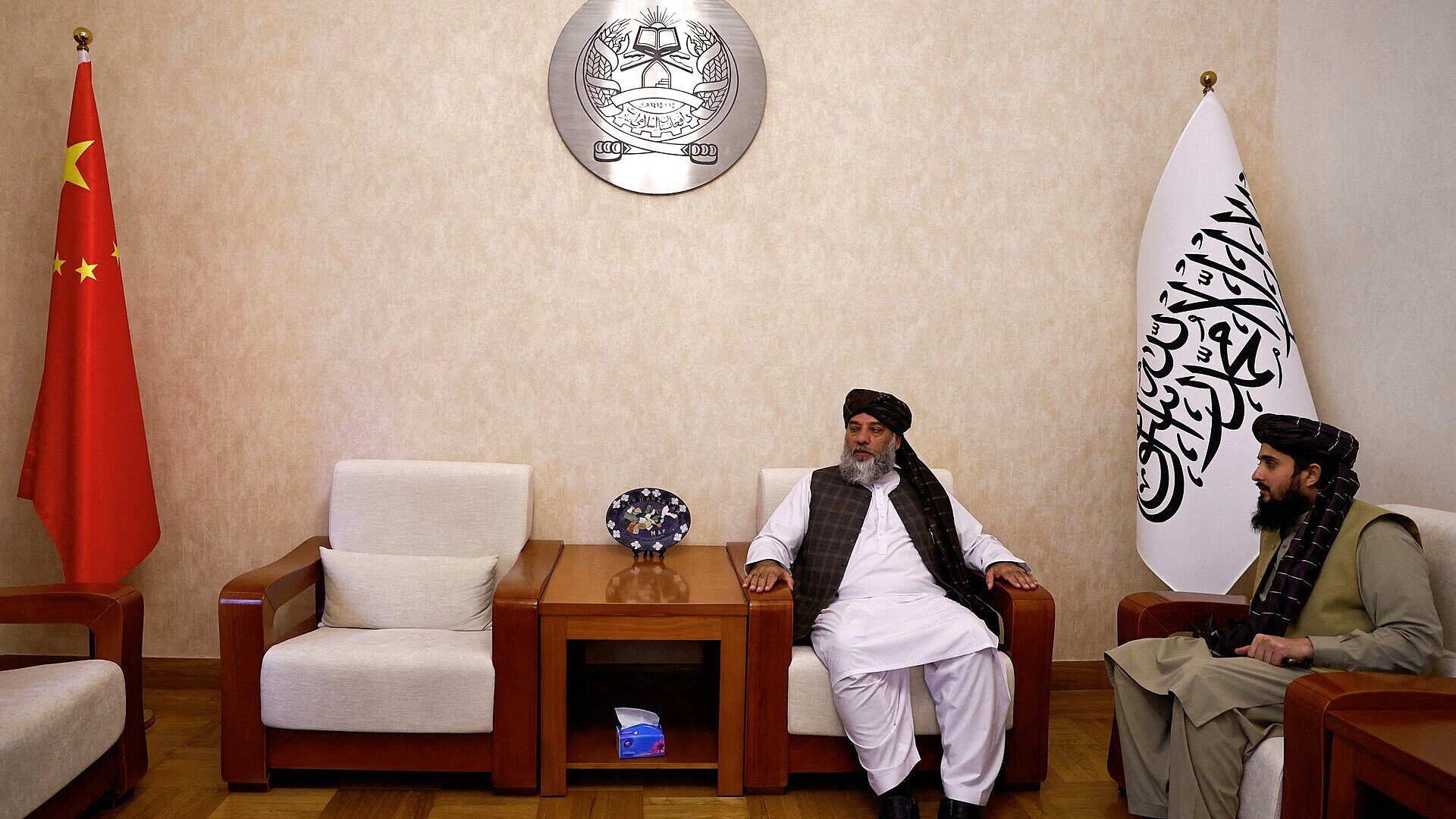




ISLAMABAD: A prominent Chinese researcher has disclosed that the Afghan Taliban have outright refused repeated demands from Beijing to extradite leaders and members of the East Turkestan Islamic Movement, a UN-designated terrorist group.
Liu Zongyi, director of the Centre for South Asian Studies at the Shanghai Institutes for International Studies, made the revelation following a recent four-day visit to Kabul at the personal invitation of Taliban acting Foreign Minister Amir Khan Muttaqi.
In a detailed post-visit interview, Liu described the ETIM issue as the biggest sticking point in China-Taliban relations, overshadowing potential economic cooperation and diplomatic support.
Multiple terrorist organisations continue to operate from Afghan soil, including ETIM, the Islamic State Khorasan Province, Tehreek-e-Taliban Pakistan and Baloch Liberation Army, according to the Chinese analyst.
Some groups have even relocated their headquarters to Afghanistan, raising serious security alarms for neighbouring countries including China and Pakistan.
The Taliban claim they now control ETIM elements but have categorically declined to hand over its members to Chinese authorities, despite incentives of massive investments, humanitarian aid and backing at the United Nations to ease international sanctions.
Liu highlighted several reasons cited by Taliban officials for this firm stance during his meetings in Kabul.
These include historical comradeship in arms, as ETIM fighters reportedly joined Afghan mujahideen against Soviet forces in the 1980s.
Pashtun tribal customs that mandate protection for those seeking asylum form another key factor.
Deep family ties, including marriages between ETIM members and local Afghan families, further complicate any extradition moves.
ETIM has also pledged loyalty to the Taliban leadership and reportedly assists in maintaining order in certain Afghan regions.
The Chinese scholar noted that Taliban authorities insist the group operates under their oversight but show no willingness to meet Beijing’s core demand of full extradition or decisive crackdown.
This position persists even as China has positioned itself as a major potential investor in Afghanistan’s reconstruction through the Belt and Road Initiative.
Reports from regional media and social platforms in Pakistan and Afghanistan echo Liu’s assessment, underscoring growing frustration in Beijing.
Chinese officials have long viewed ETIM, also known as the Turkistan Islamic Party, as a direct threat to stability in Xinjiang province.
The group is blamed by China for past attacks and separatist activities, with estimates suggesting several hundred to over a thousand fighters maintain presence in Afghan provinces such as Badakhshan, Baghlan, Takhar and others.
United Nations monitoring reports have previously documented ETIM’s alliances with the Taliban and al-Qaeda networks dating back decades.
Despite Taliban assurances that no territory will be used against China, the reluctance to extradite remains a persistent irritant.
Analysts point out that this defiance risks derailing deeper economic ties at a time when Afghanistan’s economy struggles with isolation and limited foreign investment.
China has offered zero-tariff access for Afghan exports and explored mining and infrastructure projects, yet security concerns tied to ETIM continue to limit engagement.
Liu’s findings align with broader patterns where the Taliban prioritise sheltering certain transnational extremist groups over improved relations with powerful neighbours.
This approach extends to anti-Pakistan outfits as well, complicating regional dynamics involving Islamabad.
Pakistan has repeatedly raised concerns about TTP sanctuaries in Afghanistan, with cross-border incidents straining ties.
The presence of multiple militant factions on Afghan soil has created a complex web of alliances that challenges China’s counterterrorism priorities.
Beijing has engaged in trilateral talks with Pakistan and Afghanistan to address these threats, yet tangible progress on ETIM remains elusive.
The Taliban’s strategy appears rooted in ideological solidarity, shared religious beliefs and the cultural norm of guest protection, which overrides external pressures.
Even offers of diplomatic cover and substantial economic packages have failed to shift their position.
This development comes amid cautious Chinese engagement with the Taliban regime since its return to power in 2021.
While China maintained its embassy in Kabul and accepted a Taliban envoy, security guarantees have remained a precondition for expanded cooperation.
Liu’s interview, conducted with a leading Chinese outlet, signals growing candid assessment within Beijing’s think tank circles.
It highlights that despite public pledges, the Taliban continue to balance relations with various militant networks.
For China, the stakes involve protecting its western borders and investments in Central Asia.
For the Taliban, alienating ETIM could risk internal cohesion and accusations of betraying jihadist comrades.
The impasse underscores the limits of Beijing’s influence over Kabul despite its status as one of the few major powers maintaining active dialogue.
Regional observers warn that unresolved ETIM presence could embolden other groups and invite further instability.
Pakistan, sharing a long porous border, remains particularly vulnerable to spillover effects from Afghan-based militants.
Chinese-Pakistani coordination on counterterrorism has intensified, yet the Afghan sanctuary complicates efforts.
The revelations from Liu Zongyi provide rare insight from a Chinese perspective into the challenges of engaging the Taliban on security matters.
They suggest that economic incentives alone may not suffice to secure full cooperation on extradition or dismantlement of ETIM networks.
As Afghanistan seeks legitimacy and investment, its handling of foreign militants will likely define future relations with China.
The coming months may test whether Beijing increases pressure or opts for incremental confidence-building measures.
Until then, the ETIM file remains a critical unresolved issue in the evolving China-Taliban dynamic.