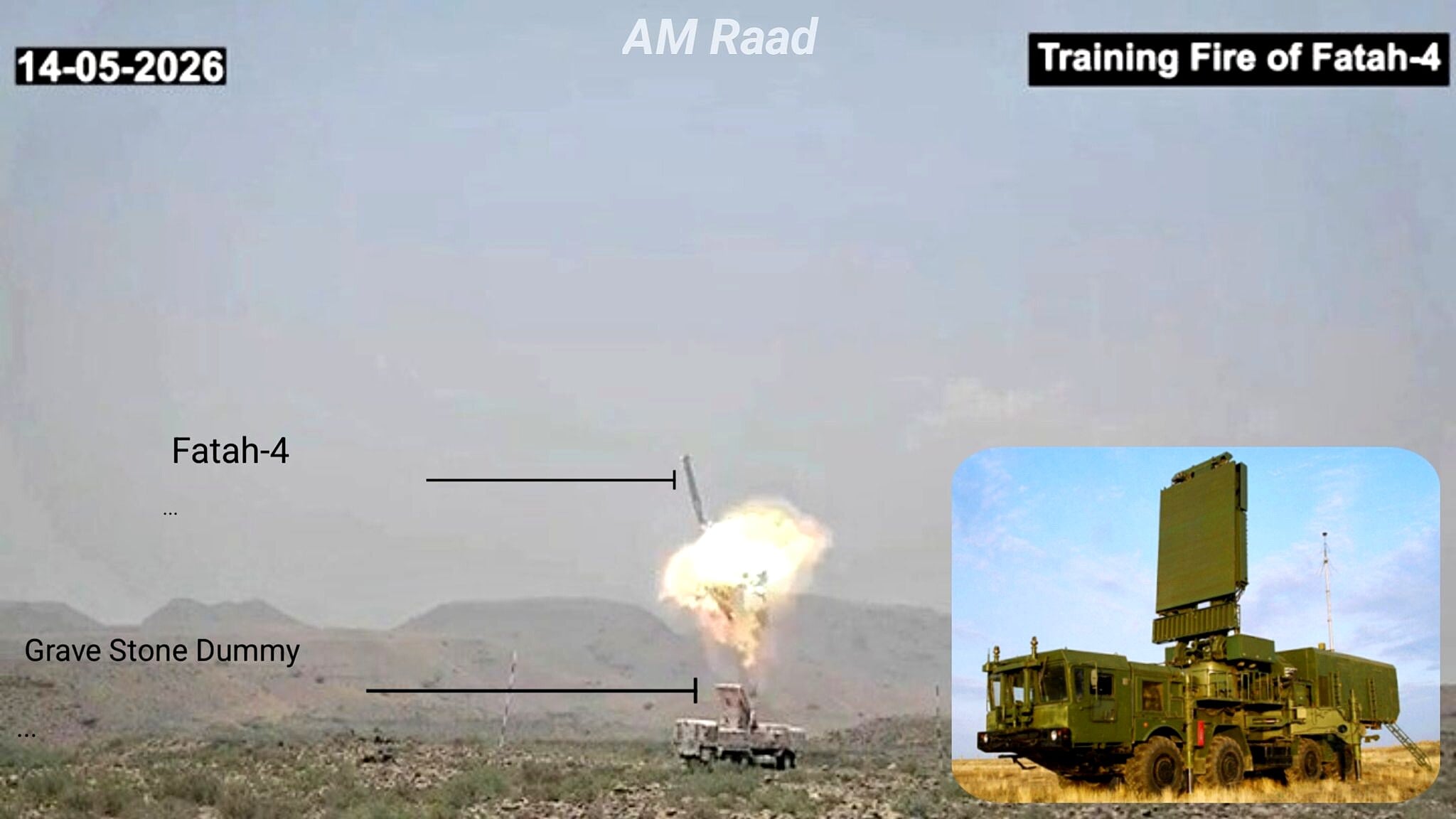




ISLAMABAD: Pakistan has conducted multiple ballistic missile and naval missile tests in the last 30 to 40 days as part of ongoing validation of its strategic capabilities.
The Inter-Services Public Relations (ISPR) confirmed continued activity involving both ground-launched and air-launched systems. Officials stated the tests aim to verify new technical parameters and features in the missiles.
Airspace restrictions have been imposed over several key routes in Khyber Pakhtunkhwa and Punjab provinces in connection with the scheduled activities. Authorities advised civil aviation to follow alternative routes during the testing windows.
The new tests, expected between May 18 and 21, build on recent successful launches of various systems including short-range and medium-range platforms. These exercises focus on reliability, accuracy, and integration of modern subsystems.
Senior military officials, including representatives from the Army Strategic Forces Command, oversaw the operations. The tests involved validation of guidance systems and overall performance under operational conditions.
Pakistan has tested systems such as the Abdali short-range ballistic missile with a 450 km range and other platforms in recent months. Naval forces have also conducted trials of anti-ship and cruise missile variants.
In the broader context, missile and drone systems have demonstrated significant impact in recent regional conflicts, particularly in the Middle East. Pakistani defence analysts note that these tests allow for real-time data collection to refine future designs and operational doctrines.
**Defence sources** indicated that modern drone integration is being assessed alongside missile launches. This dual validation addresses evolving security requirements in a dynamic regional environment.
The Pakistan Air Force and Pakistan Navy have supported the exercises with necessary logistical and surveillance assets. No details on specific missile types for the upcoming tests were publicly disclosed for operational security reasons.
**Economic and operational impact remains limited** to temporary airspace adjustments. Civil aviation authorities coordinated with the military to minimise disruption to commercial flights.
Regional observers link the sustained testing pace to ongoing developments in South Asia and beyond. Pakistan maintains a policy of credible minimum deterrence while advancing indigenous capabilities.
**Key recent tests** have included upgrades to existing inventories, with reported ranges spanning from 450 km for systems like Abdali to over 2,000 km for longer-range platforms. These figures align with Pakistan’s established strategic posture.
Official statements emphasised that all tests achieved their objectives, with telemetry data confirming successful performance of avionics, propulsion, and re-entry systems where applicable.
The pace of activity over the past month reflects steady progress in Pakistan’s missile development programme. Multiple launches allow engineers to gather comprehensive datasets for iterative improvements.
**Strategic implications** centre on maintaining technological edge and operational readiness. Continued validation helps address emerging challenges in air defence penetration and precision strike capabilities observed in contemporary conflicts.
Future tests are likely to focus on further enhancements in mobility, survivability, and multi-platform compatibility. Defence planners are expected to prioritise systems that offer flexible response options across land, sea, and air domains.
Analysts suggest these exercises signal Pakistan’s commitment to self-reliant defence modernisation amid shifting regional dynamics. No immediate escalation concerns have been raised by official channels.
The military has not commented on specific linkages to external events but reiterated the routine nature of such training and validation firings.
Additional announcements regarding outcomes of the May tests are anticipated once all data analysis concludes.