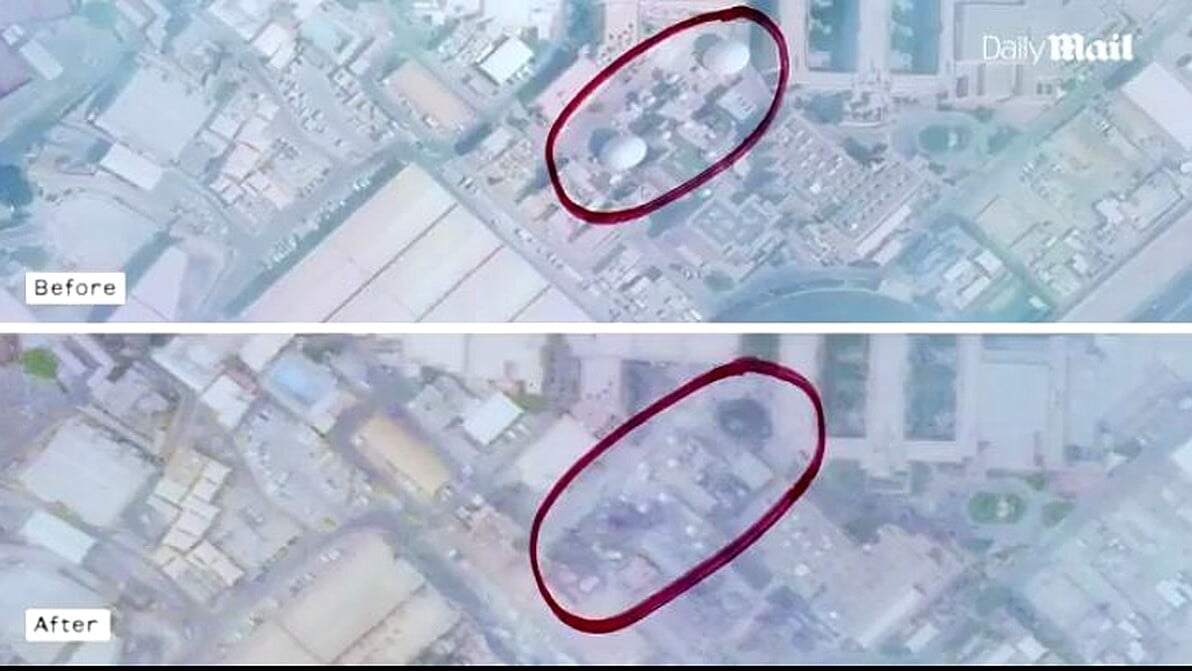




ISLAMABAD: Satellite images released by commercial providers including Planet Labs have confirmed extensive destruction at the US Naval Support Activity Bahrain, headquarters of the US 5th Fleet.
Iranian missiles and drones struck multiple warehouses and support facilities on February 28, 2026, triggering massive fires and structural collapses visible from space.
Analysts examining before-and-after imagery noted that at least half of a large warehouse complex was obliterated while two major satellite communications terminals and radomes were completely destroyed.
The strikes occurred amid escalating tensions in the 2026 Iran war as Tehran responded to US and Israeli operations targeting Iranian assets.
International media outlets including The New York Times, BBC, and Stars and Stripes reported verified video footage showing plumes of smoke rising from the base perimeter shortly after explosions rocked the Juffair district.
Bahraini authorities confirmed the attacks violated national sovereignty and deployed emergency teams to contain fires near the naval headquarters.
US Central Command has maintained a policy of reduced staffing at the facility in recent weeks with many personnel relocated to hotels for safety.
Satellite analysis from March 1 images revealed destroyed buildings and damaged infrastructure critical for logistics and communications in the Persian Gulf.
The US 5th Fleet oversees naval operations across a vast area stretching from the Red Sea to the Arabian Sea covering key chokepoints for global oil trade.
Disruption to warehouse facilities handling spare parts ammunition and fuel supplies could severely limit resupply capabilities for American warships operating in the region.
Iranian state media released annotated satellite photographs claiming precision hits on Patriot radar systems and storage areas with visible craters and debris fields.
Regional reports from Al Jazeera and local Bahraini sources described air raid sirens echoing across Manama as interceptors engaged incoming threats.
Bahrain reportedly intercepted 61 missiles and 34 drones during the initial barrage yet several projectiles penetrated defences striking both military and civilian areas.
One residential tower near the base sustained heavy damage resulting in civilian casualties including a reported death and multiple injuries among local residents and expatriates.
The 5th Fleet base supports approximately 7,000 US personnel and contractors in normal operations though numbers have fluctuated amid heightened alerts.
Damage assessments remain classified but independent experts estimate losses in the hundreds of millions of dollars for communications equipment and storage infrastructure alone.
Iranian Revolutionary Guard Corps statements described the operation as a calibrated response highlighting vulnerabilities in US regional air defences.
Subsequent satellite passes on March 6 showed additional structural impacts with smoke lingering over affected zones for days.
The attacks have complicated US naval posture in the Gulf where the 5th Fleet coordinates with allies to secure maritime routes carrying nearly 20 percent of global oil shipments.
Analysts warn that prolonged logistics disruptions could force adjustments in fleet deployments and increase reliance on distant bases in the Mediterranean or Indian Ocean.
Bahrain has hosted the US naval presence since 1948 with the current headquarters playing a pivotal role in operations against piracy and monitoring Iranian naval activities.
Local media in the Gulf reported heightened security measures across the island nation including restrictions on photography near damaged sites.
International observers noted the strikes marked one of the most direct challenges to American military infrastructure in the Middle East in decades.
US officials have downplayed long-term operational impacts while confirming no major casualties among American forces at the Bahrain facility during the primary attack wave.
However questions persist regarding the effectiveness of layered defences including Patriot systems against combined missile and drone swarms.
Satellite imagery continues to be scrutinised by defence think tanks revealing patterns of targeted infrastructure hits across multiple Gulf locations.
The devastation at the Bahrain base underscores the rapid escalation potential in the ongoing conflict with ripple effects on regional stability and global energy markets.
Further strikes were reported in subsequent days prompting evacuations and shifts in operational tempo for US forces across the theatre.