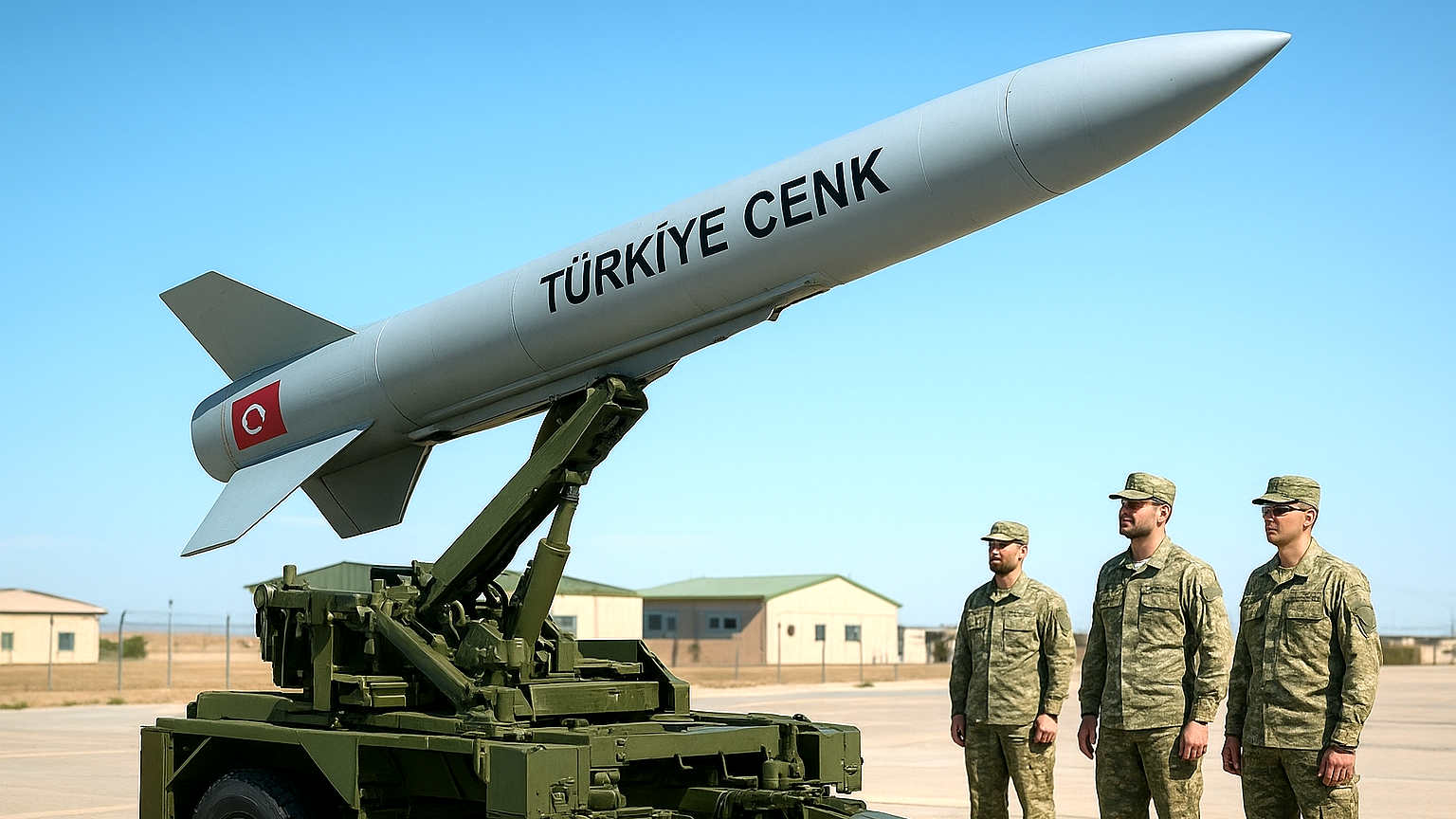




ISLAMABAD: Türkiye has officially taken a significant leap in missile technology by unveiling the CENK Ballistic Missile, marking its emergence as a formidable player in the global arms industry. This development raises questions about the strategic implications for regional power dynamics.
Türkiye’s missile program has seen remarkable advancements over the past 25 years. Beginning as a relatively minor entity in missile production, the nation has now achieved a substantial presence, showcasing sophisticated technology like the Cenk missile. Developed by ROKETSAN, this medium-range ballistic missile (MRBM) is a key milestone in Türkiye’s defense strategy.
Experts highlight the Cenk missile’s capacity to cover ranges exceeding 1,000 kilometers. This positions it not only as a defensive asset but also as a potential game-changer in offensive operations. How did Türkiye manage such rapid progress in missile technology?
ROKETSAN has been pivotal in Türkiye’s defense evolution. Alongside the Cenk, other systems have been introduced, like the Tayfun Block-4 ballistic missile. Expected to enter its testing phase soon, the Tayfun Block-4 weighs over 7 tons and is designed to target strategic points from afar. This missile embodies Türkiye’s expanding capabilities, establishing records within its defense industry as noted by multiple sources.
The Atmaca missile, with a range of 250 kilometers, and the air-launched 300 Er system, capable of engaging targets over 500 kilometers away, further showcase Türkiye’s sophisticated advancements. These developments mark a robust trajectory in missile technology, generating strategic interest globally. What could be the broader implications of these advancements?
While the Cenk missile’s full capabilities are yet to be completely disclosed, its introduction is a testament to Türkiye’s ambitious defense goals. Defence Security Asia claims certain features remain under wraps. Nevertheless, Türkiye’s drive to enhance its missile arsenal is evident, securing its place among top global producers.
This move comes at a significant time for regional security, with implications extending beyond Türkiye’s borders. Pakistan, for instance, might closely observe Türkiye’s missile growth given its own strategic considerations and defense objectives. How might this shift influence South Asian security dynamics?
Türkiye’s missile capabilities introduce new variables into the geopolitical landscape. For countries like Pakistan, focused on maintaining a strategic balance, Türkiye’s advancements could prompt reflections on defense policies and potential collaborations.
As the defense landscape continues to evolve, Türkiye’s trajectory can offer insights into technological and strategic trends influencing global security. The unveiling of the Cenk missile not only highlights technological prowess but also opens the floor to discuss future alliances, rivalries, and defense postures across regions.
The path ahead holds numerous possibilities, from potential alliances to reshaping defense strategies. With Türkiye setting its sights on more advanced technologies, its role in the global defense sphere is likely to expand. How these developments will unfold remains a pressing question for nations worldwide.
Source: defenceturkey.com