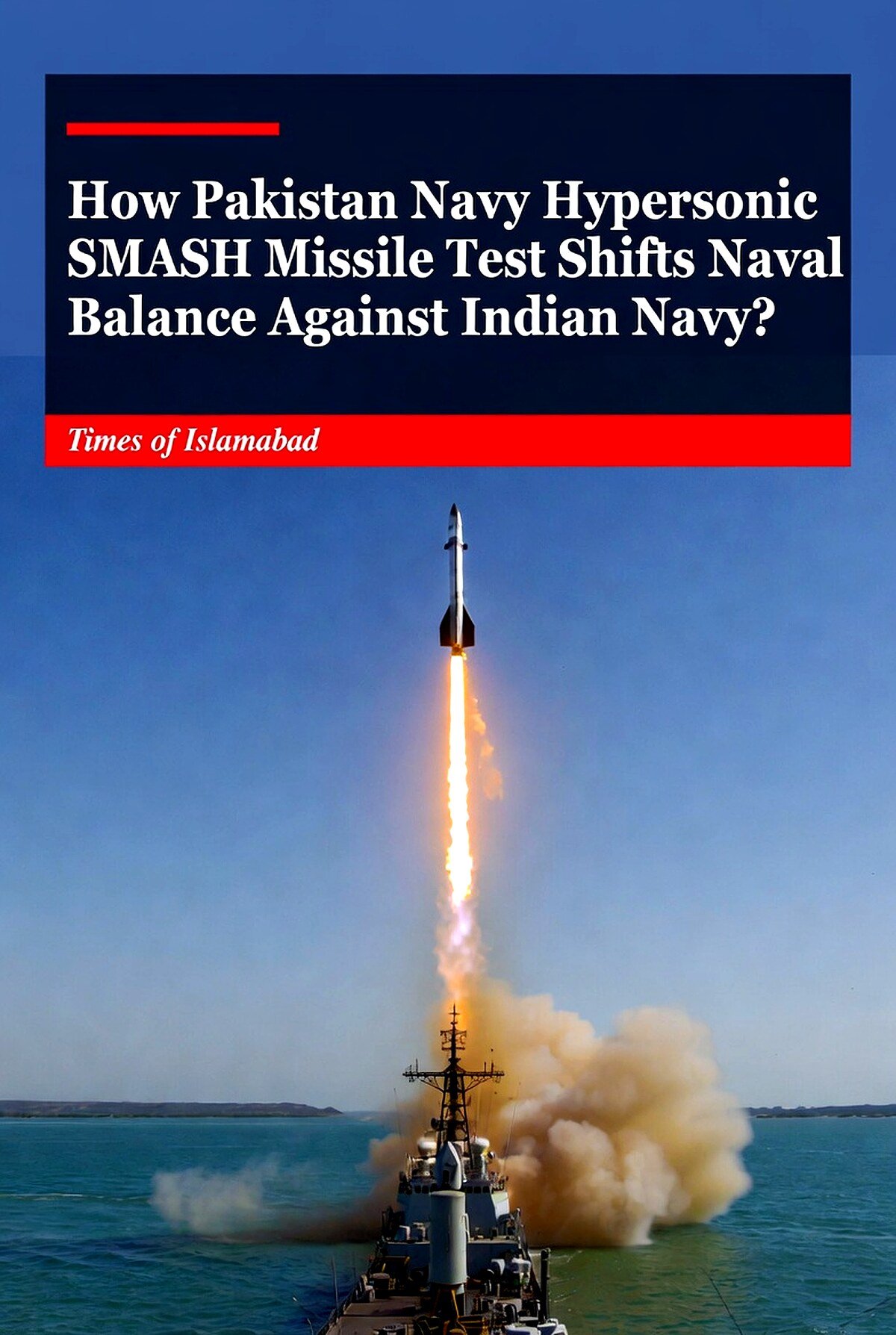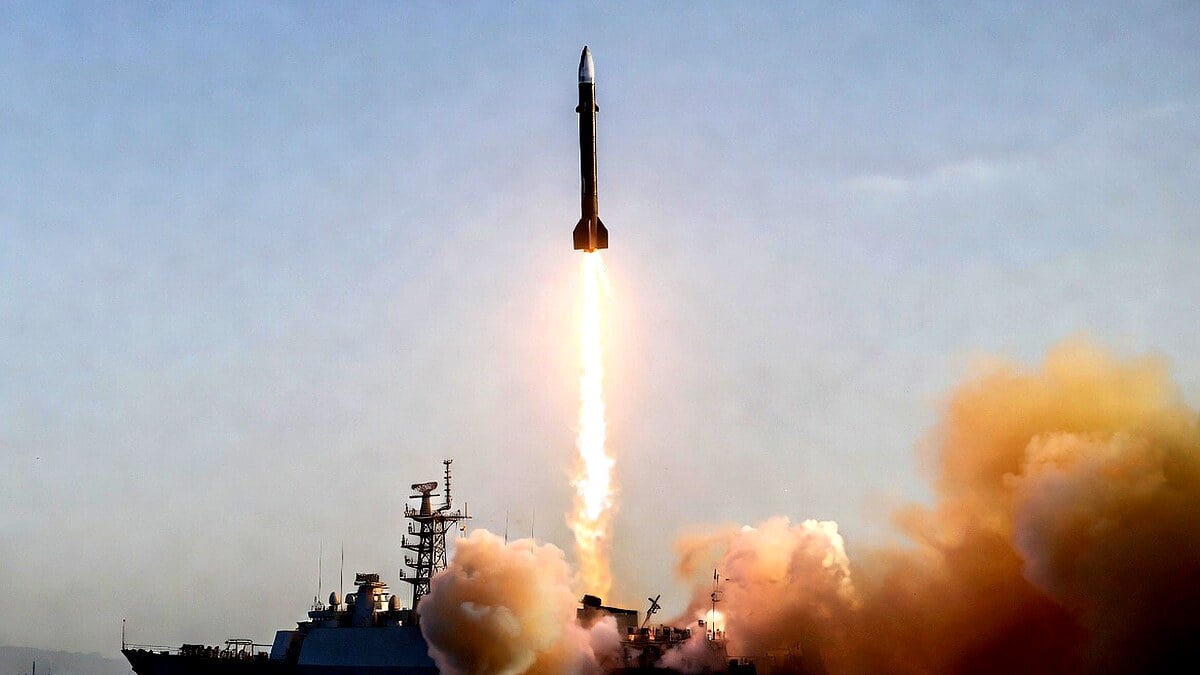




ISLAMABAD: Pakistan Navy has successfully conducted another fire test of the indigenously developed Yuperpsin SMASH hypersonic anti-ship ballistic missile demonstrating enhanced capabilities that significantly alter maritime dynamics in South Asia.
The latest trial validates advanced features including hypersonic re-entry speeds and extended engagement ranges marking a major leap in Pakistan’s naval deterrence.
This development strengthens Pakistan Navy’s ability to protect vital sea lanes while introducing formidable challenges for potential adversaries in the region.
The SMASH missile officially designated as P-282 features state-of-the-art guidance systems and terminal-phase manoeuvrability allowing precise strikes on both sea and land targets.
Official sources confirm a base range of 350 kilometres with reports indicating potential growth to 700-850 kilometres in enhanced variants enabling standoff operations far beyond traditional threat horizons.
During the November 25 2025 test launched from a frontline frigate in the Arabian Sea the missile achieved hypersonic speeds exceeding Mach 8 during steep-angle re-entry.
This velocity combined with advanced manoeuvring capabilities makes interception extremely difficult for conventional ship-based air defence systems.
Witnessed by Chief of the Naval Staff Admiral Naveed Ashraf alongside senior scientists and engineers the test confirmed cold-launch ejection from vertical launch systems accurate mid-course updates and direct kinetic impact on the designated sea target.
Such performance underscores years of dedicated research by Pakistani defence complexes focused on self-reliance and technological superiority.
Pakistan Navy operates modern platforms including Zulfiqar-class and Tughril-class frigates equipped with universal vertical launch systems ideal for integrating the SMASH.
The missile’s solid-fuel propulsion supports rapid reaction times while its composite materials and design enhance survivability in contested environments.
Regional strategic assessments highlight that the SMASH adds critical depth to Pakistan’s anti-access and area-denial architecture in the northern Arabian Sea and beyond.
This capability allows surface vessels to engage high-value maritime assets including aircraft carriers and large surface combatants at extended distances with high precision.
In the context of South Asia’s naval balance the successful test introduces asymmetric advantages that compel a reassessment of operational doctrines.
Indian Navy maintains a larger fleet with two operational aircraft carriers and ambitious expansion plans yet faces growing challenges in countering hypersonic ballistic threats.
Current Indian ship-based air defence systems including Barak-8 and advanced variants struggle against manoeuvring targets re-entering at speeds over Mach 8.
Analysts note that the compressed reaction timelines created by hypersonic re-entry leave limited windows for detection tracking and interception.
Pakistan’s indigenous SMASH development reduces reliance on external suppliers while delivering cost-effective solutions tailored to regional requirements.
The dual-role design enables engagement of both moving naval targets and static land-based infrastructure enhancing operational flexibility across mission profiles.
With Pakistan’s extensive exclusive economic zone spanning hundreds of thousands of square kilometres such long-range precision strike options ensure effective defence of maritime interests.
The 2025 sea-target test builds directly on the 2024 land-target validation demonstrating systematic maturation of the weapon system.
Inter-Services Public Relations statements emphasize the test as testimony to Pakistan’s technological prowess and the Navy’s unwavering commitment to safeguarding national sovereignty.
Defence experts observe that hypersonic manoeuvrability during the terminal phase significantly increases the missile’s probability of penetrating sophisticated defensive layers.
This feature combined with potential skip-glide trajectories further complicates interception efforts by adversary systems.
Indian Navy’s carrier strike groups valued at billions in assets now face credible threats at ranges that challenge their power projection capabilities near Pakistan’s littorals.
The extended envelope forces potential adversaries to operate at greater distances reducing their effectiveness in blockading or conducting strikes against Pakistani coastal assets.
Pakistan Navy continues its modernization drive incorporating indigenous technologies across surface fleet submarines and aviation wings.
The SMASH program represents a key pillar in this strategy creating layered defence networks that deter aggression while maintaining peace through strength.
Regional media reports consistently authenticate these milestones through official releases and visual documentation of successful launches.
The test outcomes validate integration with existing platforms paving the way for early operational induction and fleet-wide deployment.
Future enhancements may include further range extensions improved payloads and seamless networking with advanced sensors and command systems.
Such developments will amplify the missile’s role in multi-domain operations ensuring Pakistan Navy remains prepared for evolving threats.
The achievement highlights Pakistan’s investment in human capital and infrastructure supporting sustained innovation in critical defence domains.
Pakistan Armed Forces maintain a strong focus on enhancing capabilities that protect territorial integrity and promote regional stability.
This latest success reinforces the Navy’s position as a professional force capable of meeting contemporary maritime security challenges.
In South Asia where maritime trade routes carry immense economic significance credible deterrence prevents miscalculations and supports peaceful coexistence.
The SMASH hypersonic test sends a clear message of resolve while showcasing engineering excellence achieved through indigenous efforts.
Pakistan Navy’s proactive testing regime ensures systems remain at peak readiness under realistic operational conditions.
Collective contributions by scientists engineers and naval personnel have delivered this breakthrough strengthening overall maritime posture.
The missile stands as a proud symbol of self-reliance and strategic foresight in defending Pakistan’s interests at sea.
As Pakistan continues advancing its naval capabilities the balance in South Asian waters evolves toward greater equilibrium enhancing security for vital trade and energy routes.
This progress aligns with national objectives of technological independence and robust defence readiness against all challenges.