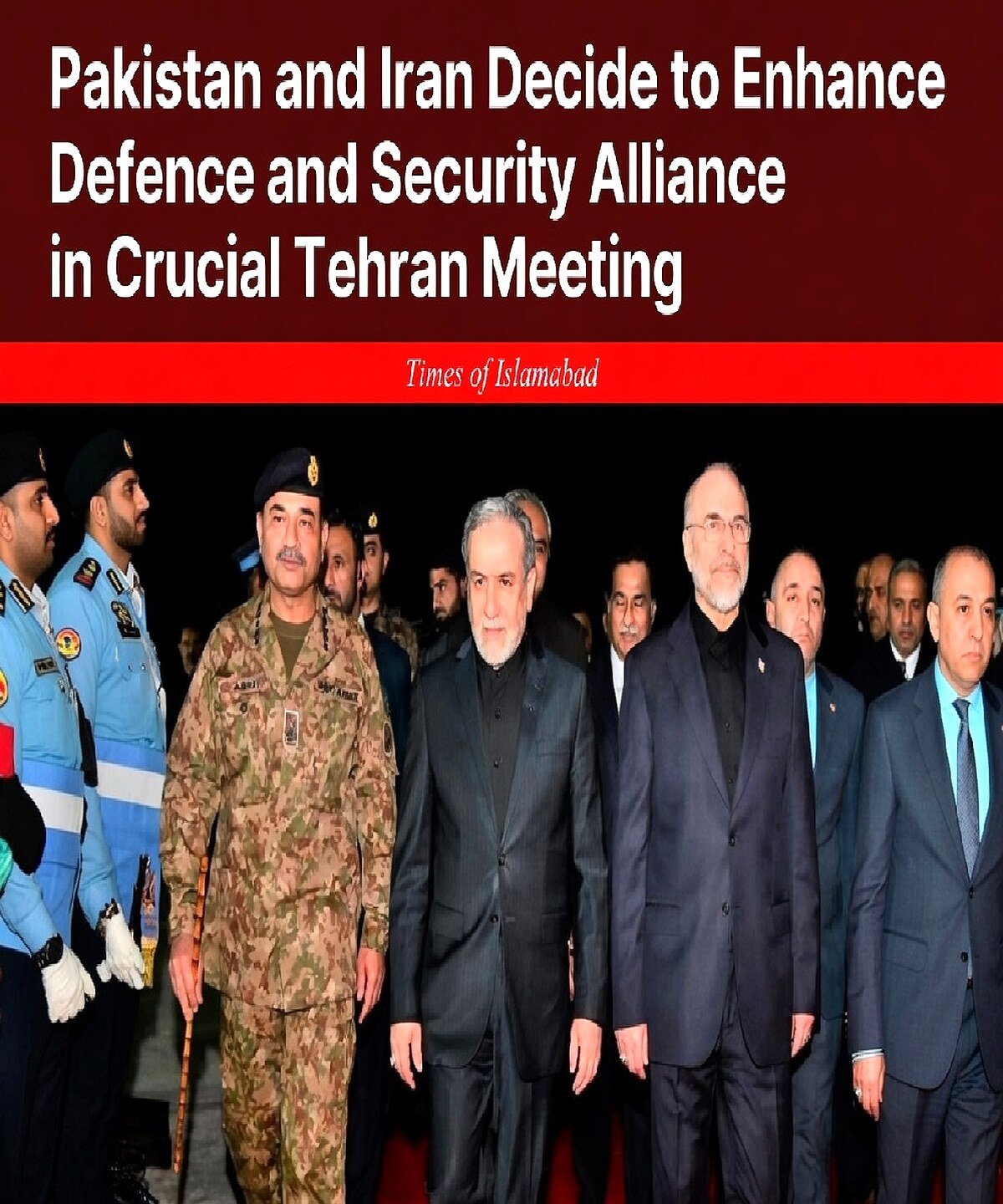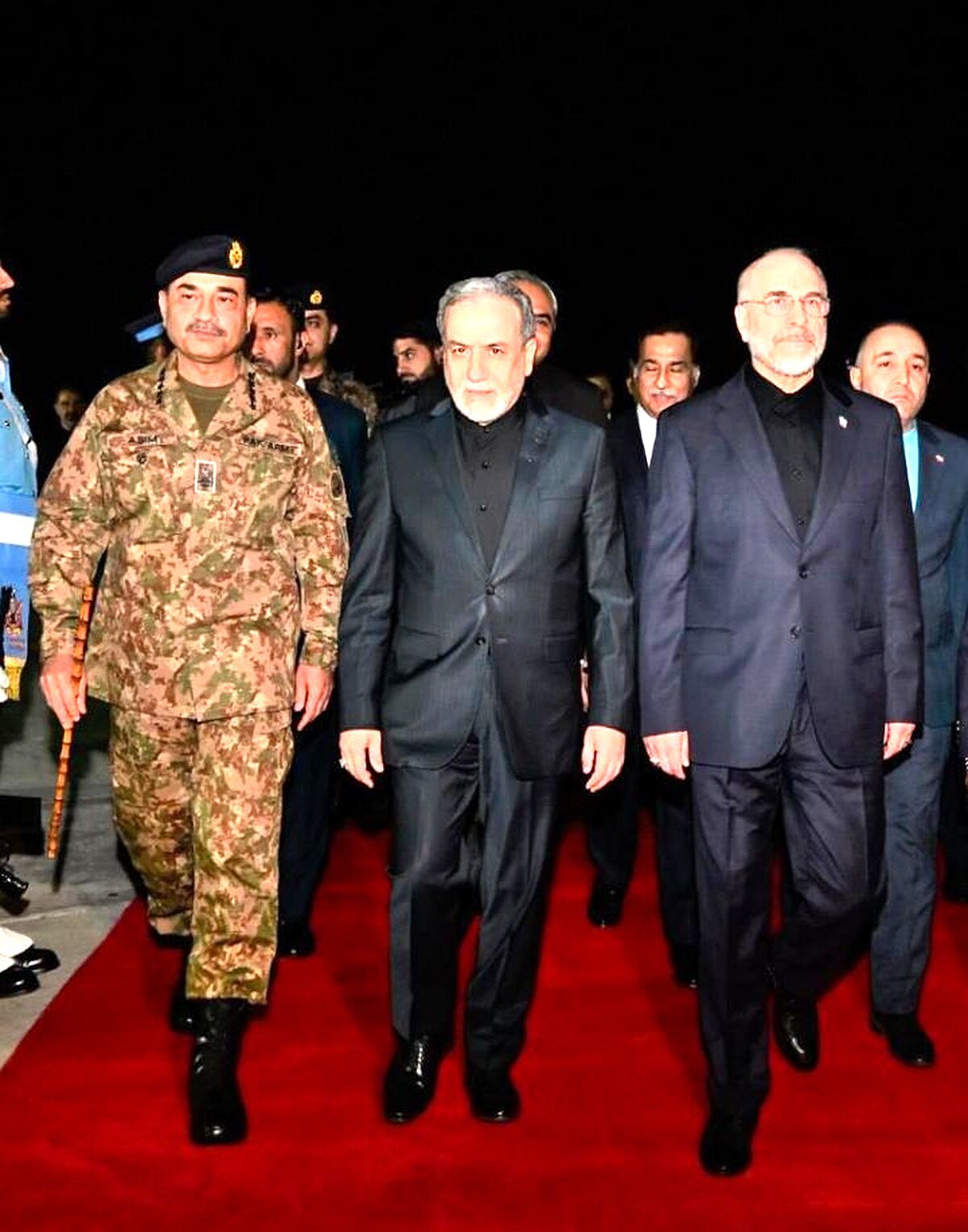




ISLAMABAD: Field Marshal Syed Asim Munir's landmark visit to Iran has reached a decisive phase with high-level military engagements that signal a new chapter in bilateral defense cooperation.
The Pakistan Army chief held an important meeting with Lieutenant General Abdollahi, commander of Iran's Khatam al-Anbiya Central Headquarters.
Detailed discussions covered bilateral affairs, the evolving regional security situation, and multiple matters of shared strategic interest.
Both sides described the meeting as highly significant in the present regional context marked by escalating challenges.
Informed sources confirmed that the two commanders stressed the promotion of peace and stability across the region.
They also committed to further strengthening defense cooperation between the two neighboring countries.
Talks extended to the development of joint strategies for addressing common security threats effectively.
This engagement occurs against a backdrop of heightened tensions that have made close Pakistan-Iran coordination essential for regional calm.
Analysts highlight that such meetings play a vital role in not only reinforcing defense linkages but also deepening mutual trust and confidence.
The visit is widely seen as a major advancement toward improved Pak-Iran relations and greater stability in a volatile neighborhood.
Pakistan and Iran share a 900-kilometre border that traverses sensitive terrain in Balochistan.
Historical cooperation between the two armed forces dates back to joint operations against militant elements in the 1970s.
Recent years have witnessed renewed focus on countering terrorism, narcotics smuggling, and cross-border threats.
Bilateral trade currently stands at approximately three billion dollars but both nations have set an ambitious target of ten billion dollars annually.
In August 2025, the two countries signed twelve agreements and memoranda of understanding covering trade, energy, agriculture, science, technology, and maritime safety.
These pacts underscore the economic dimension that complements ongoing defense collaboration.
Pakistan's armed forces under Field Marshal Munir continue to demonstrate proactive leadership in safeguarding national interests while extending support for broader regional peace initiatives.
The current visit aligns with Pakistan's emerging role as a trusted mediator in complex international dialogues.
International reports note that Field Marshal Munir has been central to efforts facilitating communication between major global players amid Middle East uncertainties.
Such diplomatic maneuvering enhances Pakistan's strategic stature and bolsters the operational readiness of its military through diversified partnerships.
Defense experts point to the potential for expanded intelligence sharing and coordinated border management protocols.
These measures are expected to yield tangible results in curbing militant activities that have affected both nations.
Pakistan's military has consistently prioritized capacity building and modernization to meet contemporary security demands.
Collaborations like the one in Tehran contribute directly to this enhancement by fostering professional exchanges and joint planning.
The Khatam al-Anbiya Central Headquarters meeting reflects the maturity of Pak-Iran military-to-military ties.
Both commanders reviewed progress on previous understandings and outlined future cooperation frameworks.
Regional security dynamics have grown increasingly complex with multiple flashpoints demanding vigilant attention.
Pakistan remains committed to peaceful resolution of disputes while maintaining robust defense preparedness.
Field Marshal Munir's leadership has been instrumental in projecting Pakistan as a responsible and capable actor on the global stage.
The visit comes at a juncture when economic interdependence and security synergy are more intertwined than ever.
Implementation of the ten-billion-dollar trade target will require seamless coordination between civilian and military stakeholders.
Pakistan's armed forces stand ready to support this vision through secure border environments and strategic oversight.
Analysts emphasize that trust built through such high-level interactions forms the bedrock of enduring partnerships.
Iran has reciprocated Pakistan's gestures with warm hospitality and substantive engagement at the highest levels.
The meeting with Lieutenant General Abdollahi is part of a broader series of consultations during the visit.
These interactions cover not only defense but also humanitarian and developmental aspects of bilateral relations.
Pakistan's consistent stance on regional stability resonates strongly with Iranian counterparts.
Joint efforts against common threats have already produced measurable successes in the past.
Continued momentum in this direction promises to elevate the security architecture of South and West Asia.
Field Marshal Munir has repeatedly highlighted the importance of neighborhood-first policies in Pakistan's foreign and defense outlook.
This approach has yielded dividends in multiple engagements, including the current one in Tehran.
The Pakistan Army's professional ethos and operational excellence provide a strong foundation for such partnerships.
Observers note that the visit reinforces Pakistan's image as a bridge-builder in an era of geopolitical flux.
Data from recent years shows steady progress in people-to-people contacts alongside official channels.
Trade facilitation measures and border infrastructure upgrades are underway to support the ten-billion-dollar goal.
Security cooperation remains the linchpin that enables these economic aspirations to materialize.
Pakistan's armed forces have invested heavily in training, equipment, and doctrinal evolution to address hybrid threats.
Partnerships with like-minded nations such as Iran augment these domestic endeavors effectively.
The Tehran meeting is expected to pave the way for follow-up exercises and technical collaborations.
Both sides expressed satisfaction with the candid and constructive nature of the dialogue.
Regional peace and stability feature prominently in all joint statements issued after such encounters.
Pakistan continues to play a constructive role in de-escalating tensions wherever possible.
Field Marshal Munir's personal involvement underscores the priority attached to these relationships at the highest military echelons.
This level of engagement reflects the growing convergence of strategic interests between Islamabad and Tehran.
Experts project that sustained cooperation will contribute positively to countering extremism and fostering economic growth.
Pakistan's military leadership remains focused on enhancing capabilities while promoting harmony with neighbors.
The visit to Iran exemplifies this balanced and forward-looking approach.
As the series of meetings continues, further announcements on concrete outcomes are anticipated.
The defense and foreign policy establishments of both countries are working in close harmony.
Such synergy serves the larger interest of the region and beyond.
Pakistan's armed forces emerge stronger through these strategic alignments.
The nation stands proud of its military's role in safeguarding sovereignty and contributing to global peace efforts.
This historic engagement in Tehran marks yet another milestone in Pakistan's diplomatic and defense journey.