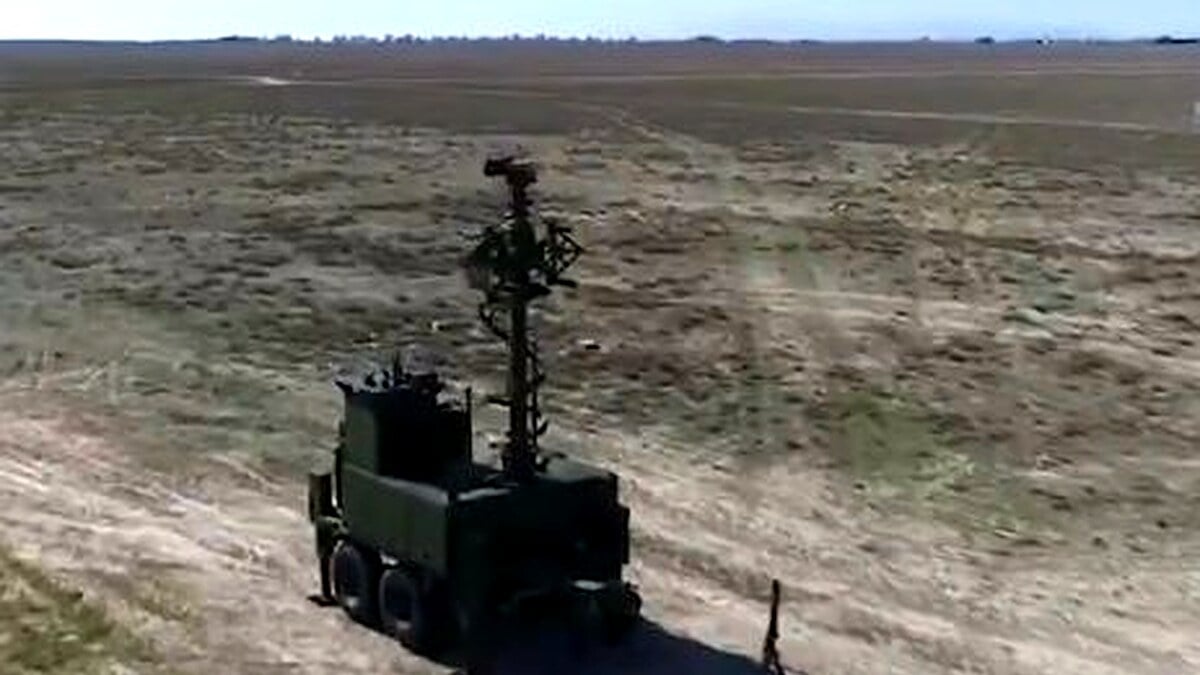




ISLAMABAD: Pakistan has acquired the ASELSAN ŞAHİN 40mm counter-unmanned aerial system to bolster its defenses against emerging drone threats.
The acquisition strengthens air defense capabilities amid increasing regional UAV activity.
Defense officials confirmed the move as part of ongoing military modernization efforts with Turkish partners.
The ŞAHİN system provides short-range protection using smart programmable airburst ammunition to neutralize mini and micro UAVs.
It features remote-controlled operation with integrated radar, electro-optical sensors, and a 40mm automatic grenade launcher.
The effective engagement range reaches up to 700 meters against low-altitude aerial threats.
The system carries up to 64 rounds of 40mm ATOM high-velocity smart grenades designed for precise mid-air detonation.
These munitions use time-programmable fuses to create shrapnel effects optimized for drone neutralization.
Military sources stated the acquisition enhances protection for critical infrastructure, border areas, and forward military positions.
The deal aligns with deepening Pakistan-Türkiye defense cooperation, which includes joint exercises, training, and technology transfers.
Pakistan has previously integrated Turkish platforms such as Bayraktar TB2 drones and MILGEM-class corvettes into its inventory.
Bilateral defense trade has expanded significantly in recent years, with multiple agreements signed under the High-Level Strategic Cooperation Council.
The ŞAHİN system entered Turkish Armed Forces service in 2022 after successful acceptance tests.
It was developed specifically to counter rotary-wing and fixed-wing mini/micro UAV threats proliferating in modern conflicts.
Pakistan faces growing drone-related security challenges along its western borders and urban centers.
Recent incidents have highlighted vulnerabilities to low-cost commercial and tactical UAVs used for surveillance and potential attacks.
The system’s automatic target detection and tracking via stabilized electro-optics allow rapid response in contested environments.
It can integrate with broader command-and-control networks for layered air defense.
Analysts estimate Pakistan’s defense budget allocations for C-UAS capabilities have increased steadily, reflecting global trends in asymmetric warfare.
The country maintains one of the largest armed forces in the region, with extensive border security requirements spanning over 7,000 kilometers.
Turkish officials have praised Pakistan’s role in regional stability and military training exchanges.
Recent high-level visits focused on expanded collaboration in unmanned systems and counter-drone technologies.
The acquisition comes as Pakistan continues to modernize its air defense layered with indigenous and imported solutions.
Market observers note that such systems offer cost-effective hard-kill options compared to missile-based interceptors for short-range threats.
Industry estimates suggest global C-UAS spending could exceed several billion dollars annually amid rising drone proliferation.
In Pakistan, the system will likely deploy with specialized units for point defense of key installations.
It complements existing electronic warfare and jamming capabilities already in service.
Reactions from defense circles welcomed the induction as a timely enhancement to operational readiness.
The development underscores sustained momentum in Pak-Turkish strategic partnership.
Broader regional dynamics, including advancements in UAV technology across neighboring states, have accelerated adoption of counter-measures.
Security implications include improved deterrence against cross-border incursions using small drones.
The ŞAHİN’s mobility and quick deployment features make it suitable for dynamic battlefield conditions.
As integration proceeds, Pakistani forces will undergo specialized training on the platform.
This step supports long-term goals of technological self-reliance through joint ventures and knowledge transfer.
Future developments may include local production components or variants tailored to Pakistani requirements.
Upcoming decisions on scaling the acquisition could influence overall C-UAS strategy across military branches.
The system’s performance will be evaluated in joint exercises to refine operational doctrines.
Regional consequences include potential shifts in aerial threat-response balance along shared borders.
Questions remain on full integration timelines and additional procurement phases in the coming years.