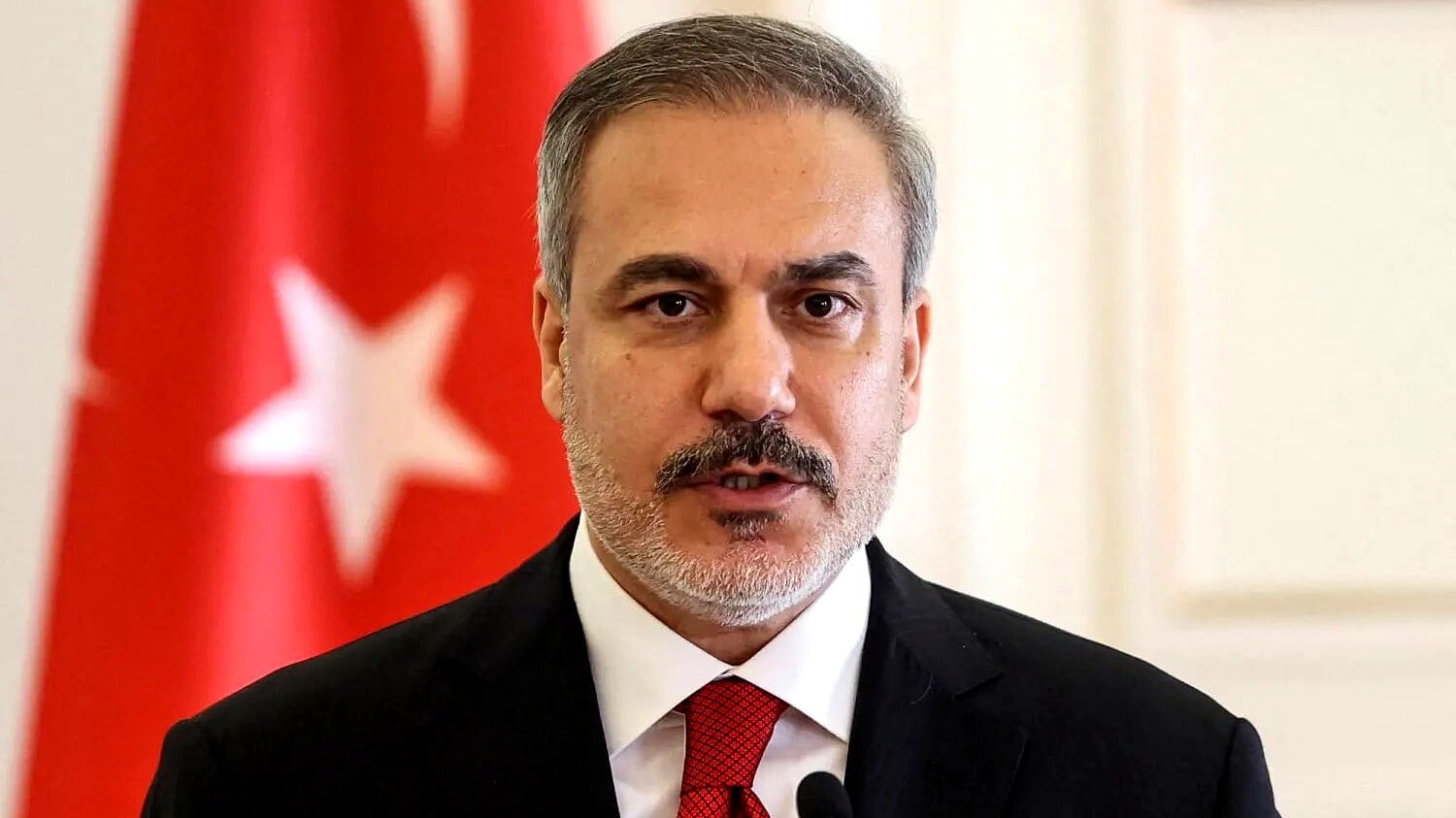




ISLAMABAD: Turkish Foreign Minister Hakan Fidan has stated that Türkiye has no bilateral problems with India and urged New Delhi not to resent Ankara’s close ties with Pakistan.
Speaking at the 6th IISS Raffles Lecture in Singapore, Fidan addressed ongoing sensitivities in India-Türkiye relations linked to Türkiye’s strategic partnership with Pakistan. “If India is going to be resentful about any country having good relations with Pakistan, I don’t know… We have no problem bilaterally with India,” he said.
The remarks come amid continued strong defence and diplomatic cooperation between Türkiye and Pakistan. Ankara has supplied Bayraktar TB2 drones and other military equipment to Islamabad, which featured prominently during the May 2025 India-Pakistan military tensions.
Fidan emphasised that Türkiye and India share no borders or historical disputes, creating space for improved bilateral cooperation in trade, technology, and other sectors. He highlighted Türkiye’s independent foreign policy approach, stating it maintains relations based on mutual interests without external pressure.
Pakistani officials have welcomed the statement as a reaffirmation of longstanding brotherly ties. Türkiye remains one of Pakistan’s key defence partners, with bilateral trade and high-level strategic cooperation expanding in recent years. The two countries regularly coordinate on regional issues, including through the Pakistan-Türkiye High-Level Strategic Cooperation Council.
**Official Context** Turkish-Pakistani defence collaboration has grown significantly. Reports indicate joint ventures in aviation, armoured vehicles, and munitions. During the 2025 border tensions with India, Türkiye expressed solidarity with Pakistan and supported diplomatic de-escalation efforts while maintaining its defence supplies.
Fidan’s comments reflect Ankara’s broader diplomatic posture of balancing multiple relationships. Türkiye maintains economic ties with India, including in textiles, machinery, and pharmaceuticals, though volumes remain modest compared to its defence and political engagement with Pakistan.
**Indian Reaction** Indian commentators have criticised the Turkish position. Former Foreign Secretary Kanwal Sibal and others pointed to Türkiye’s consistent support for Pakistan on Kashmir at the United Nations and through the Organisation of Islamic Cooperation (OIC). They described Ankara’s approach as unhelpful for any meaningful reset in India-Türkiye relations.
Bilateral trade between India and Türkiye stands at around $8-10 billion in recent years, with potential for growth in specific sectors. However, political differences, particularly over regional security issues, have limited deeper engagement.
**Background** Türkiye-Pakistan relations date back decades, rooted in shared strategic interests and cultural affinity. Cooperation spans defence production, counter-terrorism intelligence, and economic projects. Pakistan has consistently supported Türkiye on regional issues, including Cyprus and energy projects.
In contrast, India-Türkiye ties have faced periodic strains, especially after Türkiye’s vocal stance on Kashmir and its defence exports to Pakistan. The 2025 India-Pakistan crisis further tested these dynamics, with Türkiye advocating for dialogue while continuing military-technical support to Islamabad.
**Strategic Implications** Analysts note that Fidan’s statement underscores Türkiye’s refusal to let third-party sensitivities dictate its foreign policy. As a NATO member with growing autonomy in defence exports, Türkiye positions itself as a reliable partner for Pakistan while keeping channels open with India.
For Pakistan, continued Turkish support strengthens its deterrence posture and diversifies defence procurement beyond traditional suppliers. Defence industry cooperation is expected to deepen further in the coming years, with joint projects potentially worth hundreds of millions of dollars.
The region remains sensitive following the 2025 skirmishes, which highlighted risks between the two nuclear-armed neighbours. Fidan had earlier described the episode as a reminder of the severe consequences of escalation between nuclear powers.
Future developments will likely depend on how India responds to Türkiye’s position and whether economic incentives can overcome political differences. Ankara has signalled willingness for enhanced bilateral dialogue, provided New Delhi accepts Türkiye’s independent relations with Pakistan.
Observers expect continued high-level contacts between Türkiye and Pakistan, including preparations for the next session of their High-Level Strategic Cooperation Council. Regional security dynamics, including developments in the broader Middle East and South Asia, will continue to shape these alignments.