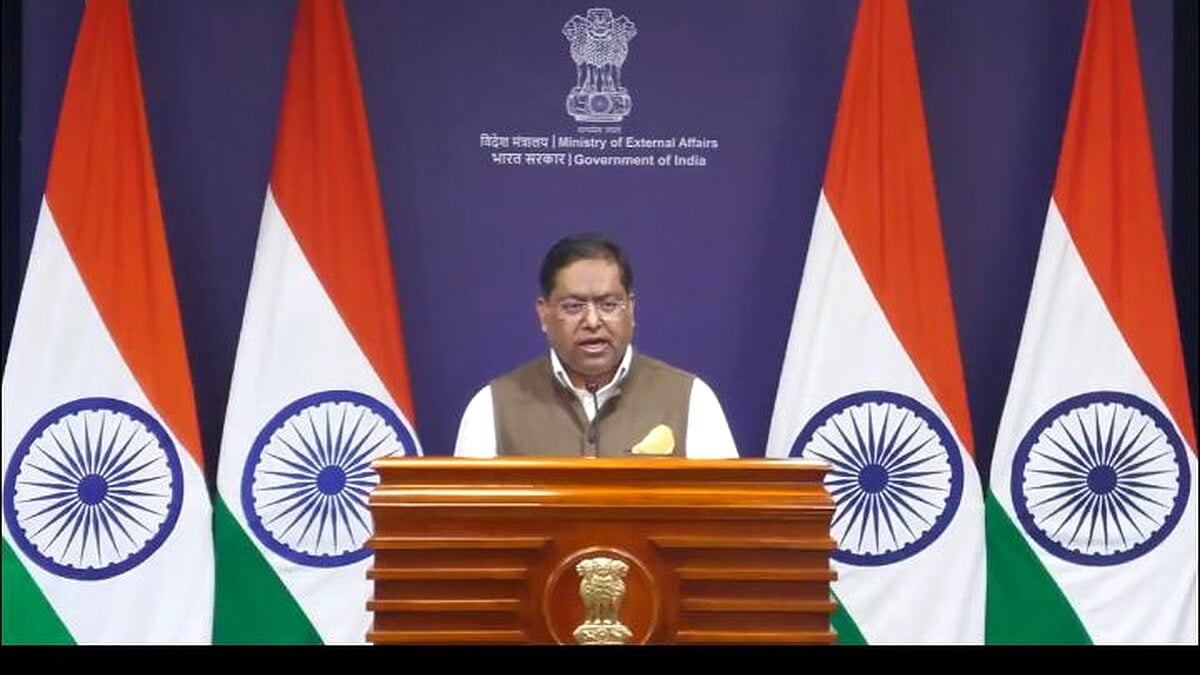




(India Desperately Reacts Against Kashmir References Made During Pakistan-EU Talks)
Islamabad
ISLAMABAD: India has strongly rejected references to Kashmir made during recent Pakistan-European Union discussions in Islamabad, issuing a sharp diplomatic response and stating that any comments on the issue by parties with “no locus standi” were unacceptable.
The reaction came after Pakistan and the European Union held high-level talks covering regional security, trade cooperation, human rights, climate challenges, and South Asian stability, during which references were reportedly made to the longstanding Kashmir dispute.
Responding to the development, India’s Ministry of External Affairs (MEA) said it “categorically rejects such unwarranted references” and reiterated its position that Jammu and Kashmir remains an internal matter of India.
In an official statement, the MEA declared: “We categorically reject such unwarranted references. Those who have no locus standi should desist from making any comment on this.”
The remarks underline New Delhi’s longstanding opposition to third-party involvement in the Kashmir issue and reflect its consistent policy that all outstanding matters with Pakistan must be addressed bilaterally.
The diplomatic exchange emerged against the backdrop of renewed engagement between Pakistan and the European Union under the framework of their Strategic Engagement Plan, which covers cooperation across political, economic, security and development sectors.
The EU remains one of Pakistan’s largest trading partners.
According to official trade data, bilateral trade between Pakistan and the European Union exceeds €12 billion annually, with Pakistani exports benefiting significantly from the EU’s GSP+ trade preference scheme.
Pakistan has repeatedly highlighted Kashmir in international forums, arguing that the dispute remains unresolved and has implications for regional peace and security.
Islamabad maintains that the issue should be addressed in accordance with relevant United Nations Security Council resolutions and the aspirations of the Kashmiri people.
India, however, has consistently rejected internationalization of the dispute and has opposed references to Kashmir in statements issued by foreign governments, international organizations, or multilateral groupings.
The latest diplomatic disagreement reflects broader differences between the two nuclear-armed neighbors, whose relations have remained strained since 2019 when India revoked the special constitutional status of Jammu and Kashmir under Article 370.
That move reorganized the region into two federally administered territories and triggered strong criticism from Pakistan, which downgraded diplomatic ties and suspended bilateral trade measures.
Since then, direct political engagement between Islamabad and New Delhi has remained limited despite periodic calls from international stakeholders for dialogue aimed at reducing regional tensions.
The European Union has traditionally encouraged peaceful engagement and confidence-building measures between South Asian rivals while simultaneously expanding economic and political cooperation with both countries.
EU institutions have frequently emphasized the importance of regional stability, human rights protections, and adherence to international law, although Brussels generally avoids taking positions that could significantly affect its relations with either side.
Analysts note that India’s latest response is consistent with its broader diplomatic strategy of firmly countering any international references that could be interpreted as external involvement in Kashmir-related matters.
The reaction also demonstrates the sensitivity of the issue for New Delhi at a time when India continues to expand strategic partnerships with Western countries, the European Union, and major global powers.
For Pakistan, raising Kashmir during international engagements remains a central component of its foreign policy messaging and diplomatic outreach.
Officials in Islamabad argue that international awareness and engagement remain important for achieving a peaceful resolution to the dispute and ensuring long-term regional stability.
The development comes as South Asia continues to face multiple security and economic challenges, including border tensions, counterterrorism concerns, energy pressures, and slowing global trade growth.
Regional observers believe that while the latest exchange is unlikely to trigger immediate policy changes, it highlights the enduring diplomatic divide over Kashmir and the difficulty of finding common ground on one of South Asia’s most sensitive geopolitical issues.
Future Pakistan-EU engagements, upcoming regional diplomatic forums, and broader international discussions on security and stability are likely to keep the Kashmir question within the diplomatic spotlight, even as India continues to o