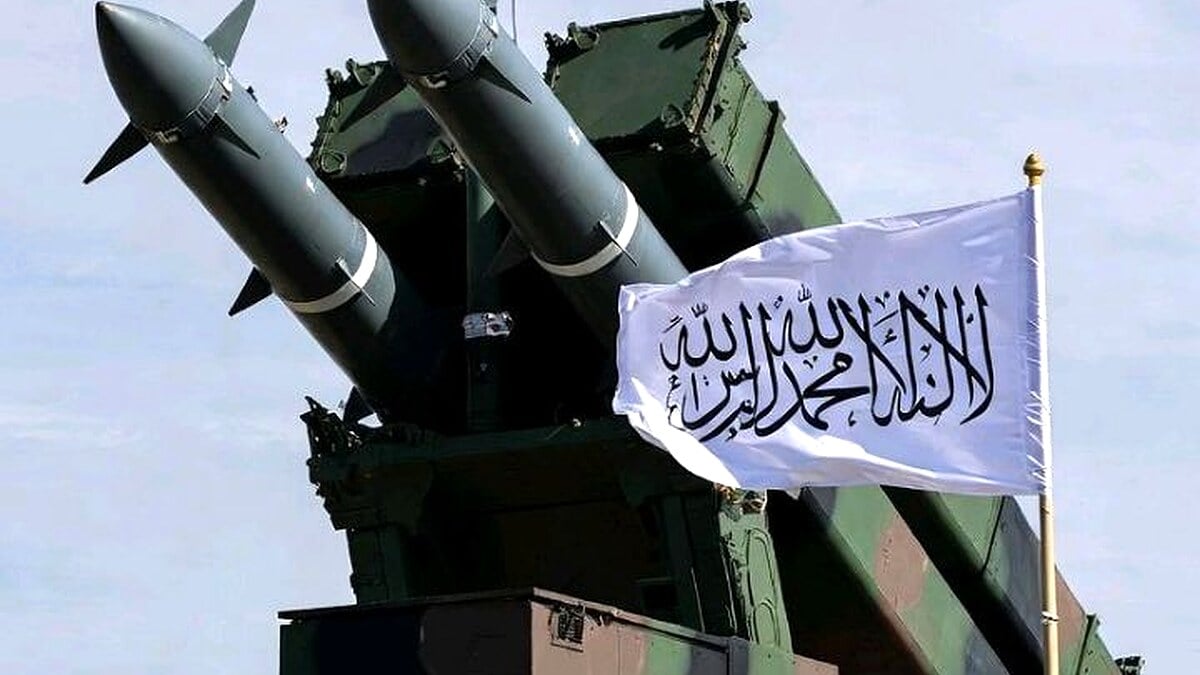




ISLAMABAD: Afghanistan’s acting Defence Minister Mullah Mohammad Yaqoob has said Pakistan is unlikely to carry out strikes inside Afghanistan in the near future, linking the assessment to a recently signed military and technical cooperation agreement between Kabul and Moscow.
Speaking to reporters at Kabul Airport after returning from Russia on Saturday, Mullah Yaqoob said the agreement should not be viewed as a security or defence pact but rather as a military and technical arrangement aimed at maintaining and repairing existing equipment.
His remarks come at a time when relations between Pakistan and Afghanistan remain under strain over border security issues, militant activity, and competing accusations regarding cross-border attacks.
Commenting on concerns reportedly raised regarding the agreement, Mullah Yaqoob suggested that any reservations from Pakistan could be linked to apprehensions about the growing cooperation between Kabul and Moscow.
“If Pakistan has made any complaints, it may be afraid of the agreement with Russia,” he told journalists following his return from Moscow.
The Afghan defence minister also referred to previous Pakistani strikes inside Afghanistan, saying Kabul was seeking measures that would prevent similar incidents from occurring in the future.
Pakistan conducted air operations in border regions during recent years following security incidents that Islamabad linked to militant groups operating from Afghan territory.
Pakistani authorities have repeatedly stated that militant organizations responsible for attacks inside Pakistan use sanctuaries across the border, an allegation Afghan officials have consistently rejected.
The latest comments from Kabul are therefore likely to receive attention within regional security circles already monitoring developments between the two neighbouring countries.
Providing further details, Mullah Yaqoob emphasized that the agreement signed with Russia was primarily focused on technical cooperation.
He stated that Afghanistan continues to possess military equipment of Russian origin that requires maintenance, repair and technical support.
According to the Afghan minister, the newly signed framework would facilitate the servicing of such equipment and improve operational readiness within Afghan security institutions.
He stressed that the arrangement should not be interpreted as a formal defence alliance or collective security agreement.
The statement is significant because Russia remains one of the major military equipment producers in Eurasia, with decades of involvement in Afghanistan’s security environment.
Military analysts note that a large quantity of Soviet-era and Russian-origin hardware remains present across Afghanistan, including transport vehicles, helicopters, logistics platforms and support equipment.
Repairing and maintaining such assets often requires technical expertise, spare parts and institutional cooperation that cannot easily be obtained through domestic channels alone.
Mullah Yaqoob also indicated that Kabul would be open to pursuing similar arrangements with other countries.
He specifically mentioned the United States, saying Afghanistan possesses American military equipment and would be prepared to sign comparable technical agreements with Washington.
Following the withdrawal of US-led forces from Afghanistan in August 2021, significant quantities of military hardware remained inside the country.
Various international assessments have estimated the value of military equipment left behind during the withdrawal at several billion dollars, although exact figures remain disputed.
Much of that equipment requires regular maintenance, technical support and spare parts to remain operational over the long term.
The comments suggest that Afghanistan’s current leadership is seeking pragmatic engagement with multiple international partners based on technical requirements rather than exclusive strategic alignments.
Regional observers believe the approach reflects Kabul’s broader effort to expand diplomatic and practical cooperation with a wider range of countries.
Russia has steadily increased engagement with Afghanistan since the Taliban’s return to power, focusing on trade, security dialogue, counterterrorism coordination and regional stability.
Economic ties have also attracted attention in recent years as both sides explored cooperation in energy supplies, transportation and commercial exchanges.
Security experts note that military technical agreements generally differ from formal defence treaties because they focus on maintenance, training, logistics support and equipment servicing rather than mutual defence commitments.
Nevertheless, such arrangements can carry strategic significance by opening channels for deeper institutional cooperation over time.
The latest remarks from Mullah Yaqoob are also likely to fuel discussion regarding the future direction of Afghanistan’s foreign and security policy.
While Kabul continues to face economic challenges and international isolation in several areas, it has simultaneously sought broader engagement with regional powers including Russia, China, Iran and Central Asian states.
Analysts say future developments will depend on the practical implementation of the Russia agreement, the extent of technical cooperation achieved, and whether Afghanistan succeeds in securing similar arrangements with other countries.
As regional security dynamics continue to evolve, policymakers across South and Central Asia are expected to closely monitor how emerging military partnerships influence border stability, counterterrorism efforts and broader geopolitical calculations in the months ahead.