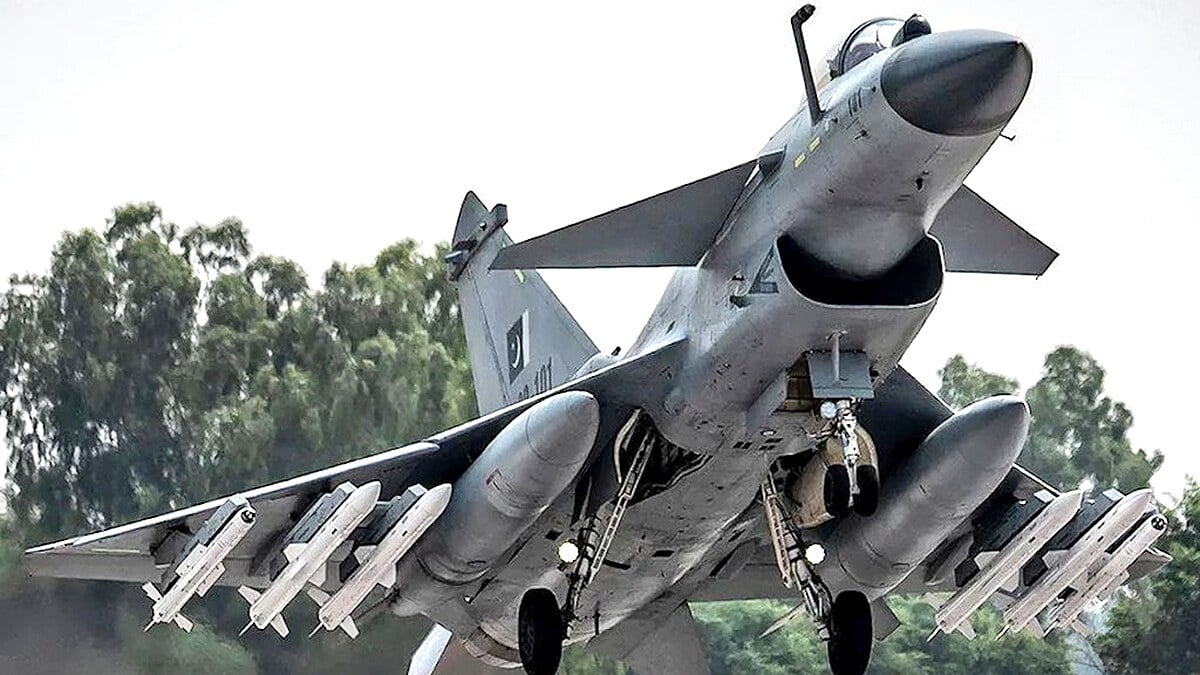




ISLAMABAD: Indonesia is reportedly preparing to significantly expand its planned acquisition of Chinese J-10CE fighter aircraft, with new reports indicating that Jakarta intends to increase the order from 12 to 24 jets while also procuring the long-range PL-15E beyond-visual-range air-to-air missile package.
The development was reported by defence analyst and aviation journalist Alan Warnes, who cited sources within the Indonesian Air Force (TNI-AU) familiar with the procurement discussions.
If finalized, the deal would represent one of the largest recent exports of China’s fourth-and-a-half generation fighter aircraft and further strengthen Beijing’s position in the competitive Southeast Asian defence market.
The proposed package is expected to include 24 J-10CE multirole combat aircraft along with PL-15E missiles, advanced avionics systems, training support, maintenance infrastructure, and logistics arrangements.
While Indonesian authorities have not yet publicly confirmed the reported increase, defence observers note that the move reflects growing interest in the aircraft following recent combat-related attention surrounding the J-10C platform.
The J-10CE is the export version of China’s J-10C fighter and is manufactured by the state-owned Aviation Industry Corporation of China (AVIC).
The aircraft features an active electronically scanned array (AESA) radar, digital cockpit, electronic warfare systems, advanced data links, and compatibility with a wide range of precision-guided weapons.
Powered by a single-engine configuration, the fighter can reportedly achieve speeds exceeding Mach 1.8 and conduct both air superiority and ground-attack missions.
Particular attention has focused on the PL-15E missile, the export variant of China’s long-range beyond-visual-range air-to-air weapon.
Open-source defence assessments estimate the PL-15E possesses a range exceeding 145 kilometres, while the domestic Chinese version is believed to have an even greater engagement envelope.
The missile uses active radar guidance and is designed to engage enemy aircraft well before visual contact is established.
Indonesia’s reported procurement plans emerge amid broader military modernisation efforts across Southeast Asia.
The country operates one of the region’s largest air forces and has pursued a diverse procurement strategy involving Western, Russian, South Korean, and increasingly Chinese defence technologies.
Jakarta has previously signed agreements for French Rafale fighters, upgraded F-16 aircraft, and participation in South Korea’s KF-21 fighter programme.
Analysts say the addition of J-10CE fighters could provide Indonesia with a larger and more diversified combat fleet while potentially reducing procurement costs compared with some Western alternatives.
The reported expansion has also attracted international attention because of the growing reputation of the J-10C family following the Pakistan-India aerial confrontation in May 2025.
During that crisis, Pakistan’s Air Force deployed J-10C fighters equipped with advanced air-to-air missiles as part of its air defence and interception operations.
Pakistani officials subsequently highlighted the effectiveness of networked air combat systems and modern beyond-visual-range missile capabilities during the confrontation.
Although details of individual engagements remain subject to competing claims and independent verification challenges, the conflict generated extensive discussion among military analysts regarding the combat performance of modern fighter aircraft and missile systems.
The episode also intensified international interest in Chinese military aviation exports.
Several defence experts argue that operational exposure, even under contested circumstances, often influences procurement decisions by countries evaluating future fighter acquisitions.
Indonesia’s potential expansion of the J-10CE order therefore carries significance beyond the immediate transaction value.
The acquisition would further deepen defence-industrial cooperation between Jakarta and Beijing while signalling increasing acceptance of Chinese aerospace technology among regional military planners.
Industry estimates suggest that a complete package involving 24 fighters, weapons, training, spare parts, and support infrastructure could be worth several billion dollars, depending on final specifications and contractual arrangements.
The reported deal also comes as regional air forces continue investing heavily in next-generation capabilities amid evolving security dynamics in the Indo-Pacific.
Countries across Southeast Asia are expanding surveillance networks, acquiring advanced missiles, and modernising combat aircraft fleets to address increasingly complex operational requirements.
For Indonesia, the final outcome of negotiations could influence future force structure planning for decades.
Defence observers will now closely monitor official announcements from Jakarta and Beijing, as confirmation of the expanded purchase would mark another notable milestone in China’s growing presence within the global fighter aircraft export market and could encourage additional interest from other prospective buyers evaluating advanced yet comparatively affordable combat aviation platforms.